Canada
 United States



The Sleeper That Works All Night


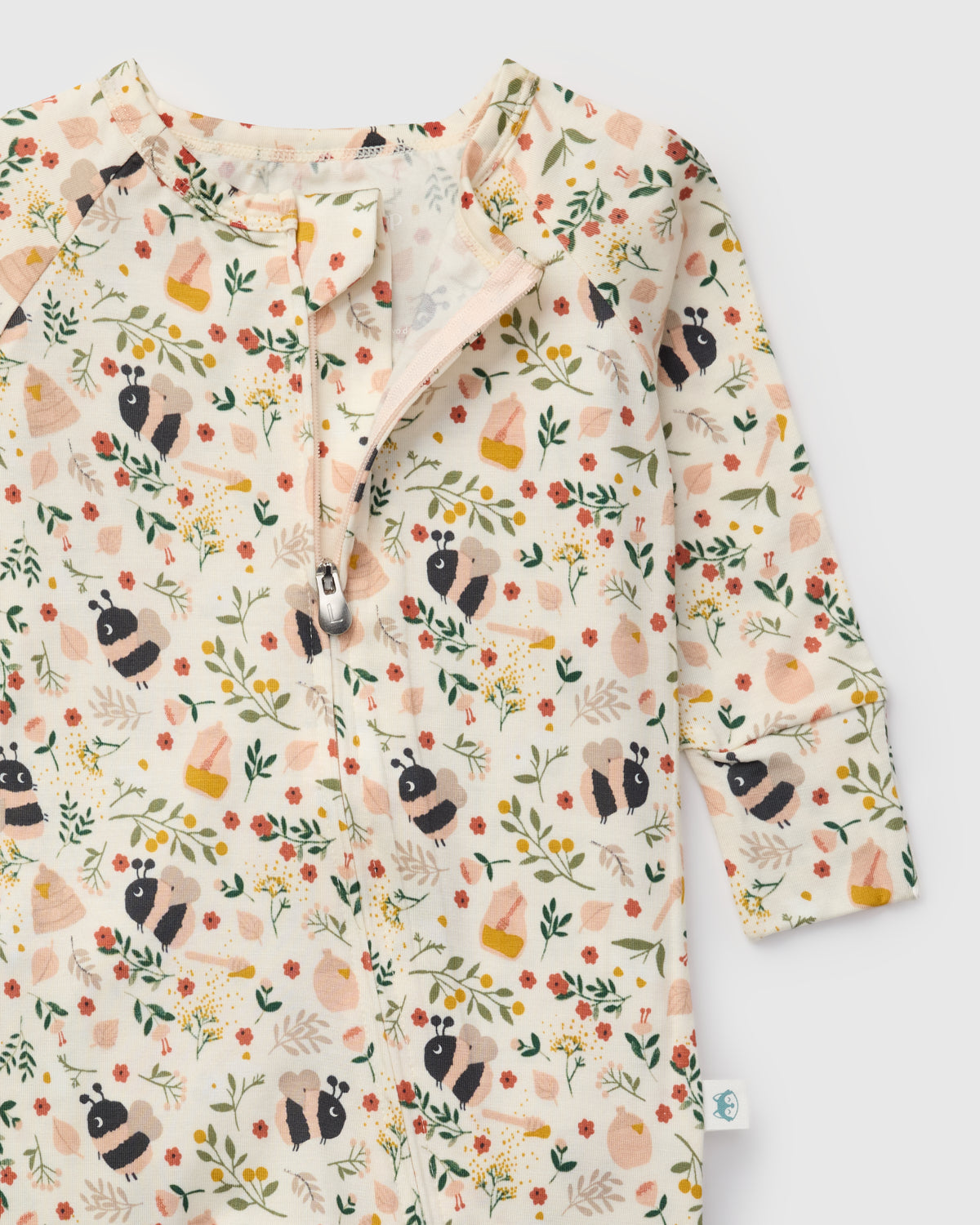
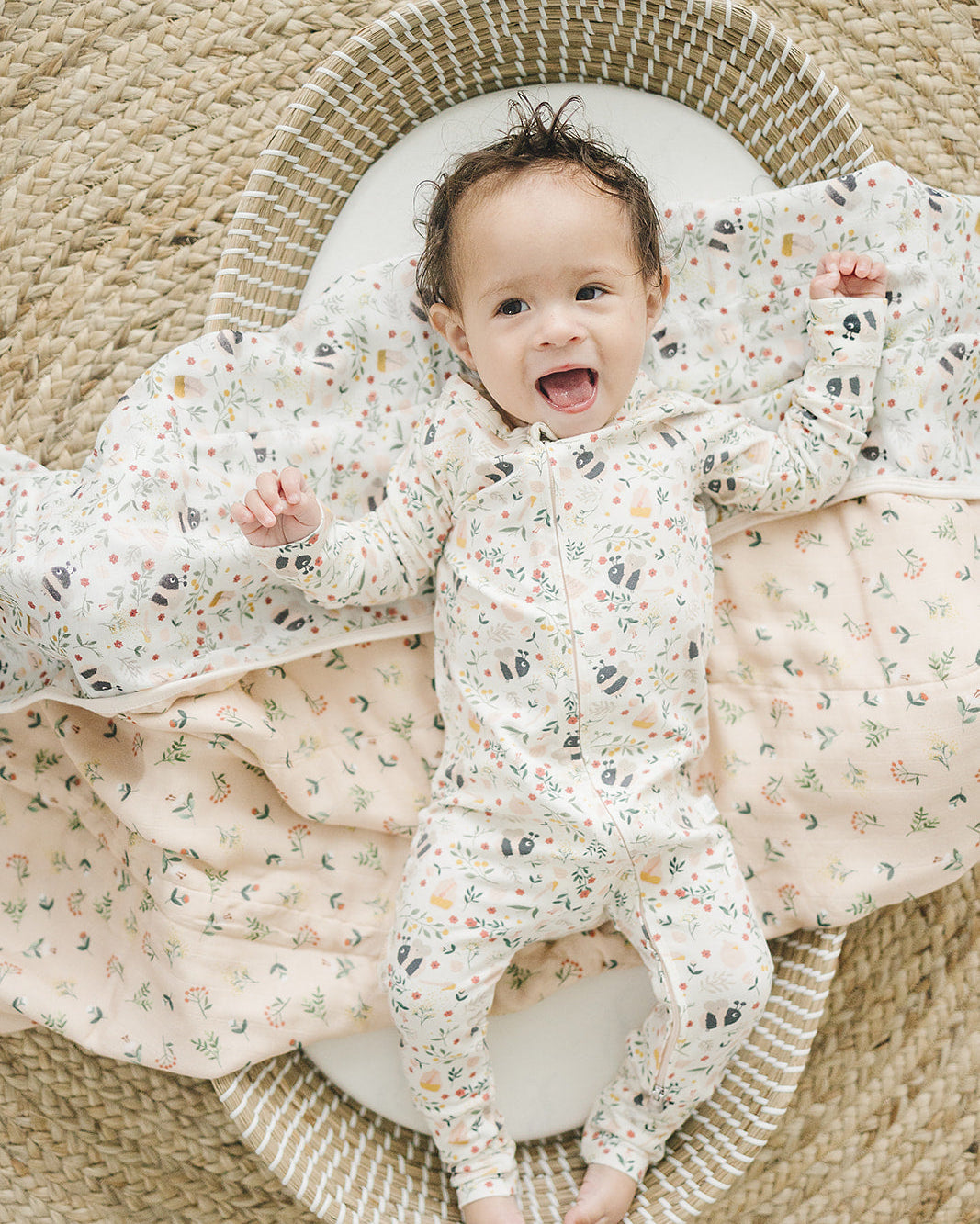
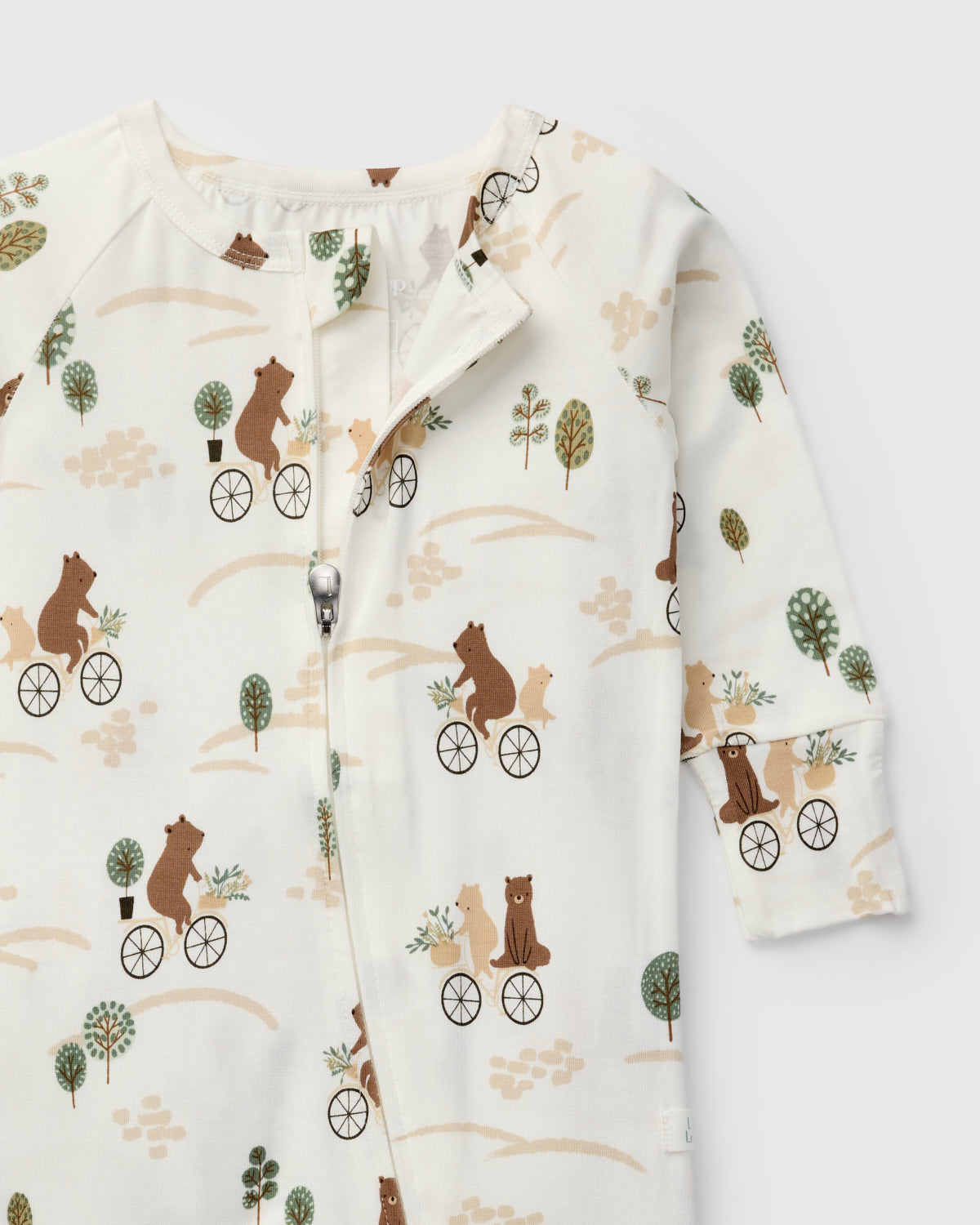
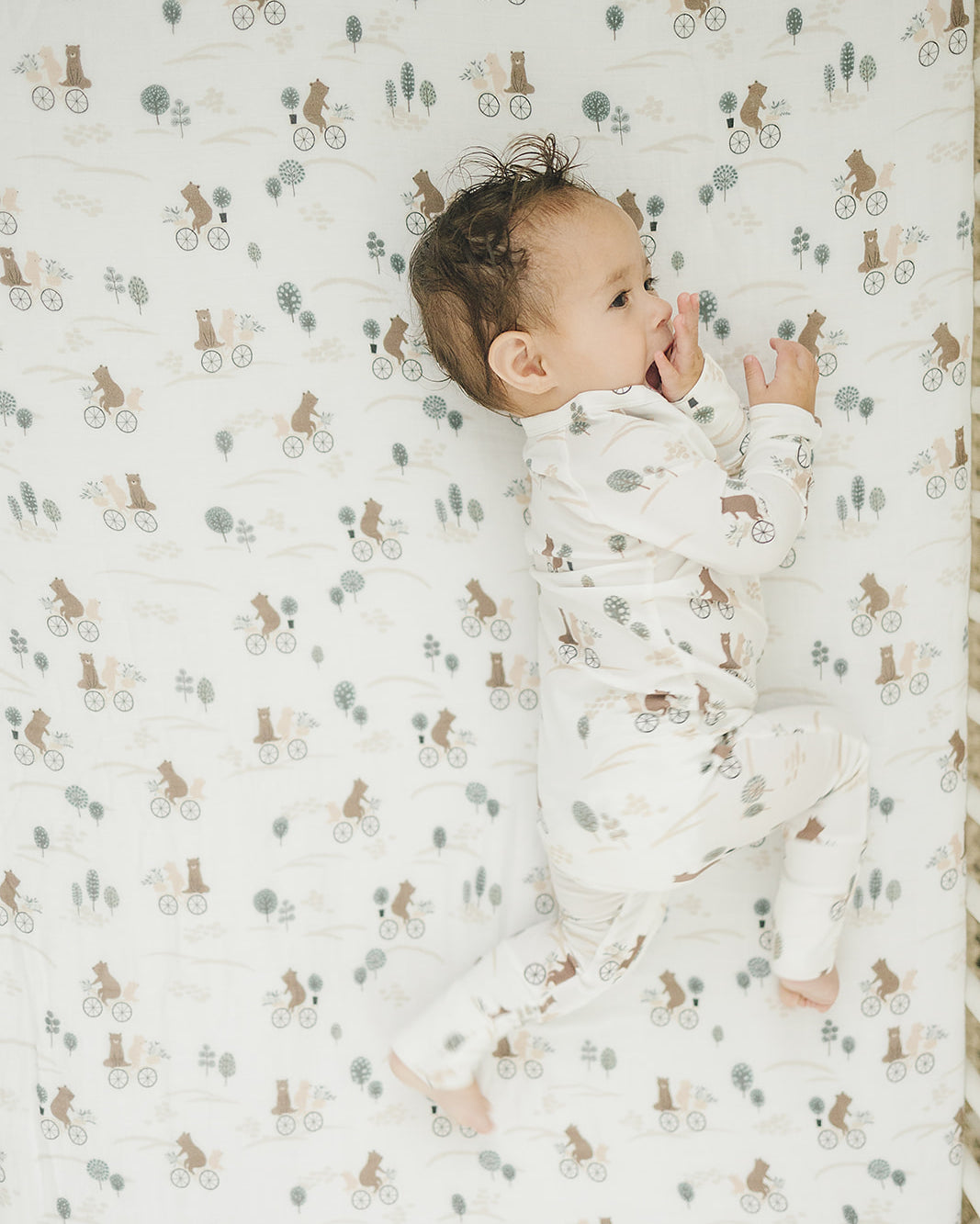
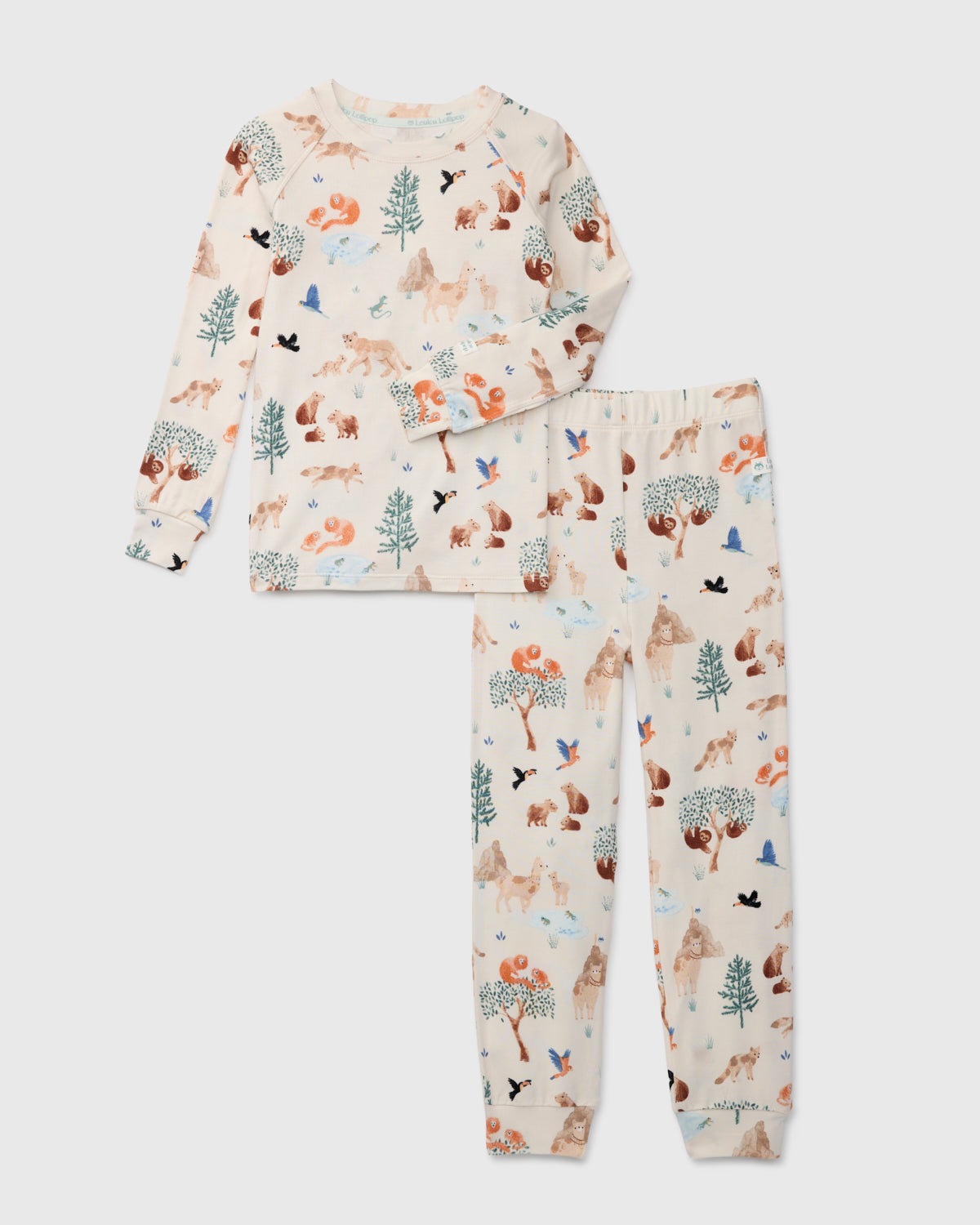
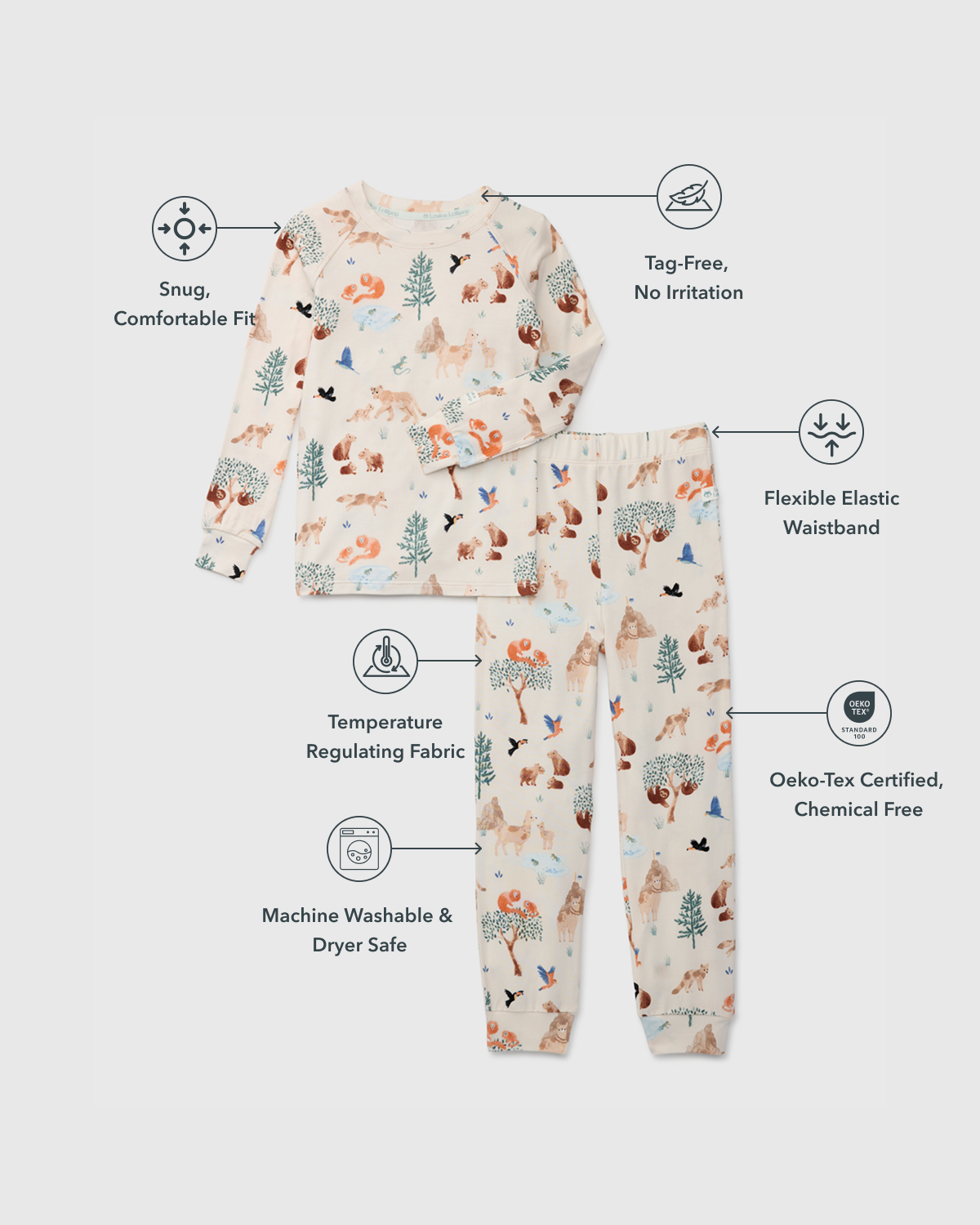
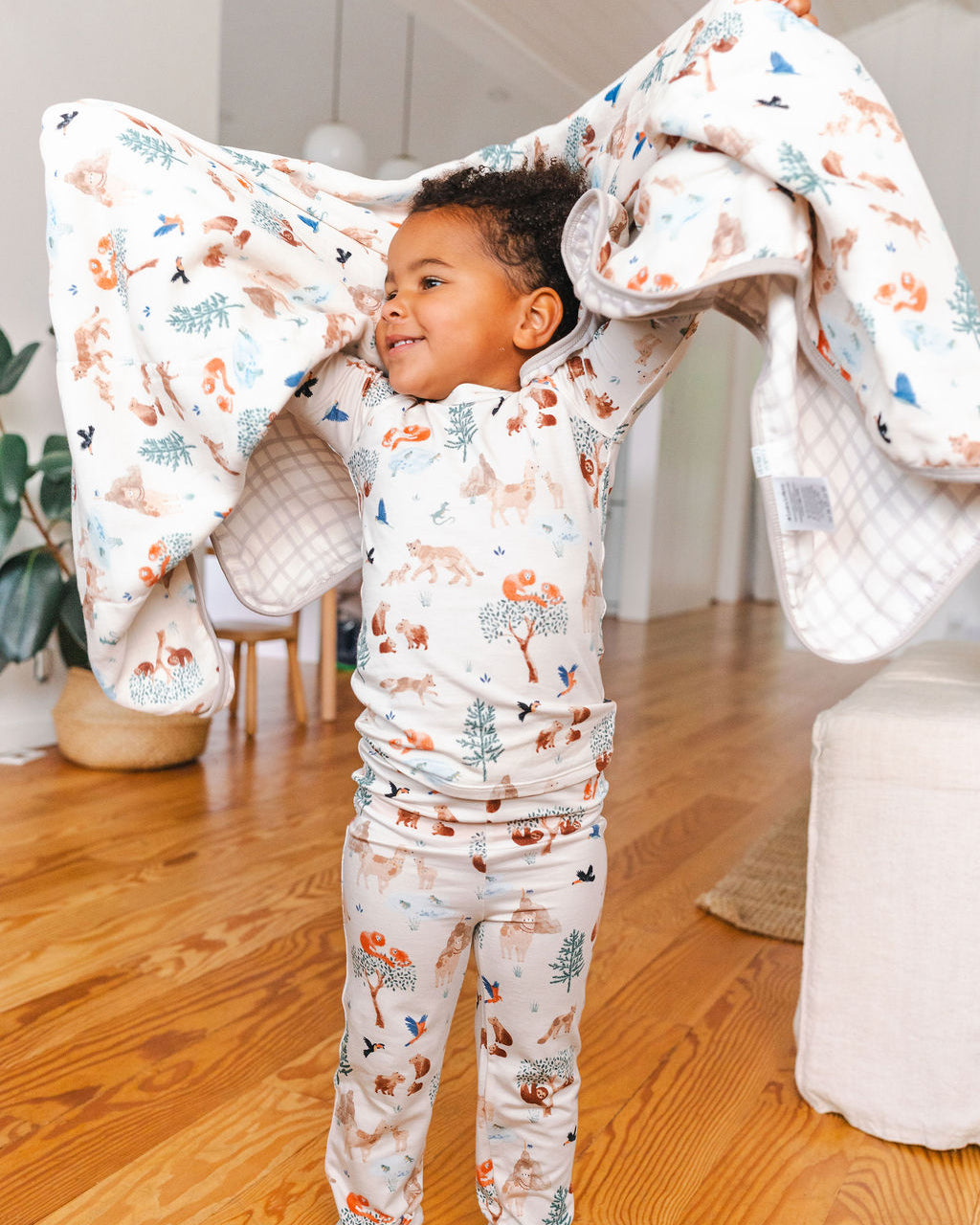
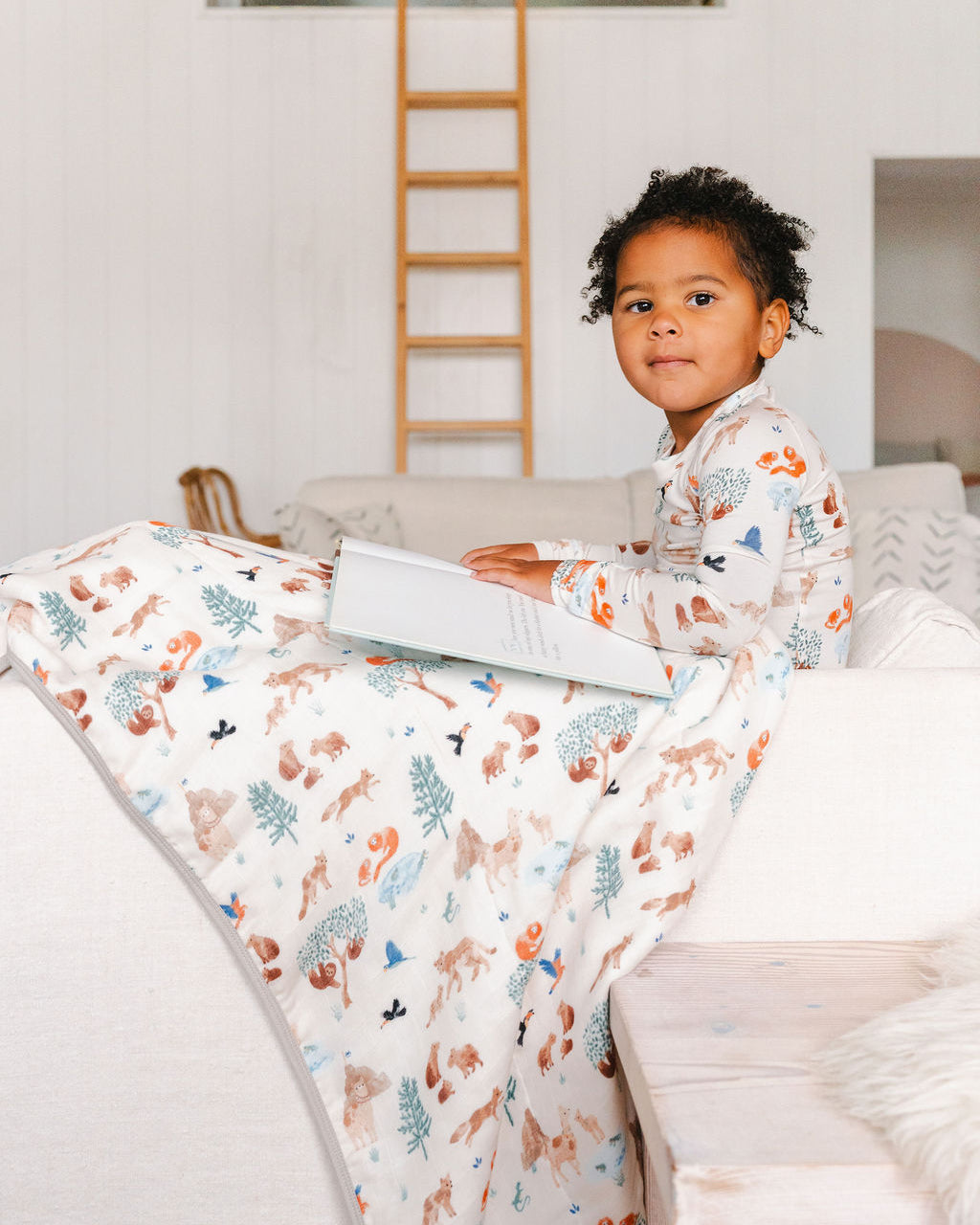
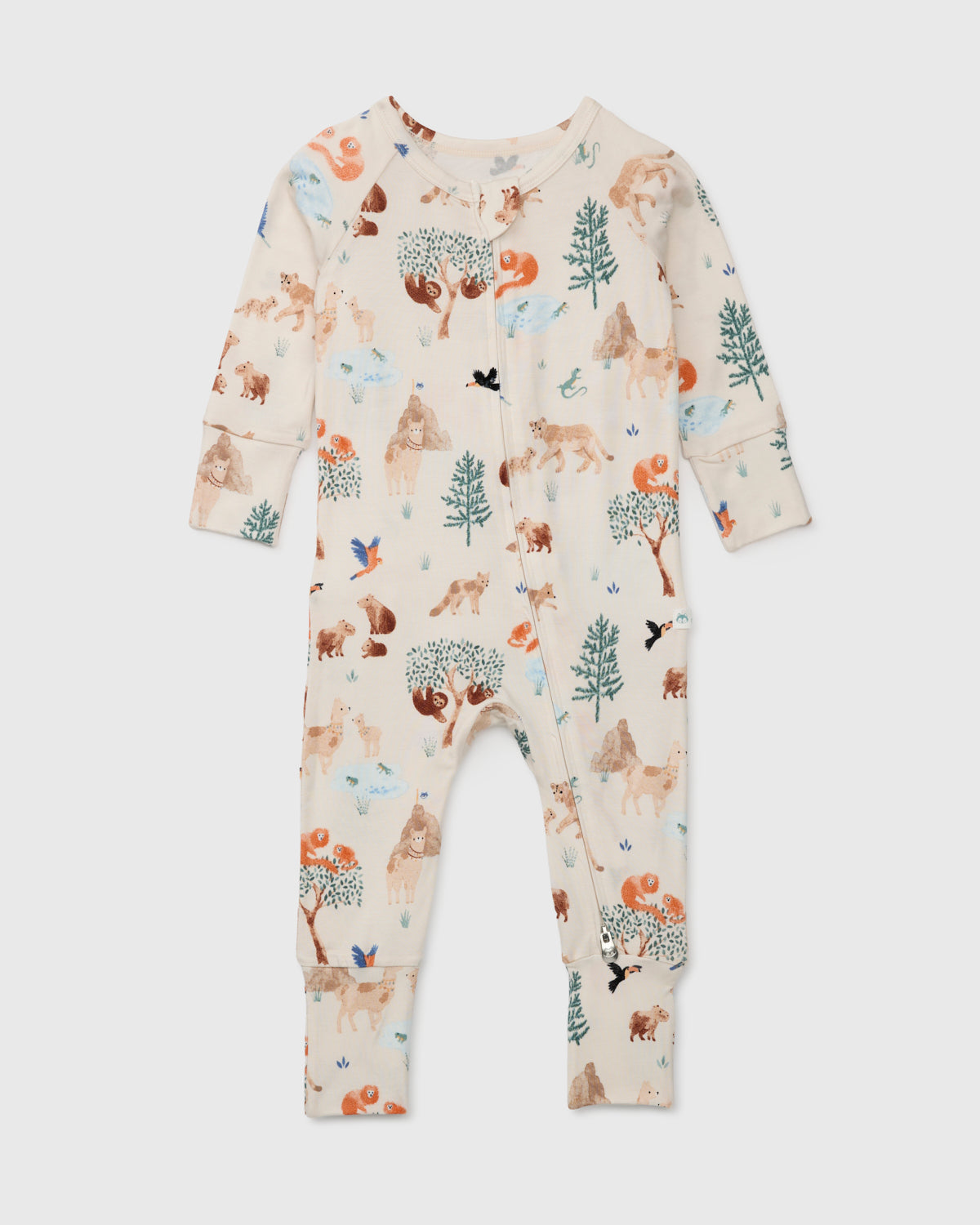
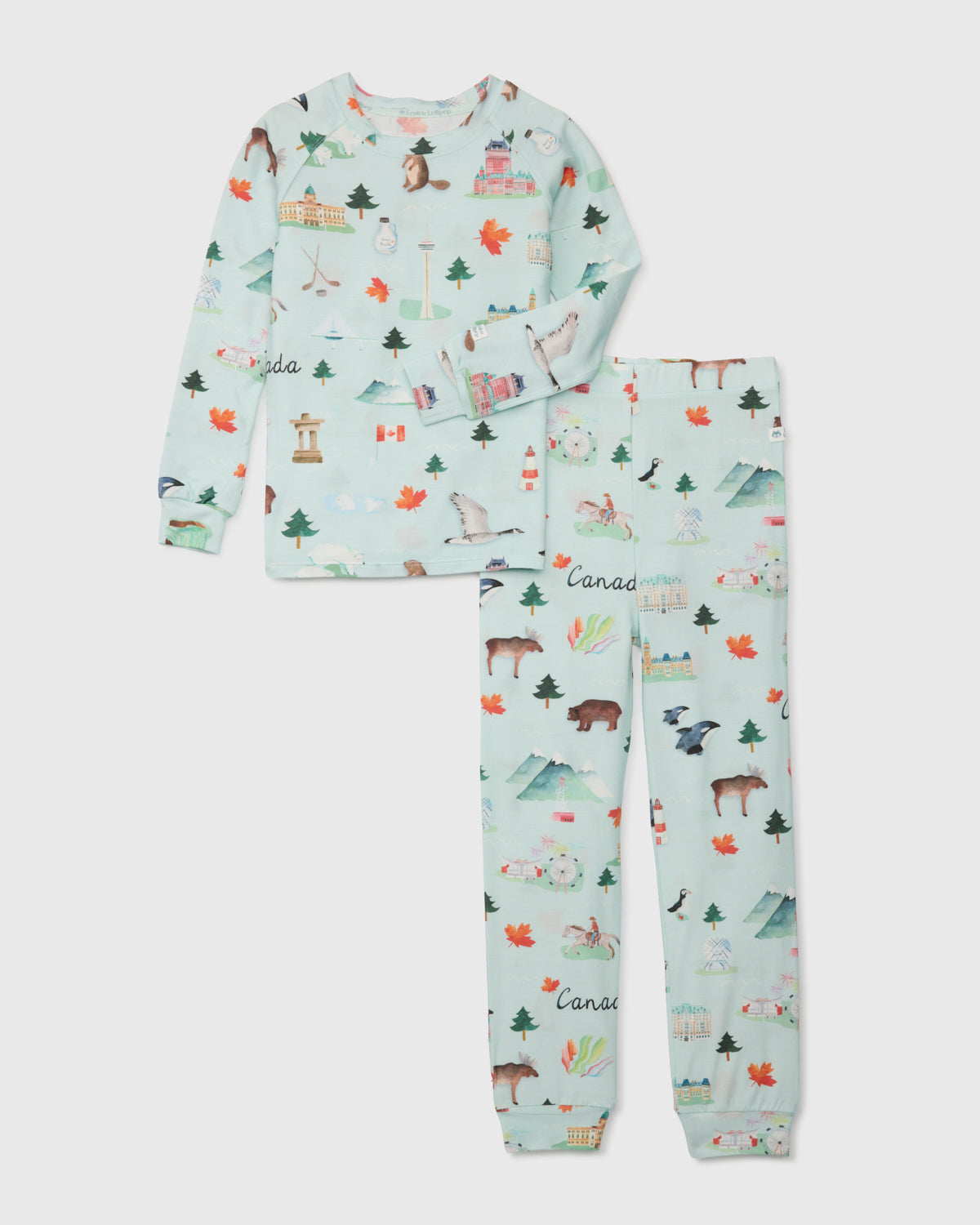
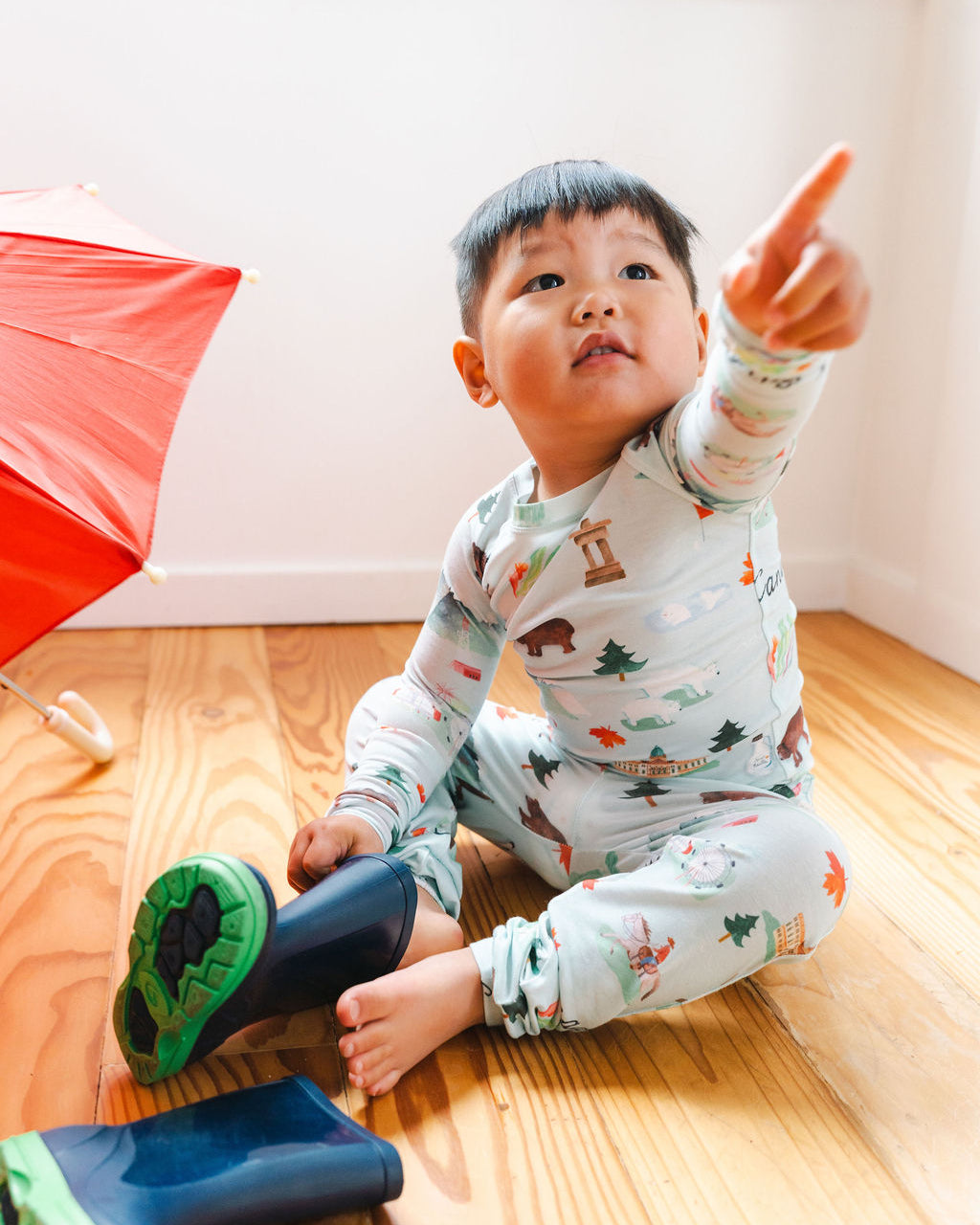
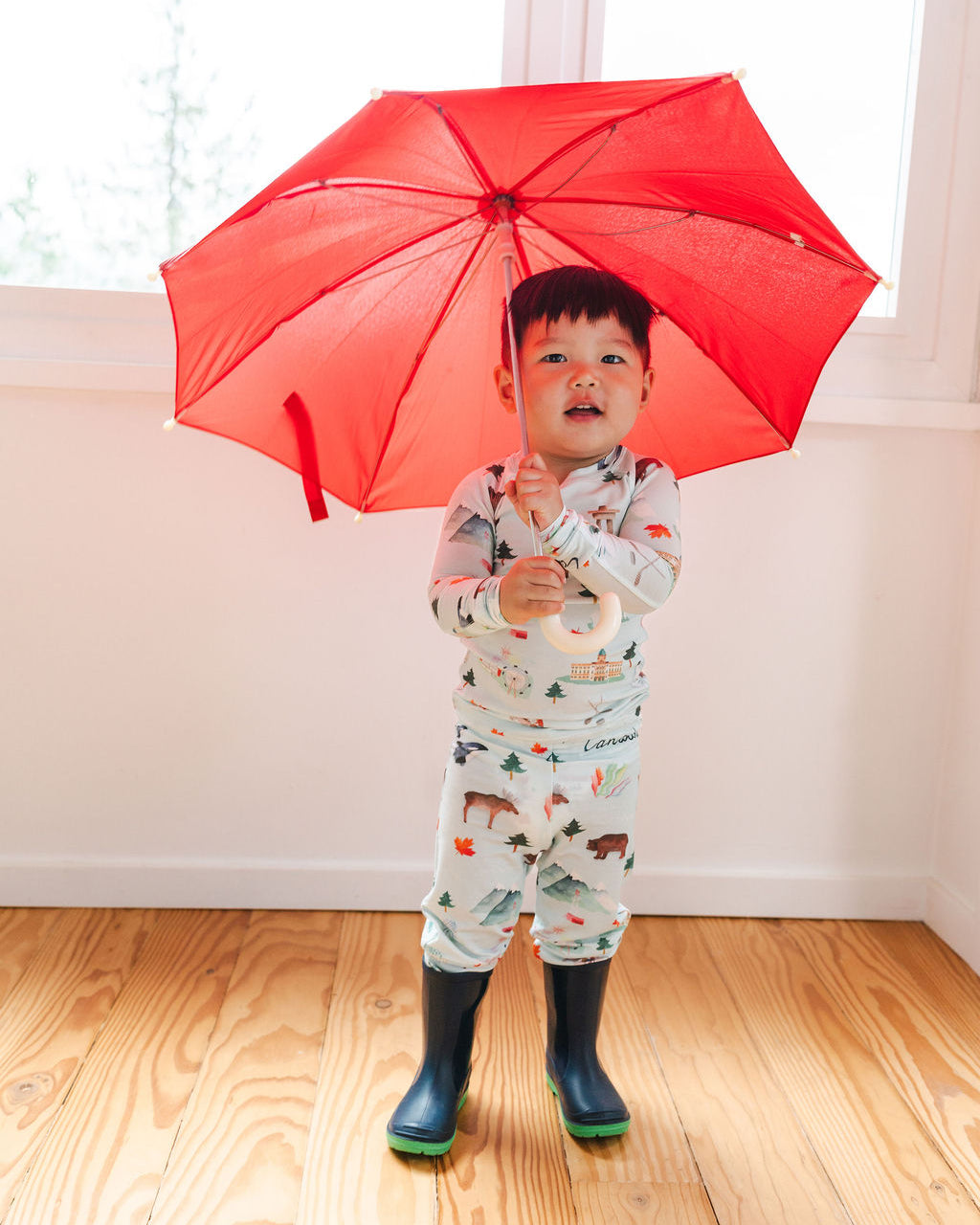
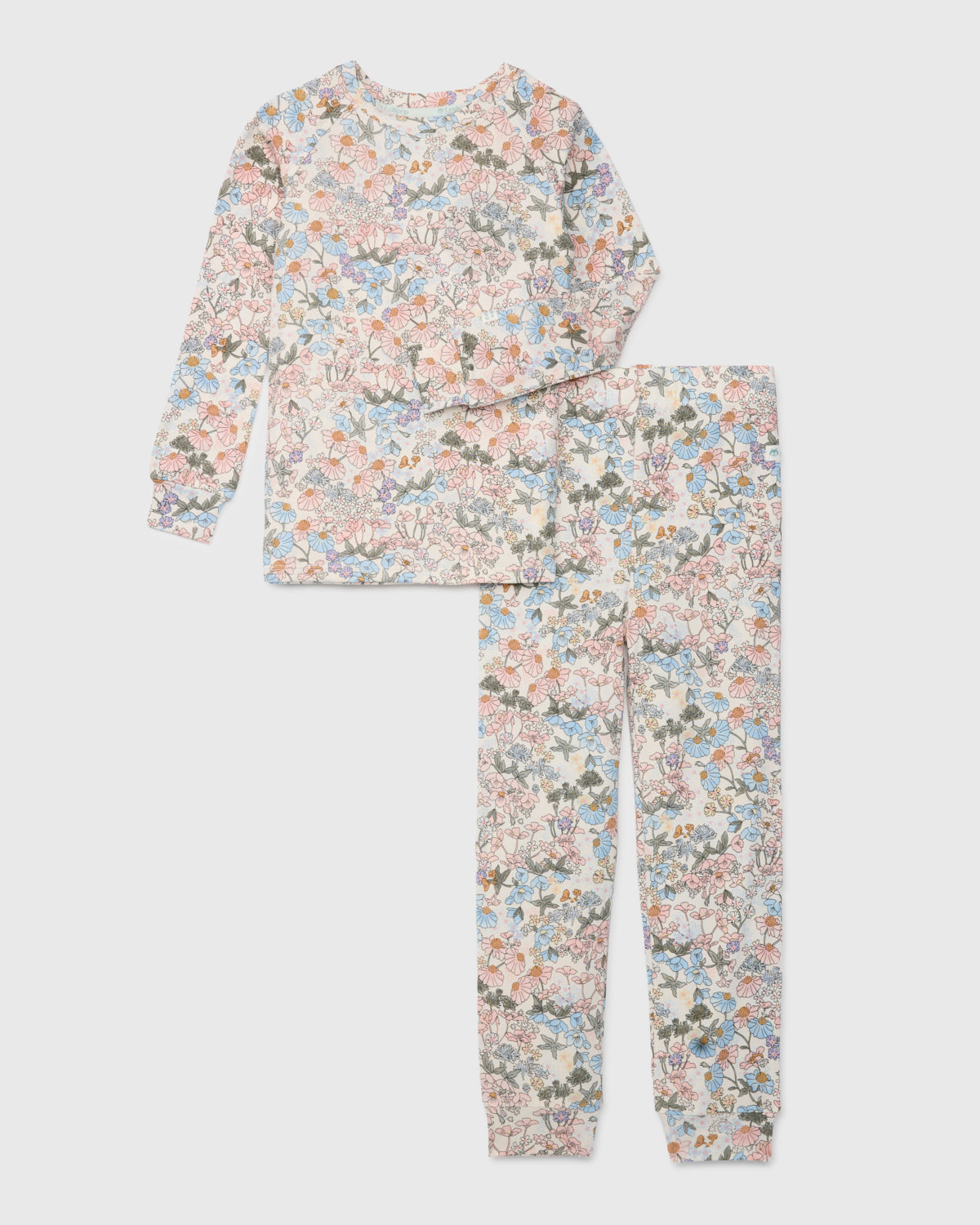
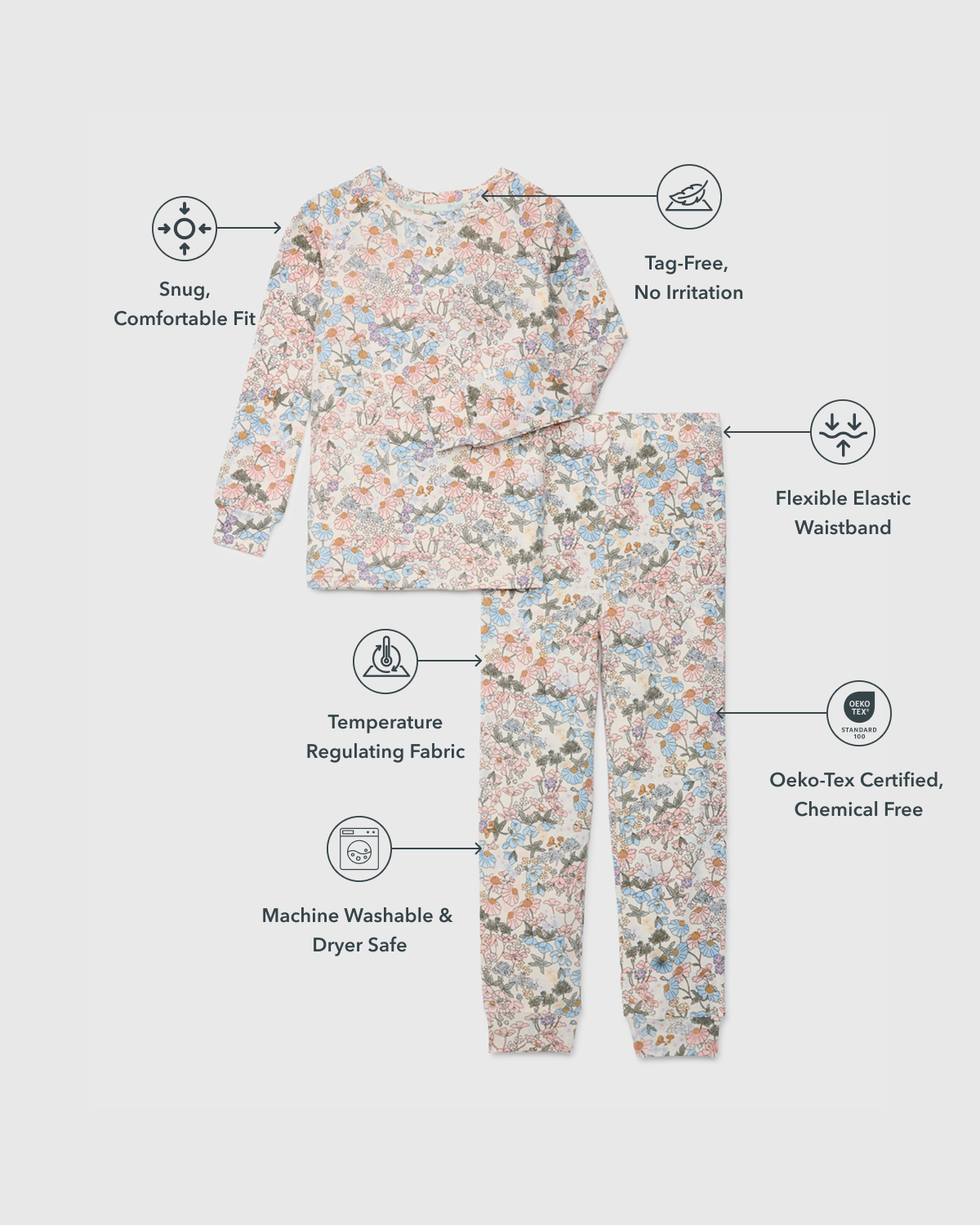
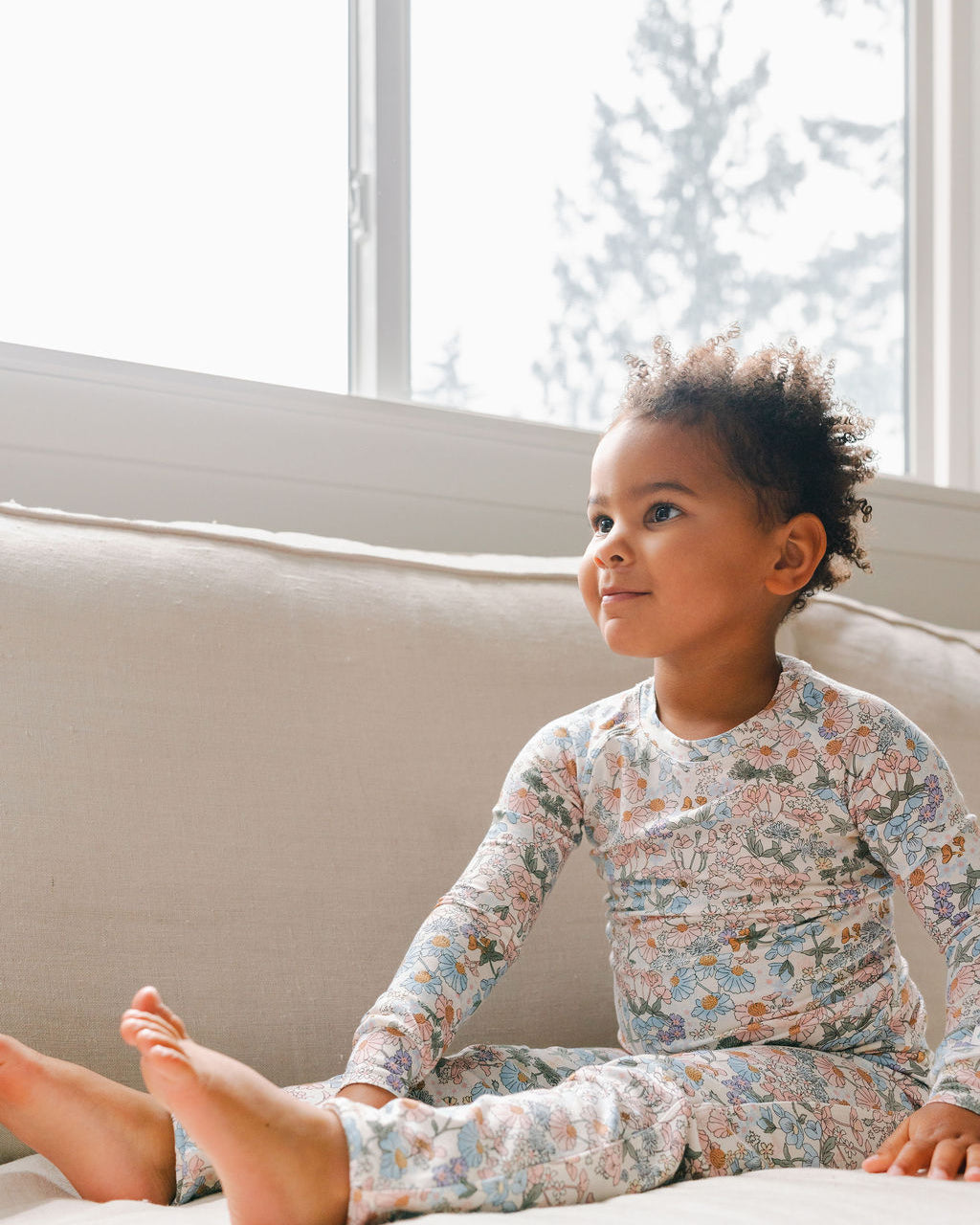
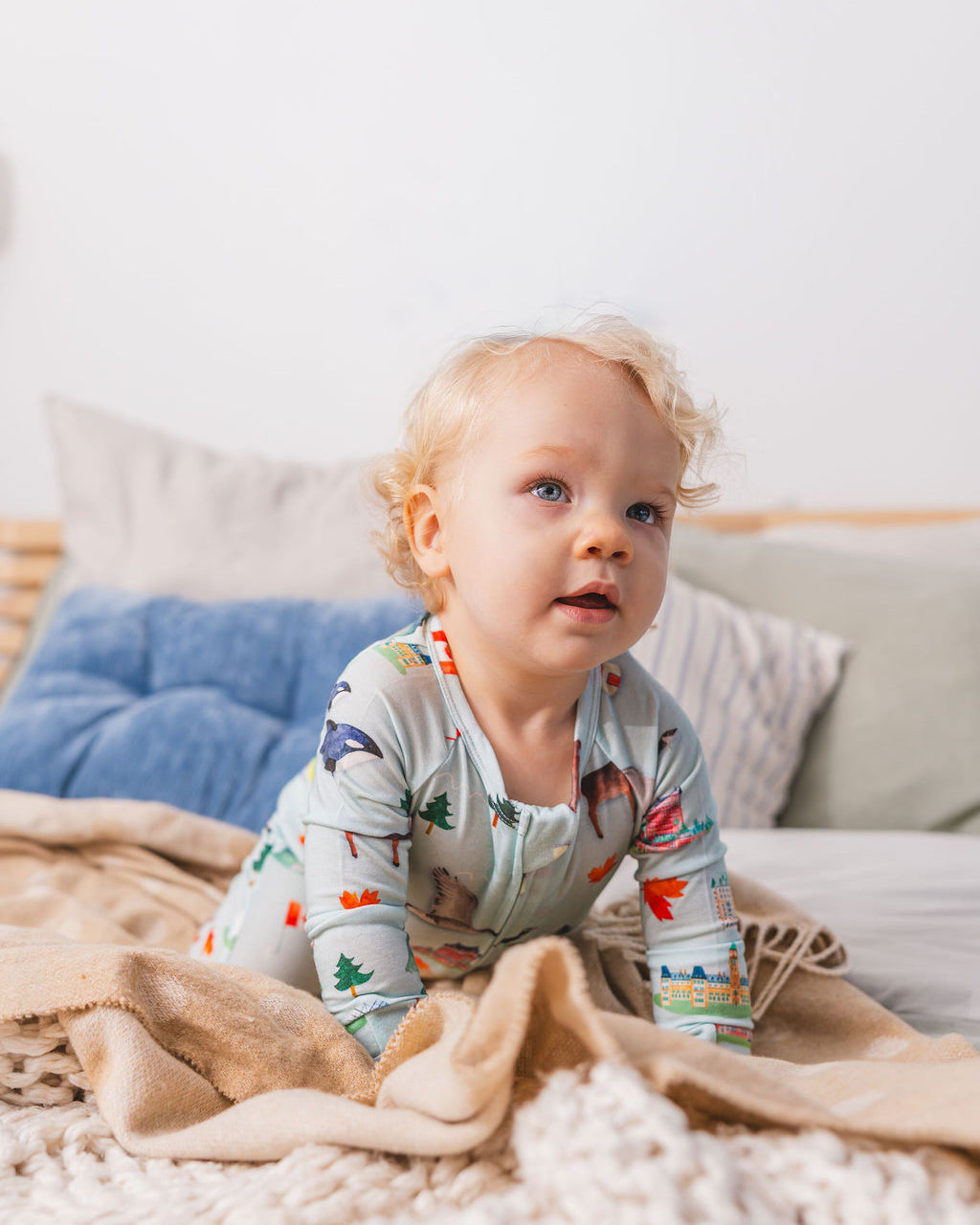
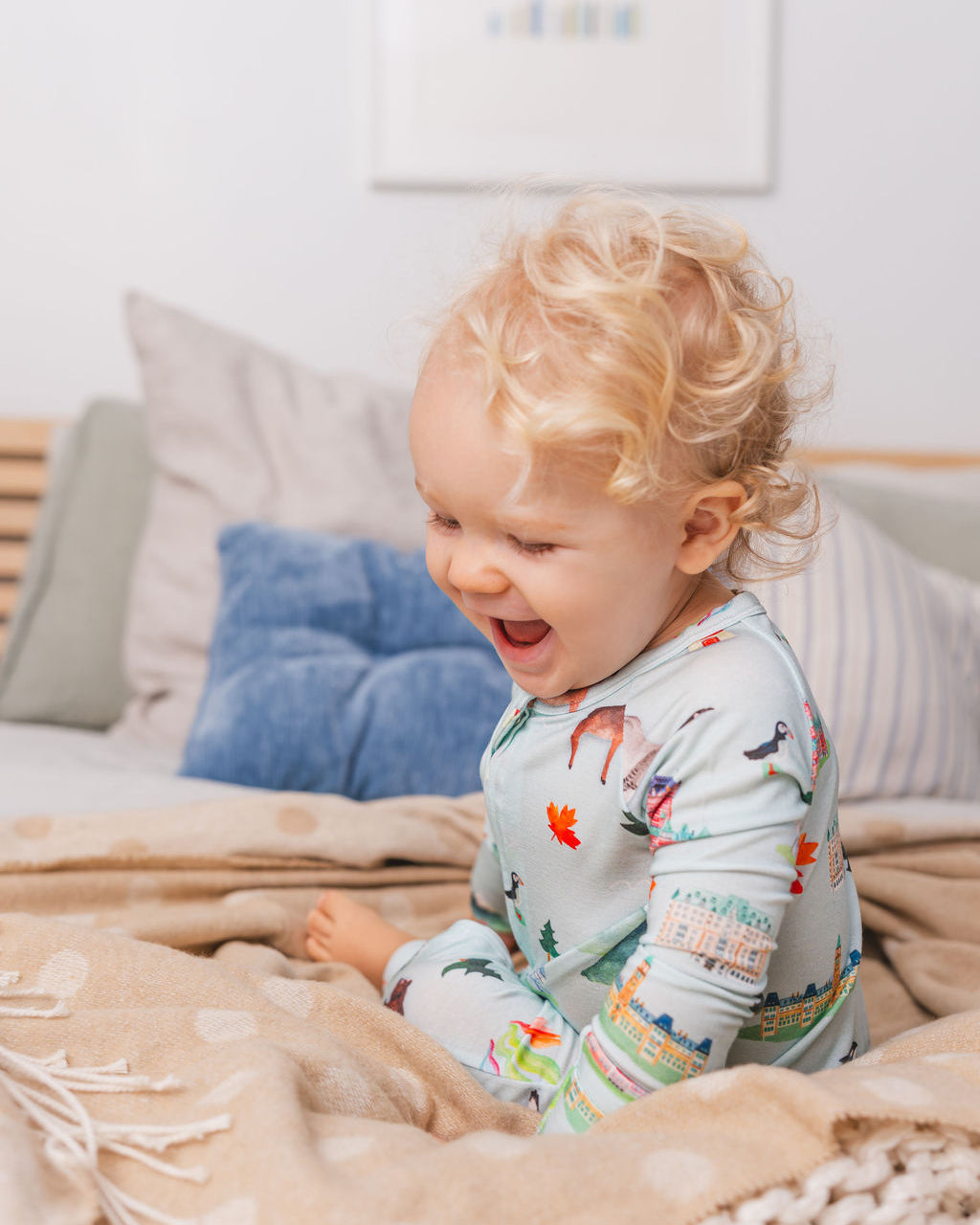
Our TENCEL™ sleepers are designed as the perfect under-layer for sleep bags — or worn solo on warmer nights.
Shop Sleepers & Pajamas
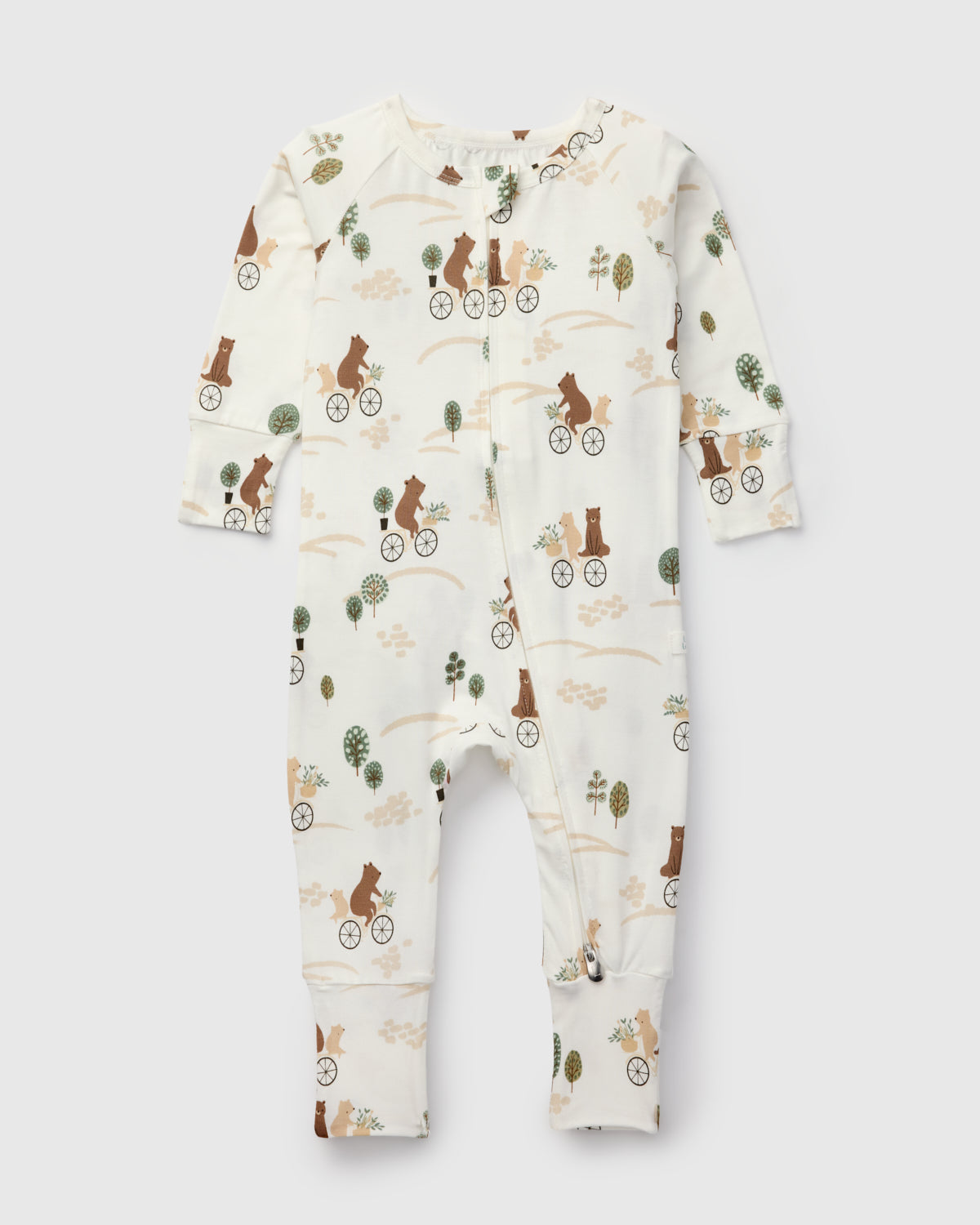
Every print, every size — made from buttery-soft TENCEL™ Lyocell. The under-layer your sleep bag was designed to pair with.





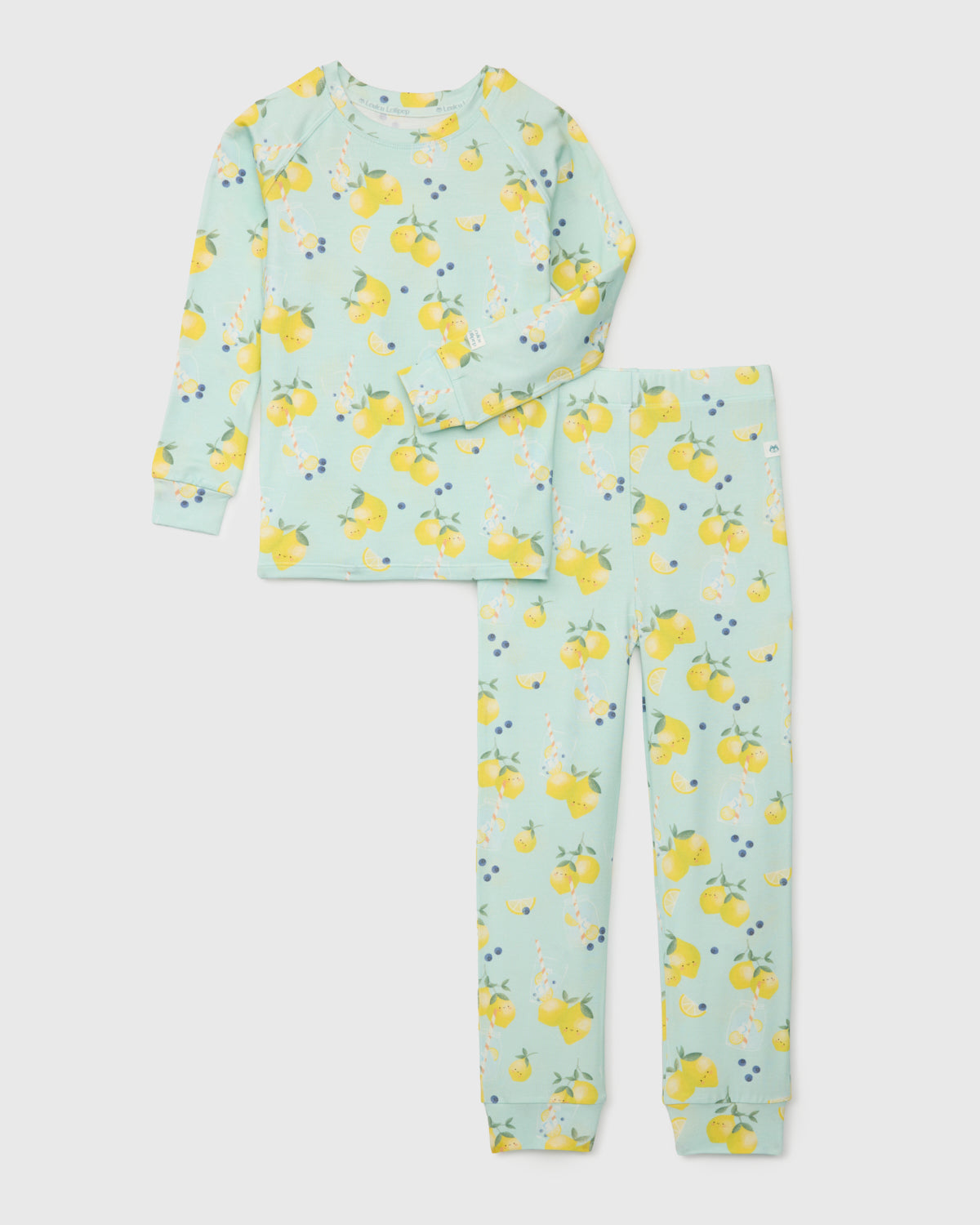


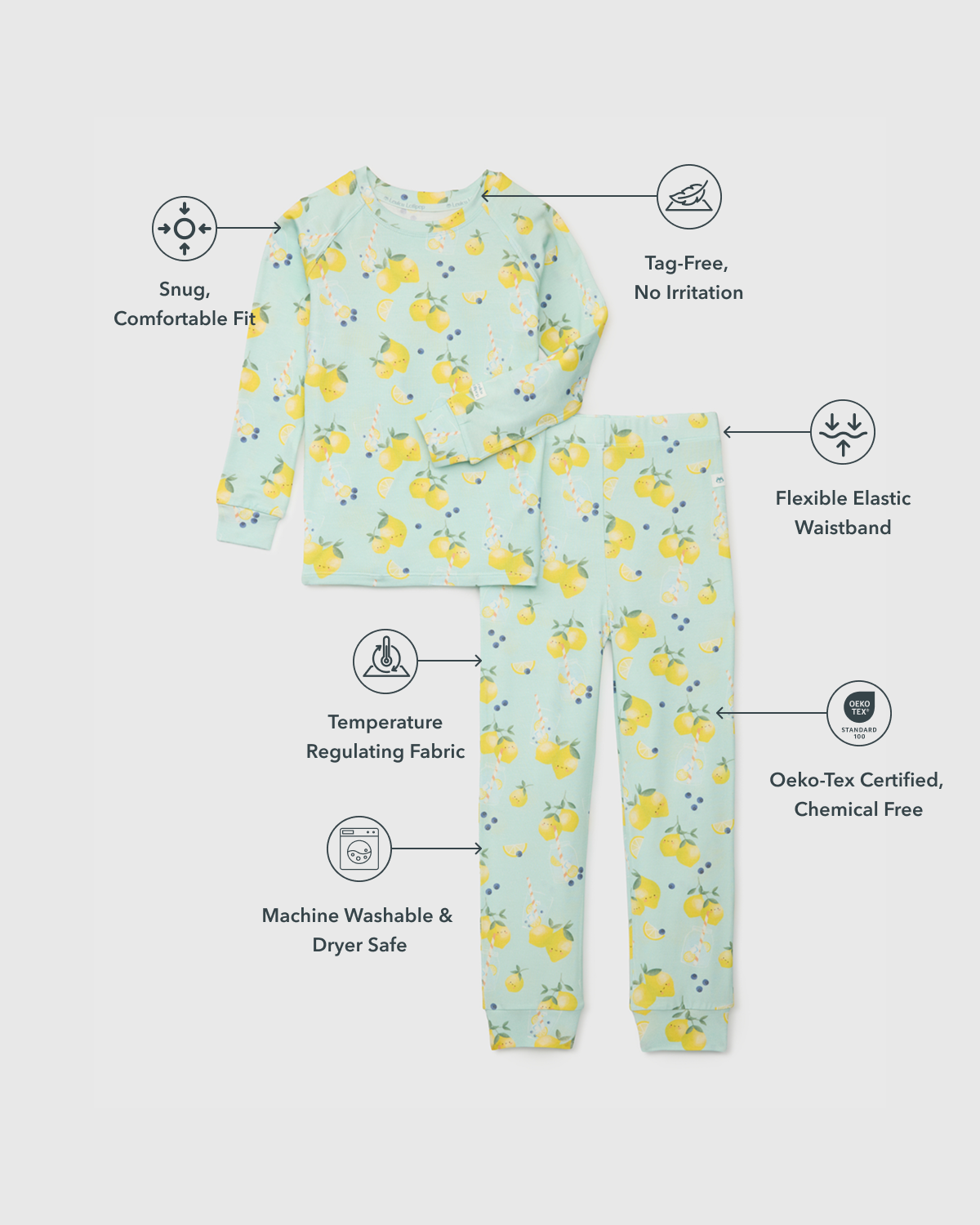
Pairing Your Sleeper with a Sleep Bag
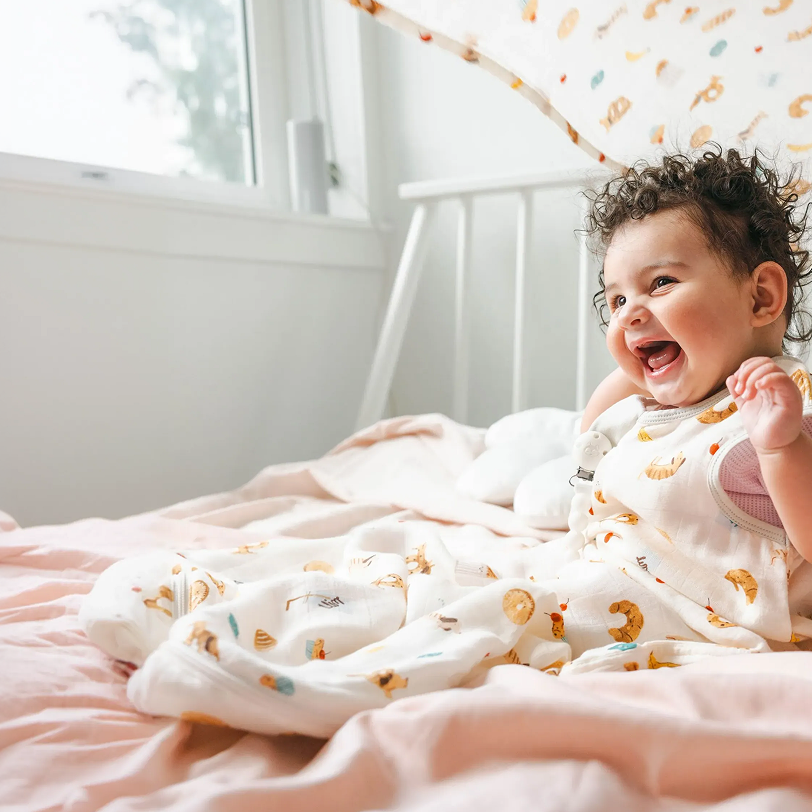
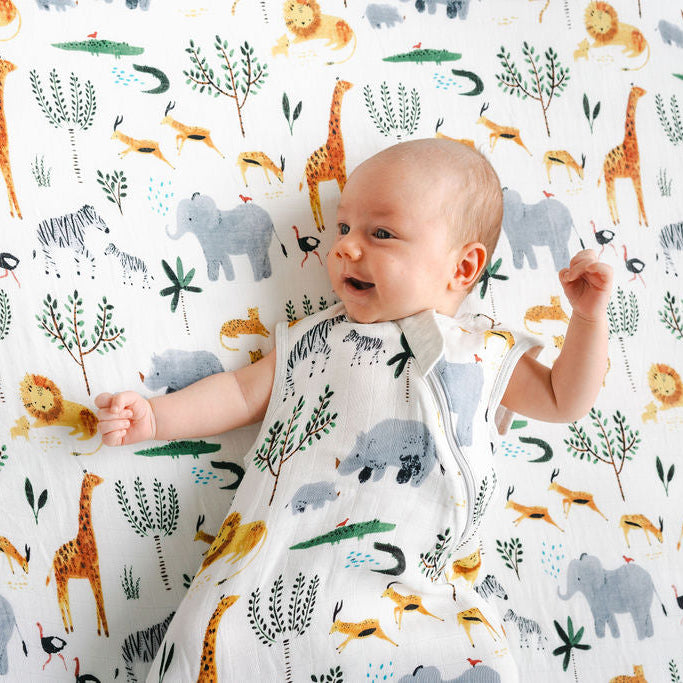
TOG measures how warm a sleep bag keeps your baby. The sleeper is the layer underneath — the variable you control. A TENCEL™ long-sleeve sleeper is the right choice under a 1.0 or 2.5 TOG bag, the two most families use year-round. For rooms above 24°C, skip the sleeper and use a short-sleeve bodysuit under a 0.5 TOG bag instead.
- 0.5 TOG – Summer / warm rooms (24°C–27°C · 75°F–81°F): Lightweight and breathable. Ideal when room temperature stays above 24°C. Pair with a short-sleeve bodysuit or light onesie underneath.
- 1.0 TOG – Spring, fall & mild rooms (20°C–24°C · 68°F–75°F): Our most popular weight. Versatile enough for year-round use in most homes. Pair with a long-sleeve bodysuit or fitted sleeper.
- 2.5 TOG – Winter / cool rooms (16°C–20°C · 61°F–68°F): Extra warmth for cold bedrooms or winter nights. Pair with a full-coverage sleeper for the coldest rooms.

Pairing tip: a TENCEL™ long-sleeve sleeper under a 1.0 TOG sleep bag works in most Canadian homes year-round. Add a 2.5 TOG bag for winter. One sleeper, two bags — that's the system.
Why the Under-Layer Matters

Most parents focus on the sleep bag TOG rating — but what baby wears underneath determines whether the system actually works. Cotton traps moisture against the skin. That's why a baby in a cotton onesie under their sleep bag wakes up damp, clammy, and uncomfortable at 2am.
TENCEL™ Lyocell solves this at the source. It's a botanic fiber made from eucalyptus wood pulp, and independent testing shows it absorbs moisture roughly 50% more efficiently than cotton. It keeps wicking where cotton gives up — so your baby stays dry and comfortable for the full 10–12 hours they're in that garment.
Moisture-wicking all night
Pulls sweat away from skin and releases it — doesn't hold it against baby.
Gets softer with every wash
Unlike cotton, TENCEL™ doesn't stiffen or pill over time. The fiftieth wash feels as good as the first.
Gentle on eczema-prone skin
Smooth fiber structure means less friction against skin. The National Eczema Society lists TENCEL™ alongside cotton as suitable for sensitive skin.
Closed-loop production
99% of the solvent used is recycled. Less water, less waste than conventional cotton.
TENCEL™ Sleeper vs Bamboo Rayon Pajamas
Bamboo rayon and TENCEL™ Lyocell both market themselves as premium baby fabrics. Here's how they actually compare over time.
| Loulou Lollipop TENCEL™ Sleeper | Bamboo Rayon Pajamas | |
|---|---|---|
| Fabric feel | Buttery-soft TENCEL™ — smooth against skin | Soft initially — varies by brand and processing |
| Softness over time | Gets softer with every wash | Pills and thins through repeated washing — noticeable by month 3 |
| Moisture management | Wicks sweat away and releases it — baby stays dry | Absorbs but holds moisture — less effective under a sleep bag |
| Sensitive skin | Smooth fibre, minimal friction — eczema-friendly | Depends on processing quality — rayon treatment varies widely |
| Durability | Surface holds through 50+ washes | Degrades faster — especially with 3–4 washes per week |
| Production | Closed-loop — 99% solvent recycled, botanic source | Heavy chemical processing to convert bamboo into rayon fibre |

Designed for Babies, Built for Parents
Every detail on a Loulou Lollipop sleeper exists for a reason.
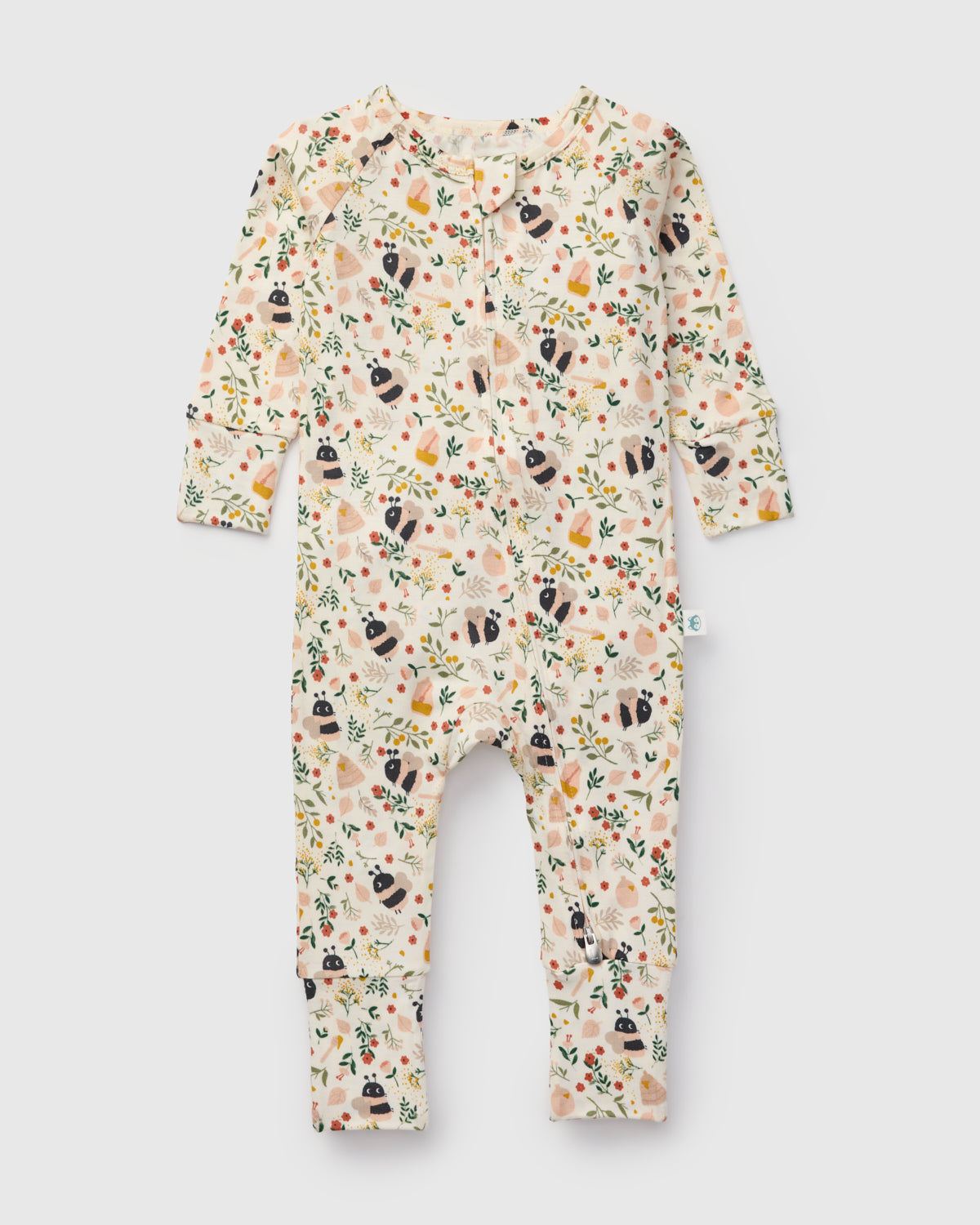
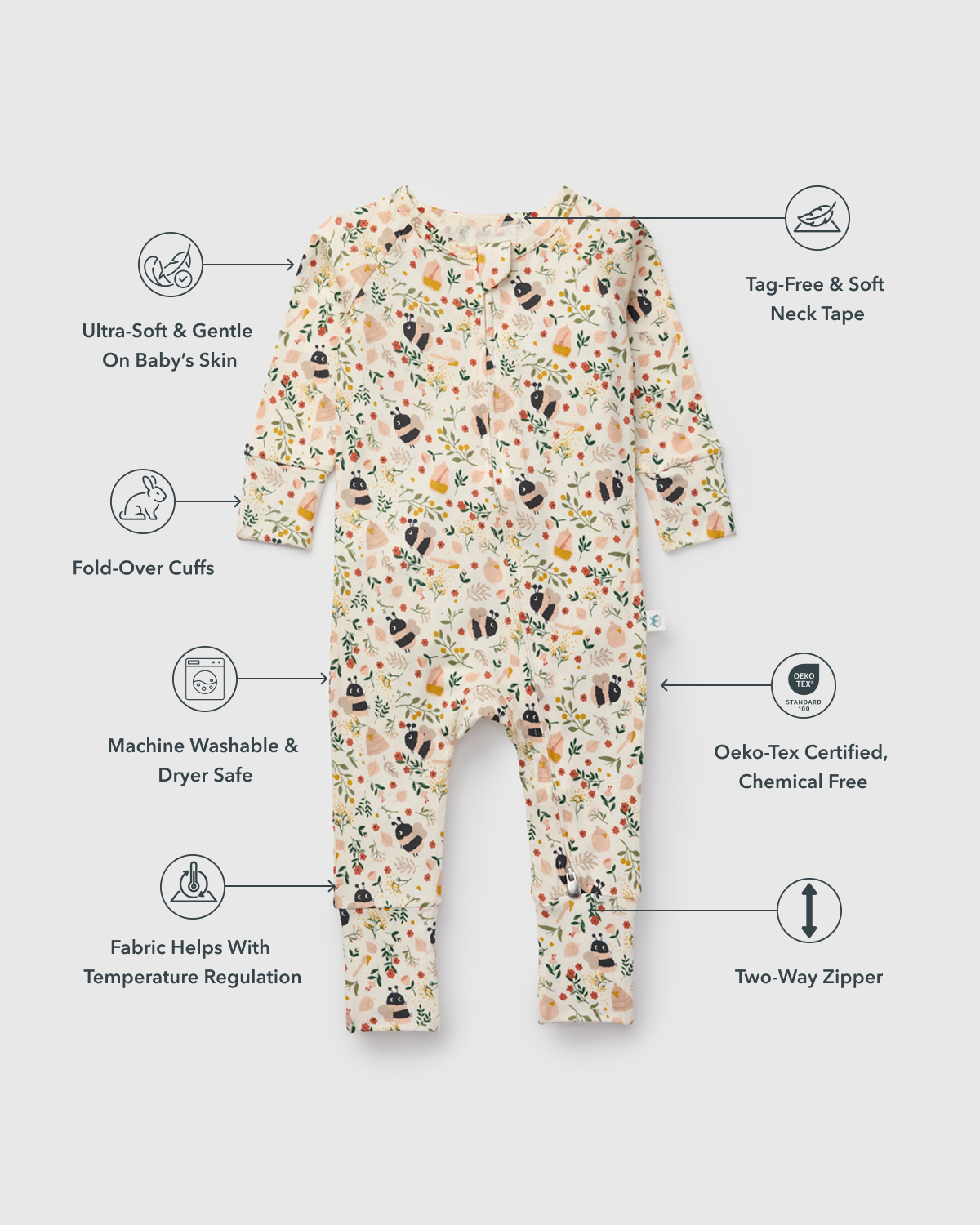
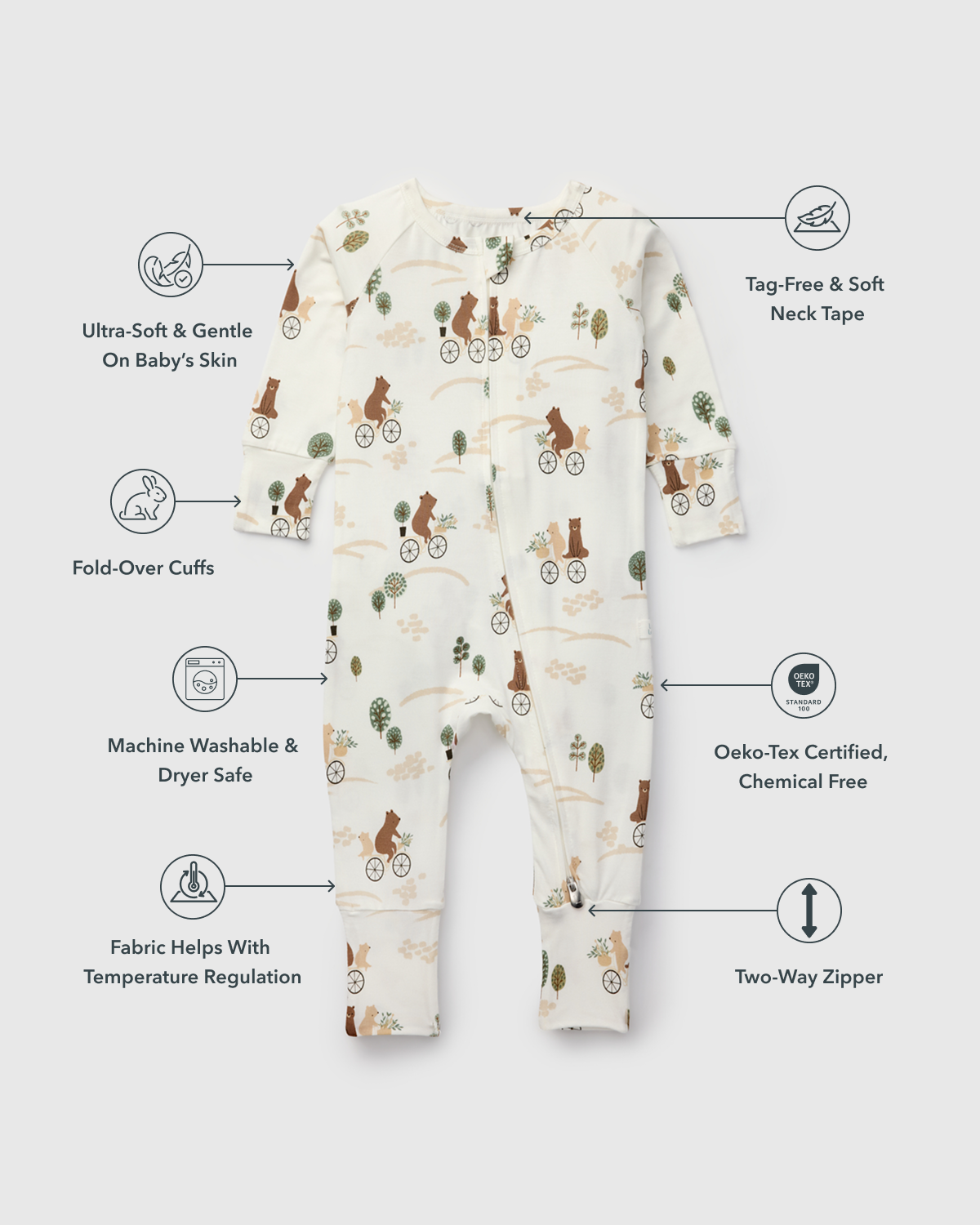
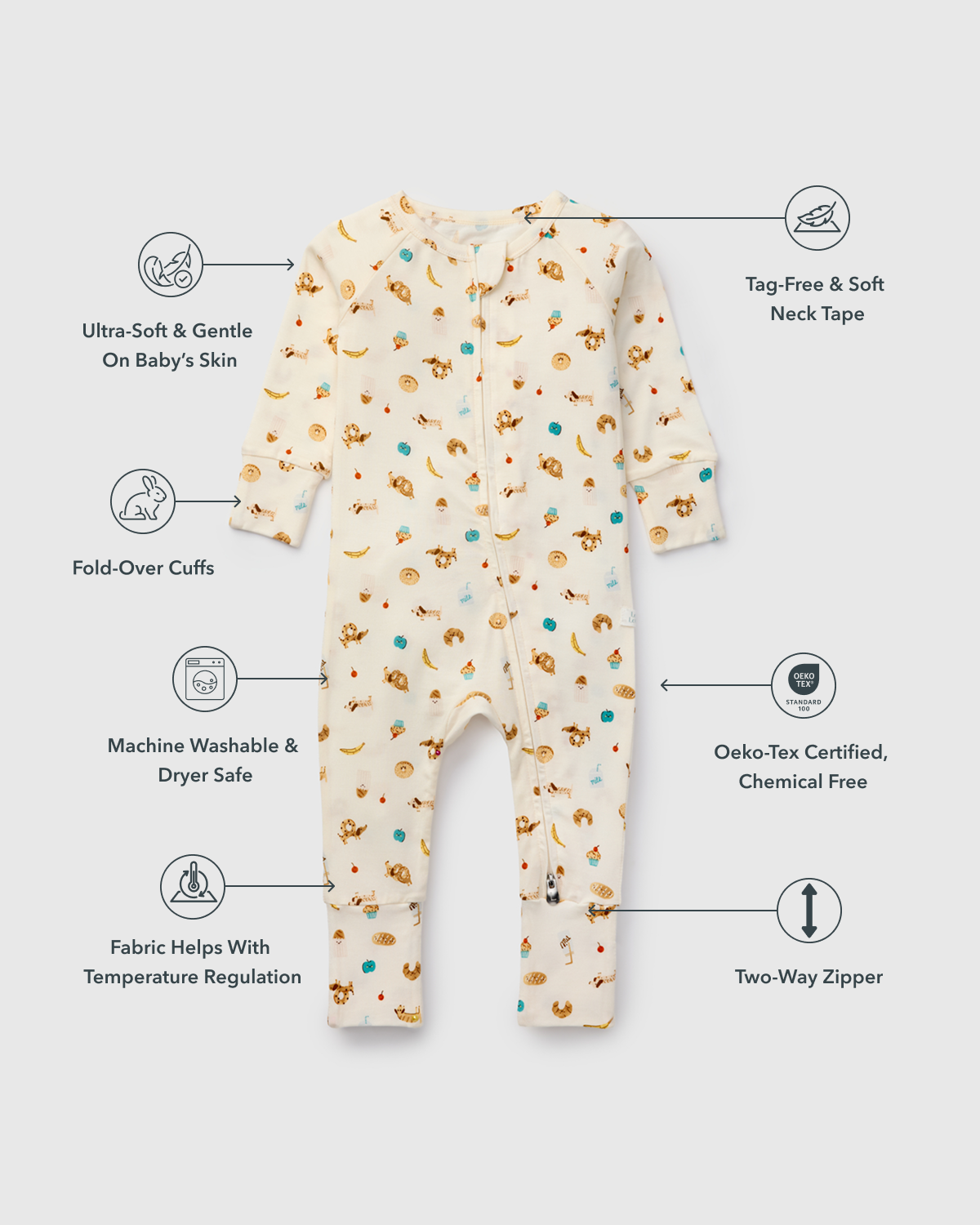
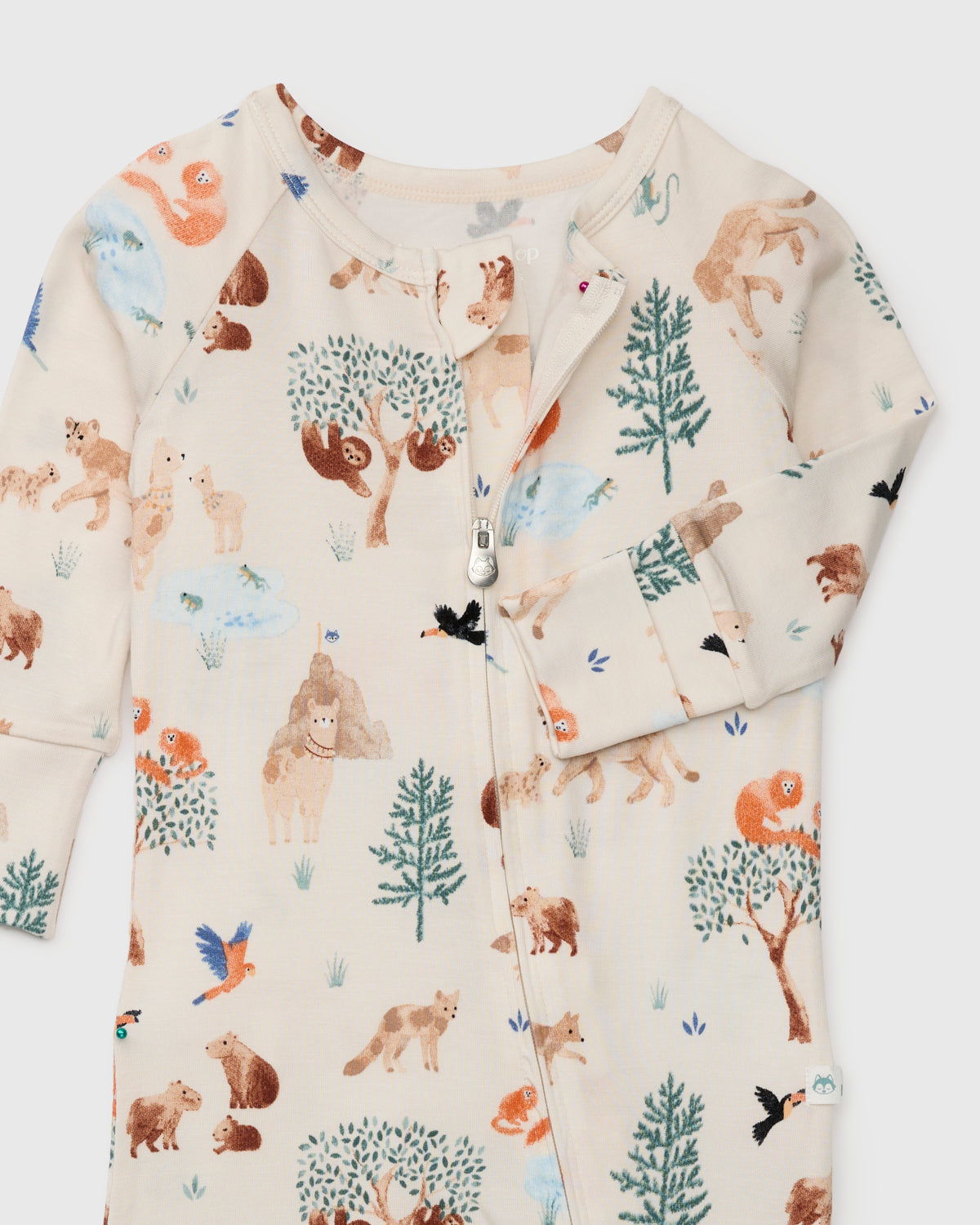
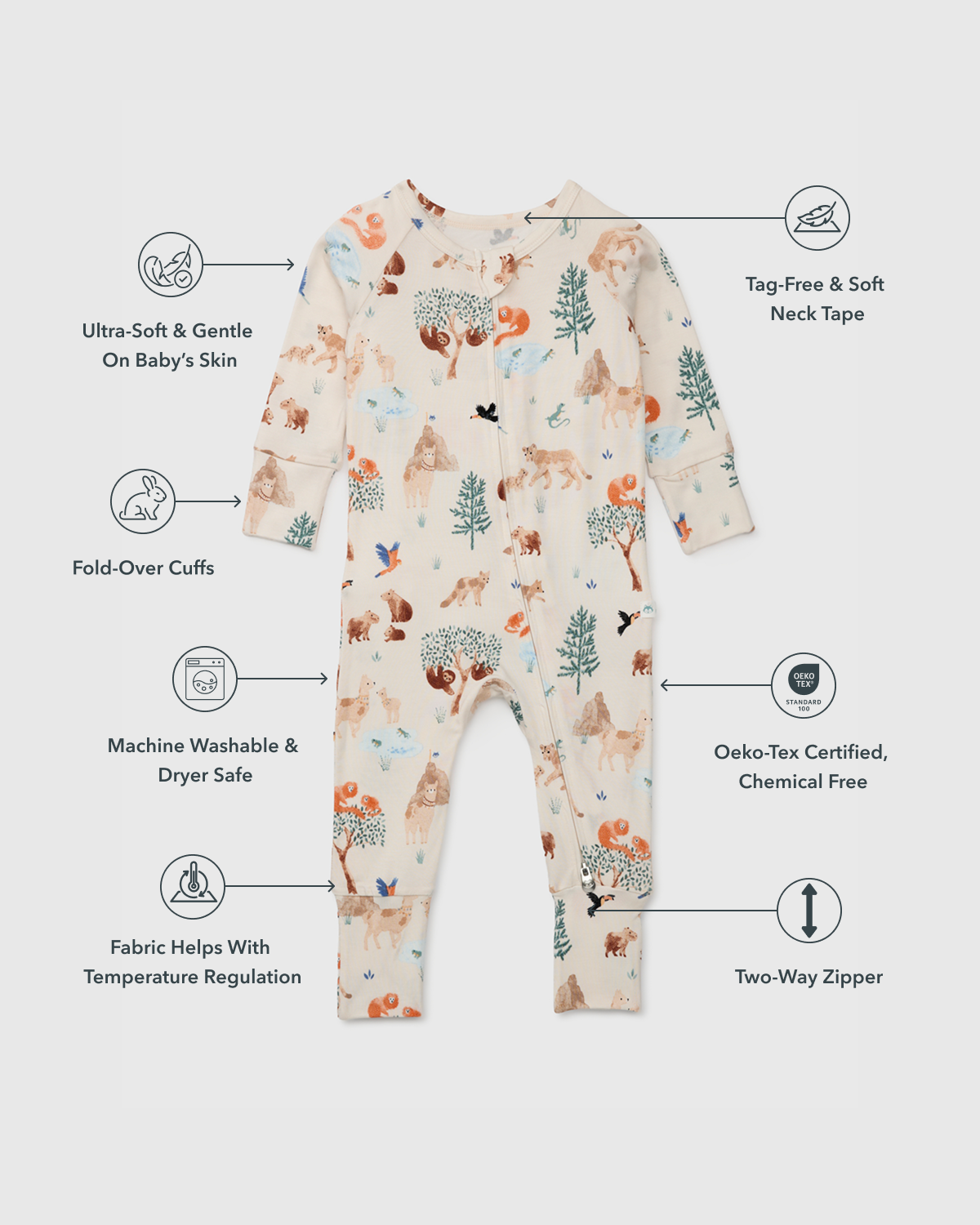
- 2-way zipper — opens from the bottom for nighttime diaper changes without fully unwrapping baby
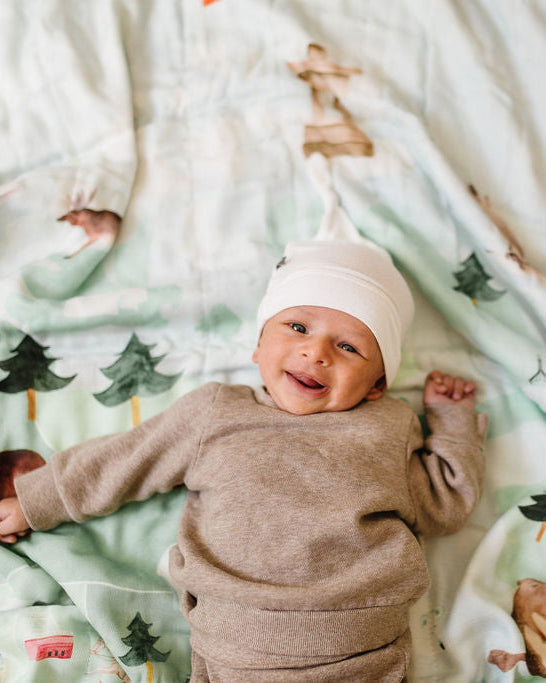
- Fold-over hand cuffs — built-in mitts protect newborn faces from scratches, fold back as baby grows
- Footed design — no separate socks to lose, keeps feet warm all night
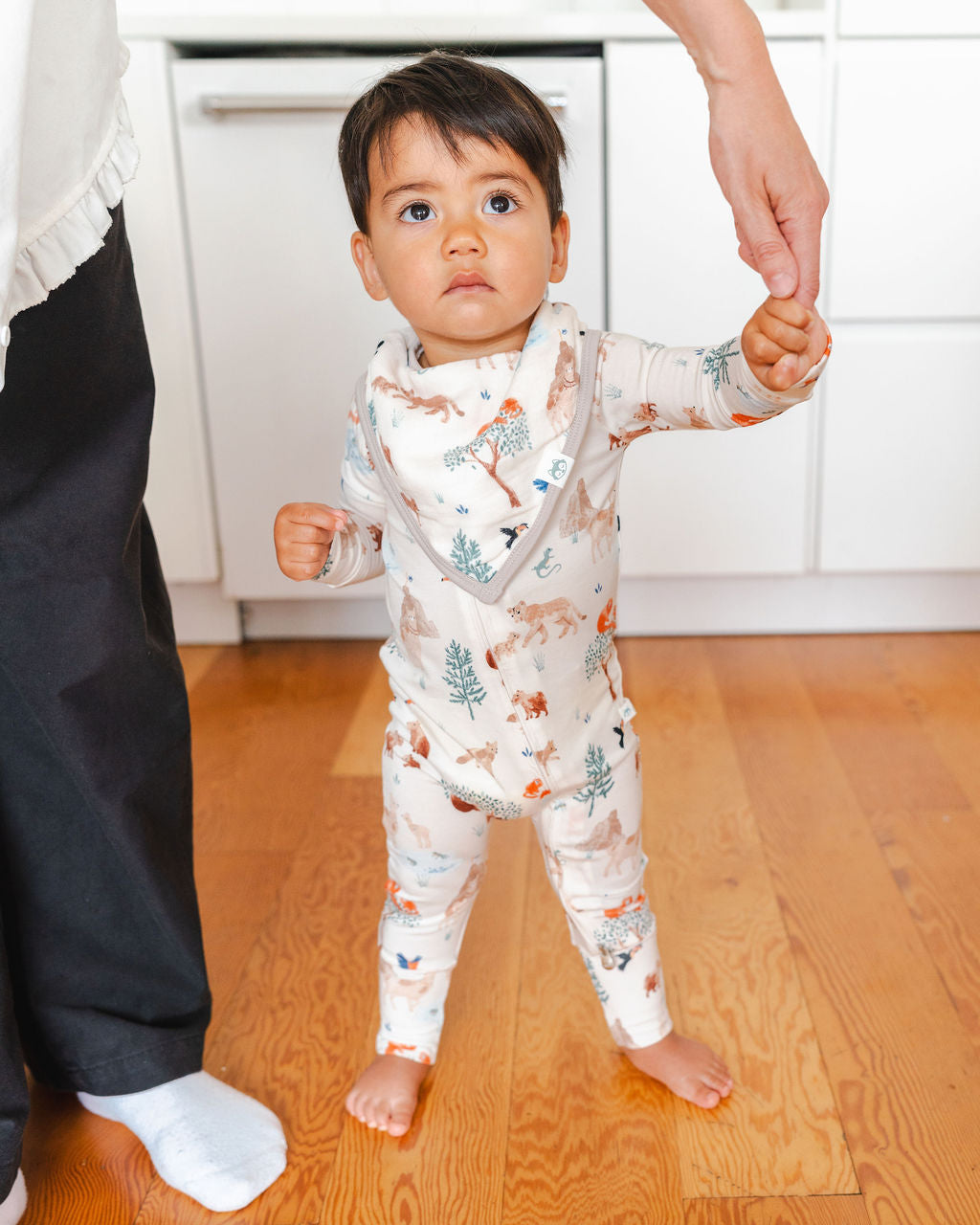
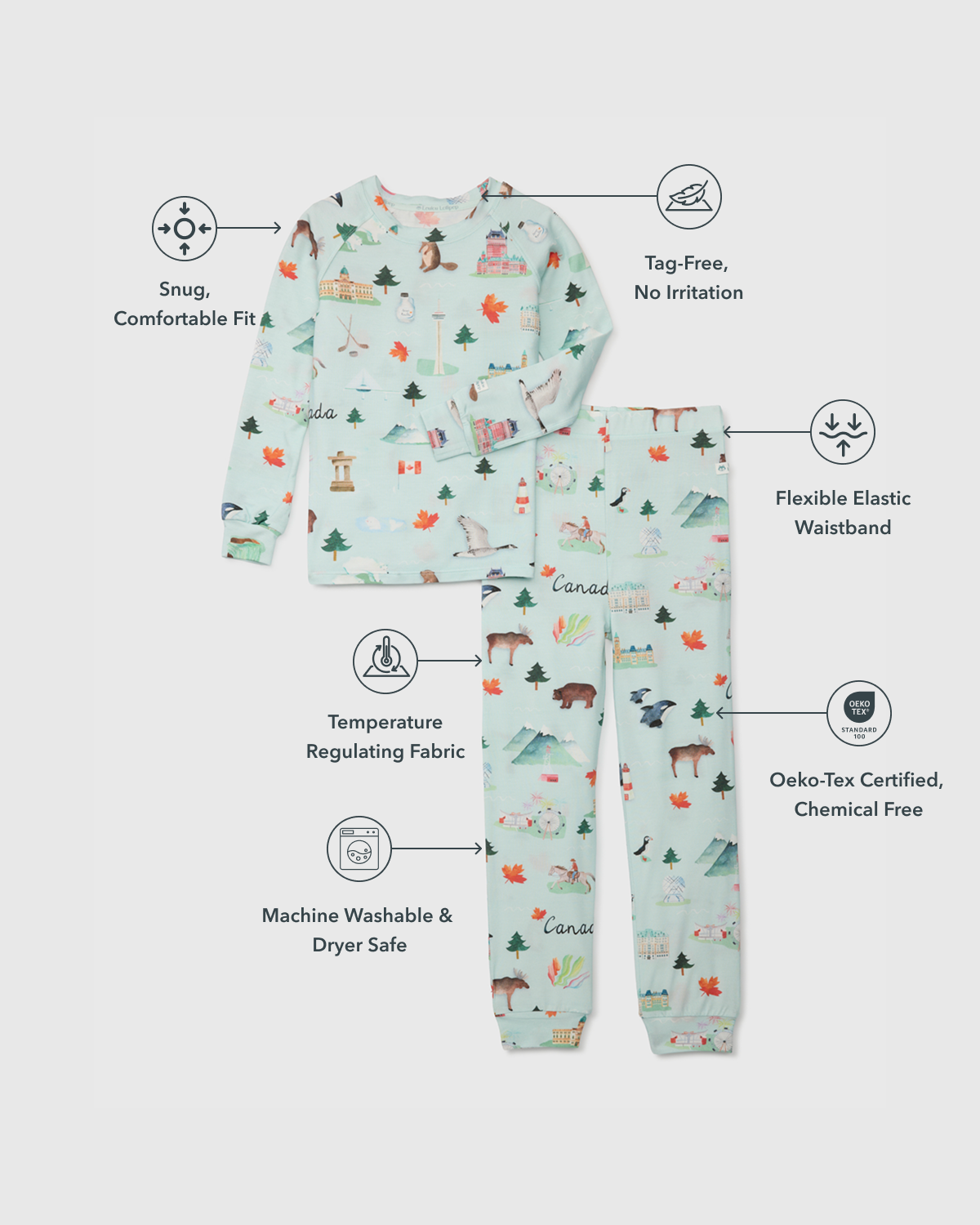
- Snug fit — close-fitting per safe sleep guidelines, no excess fabric in the crib
- Hidden zipper guard — smooth against delicate skin at the chin and neck
- Sizes NB–4Y — grown with your baby, sized by weight and height not age
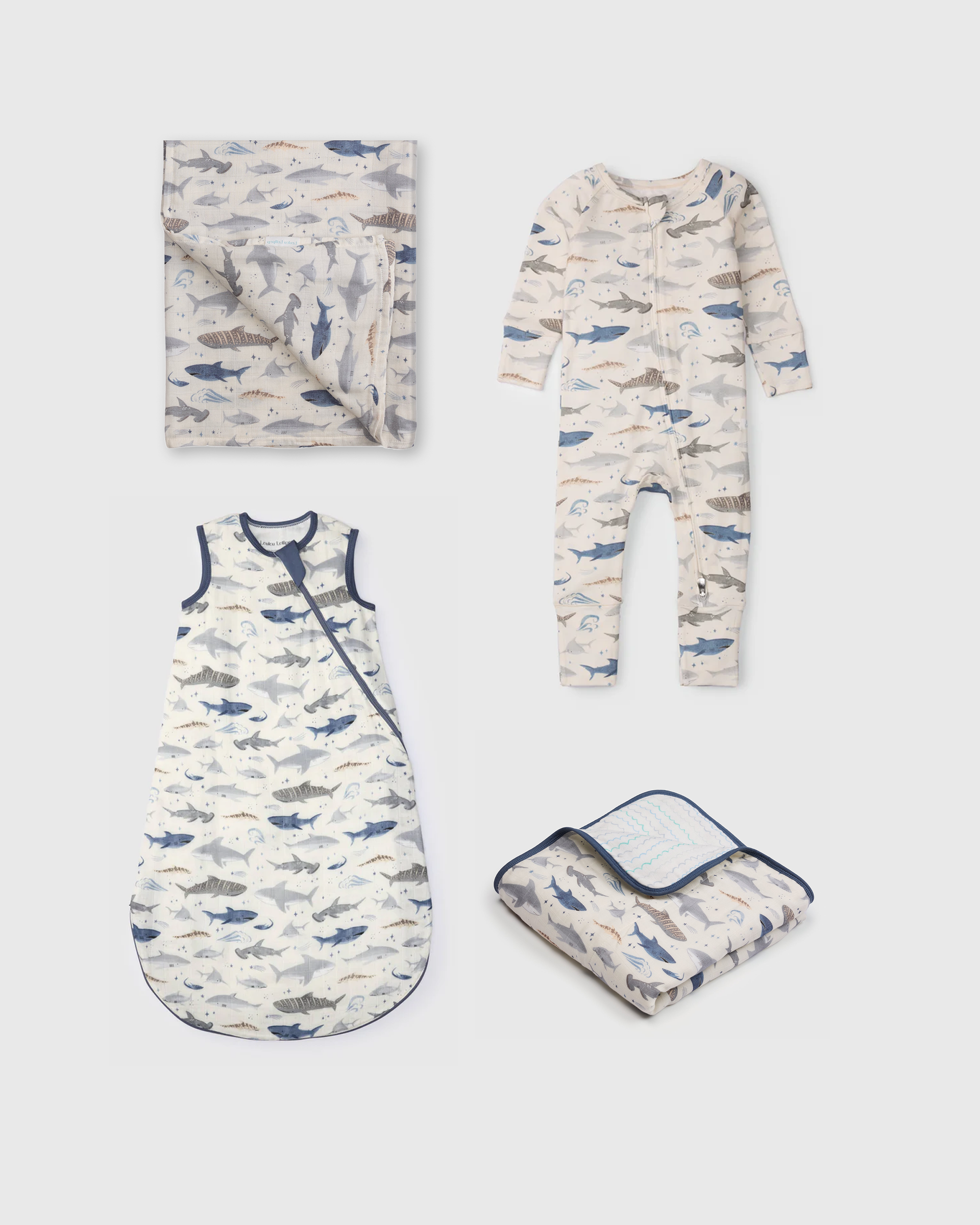
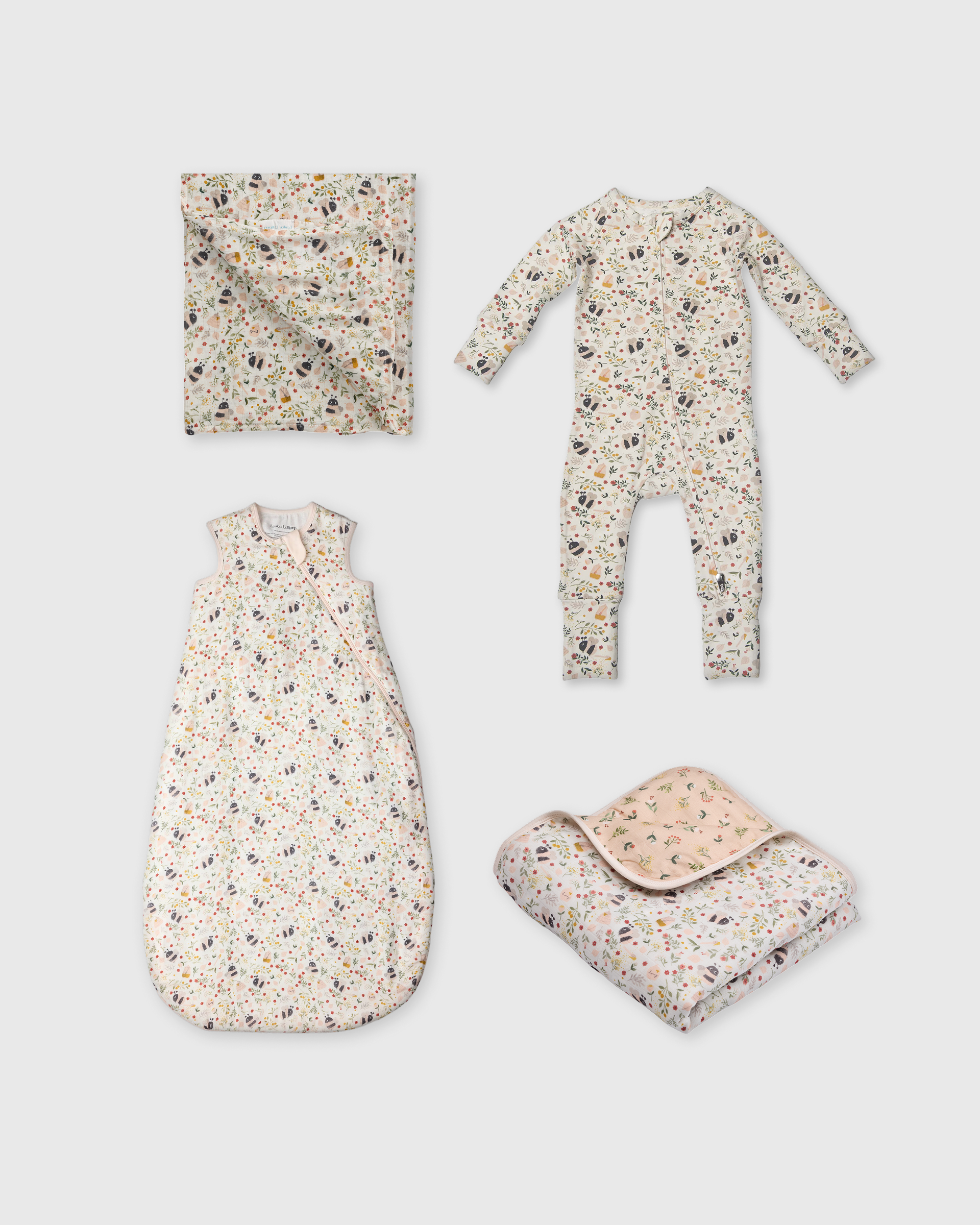
Save with a Sleep Starter Bundle
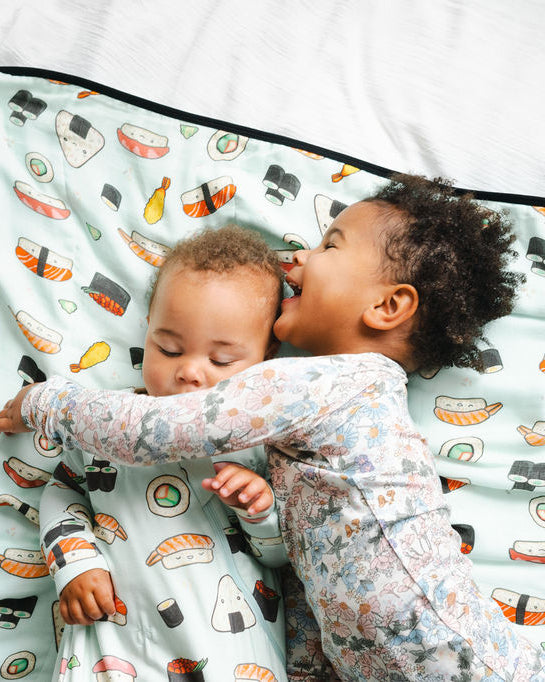
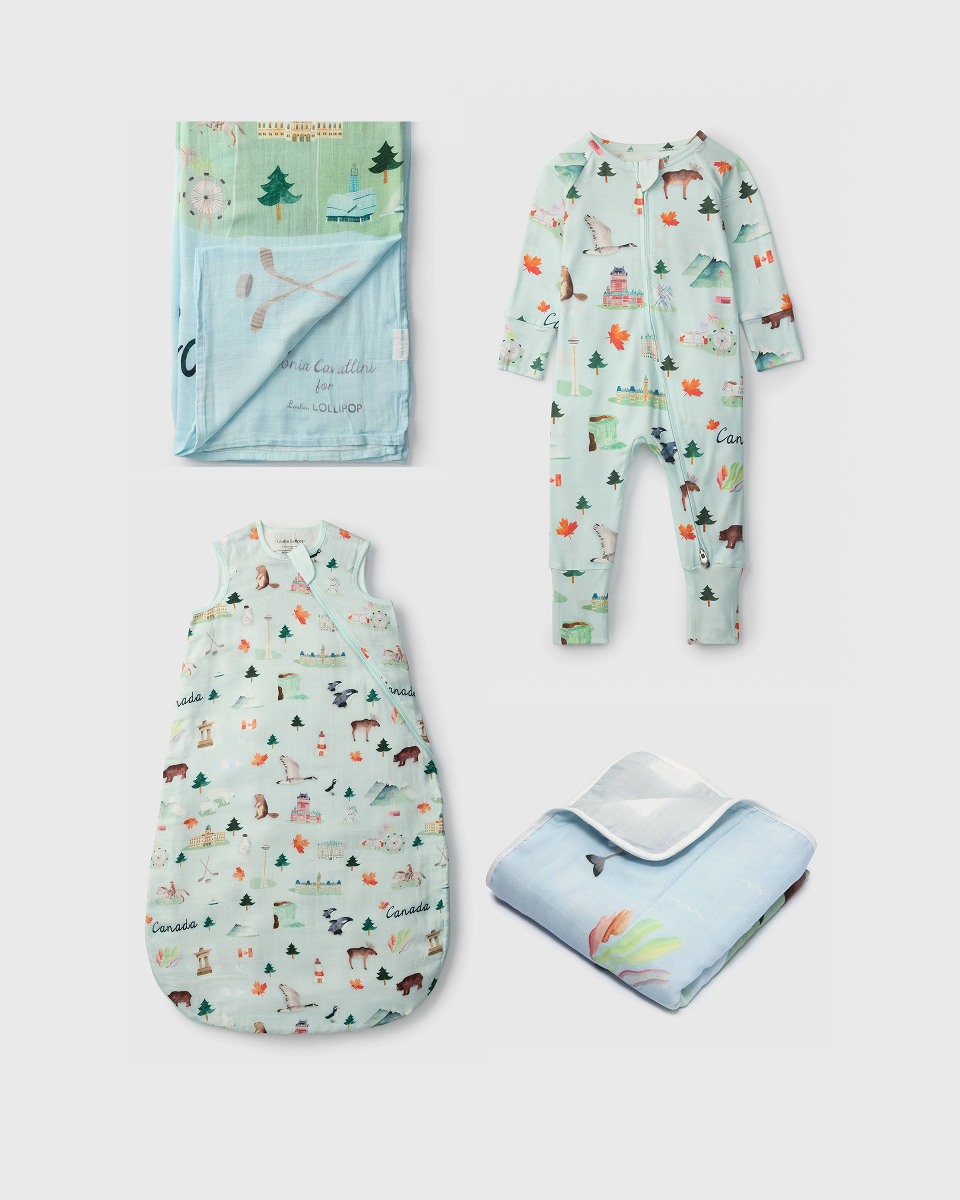
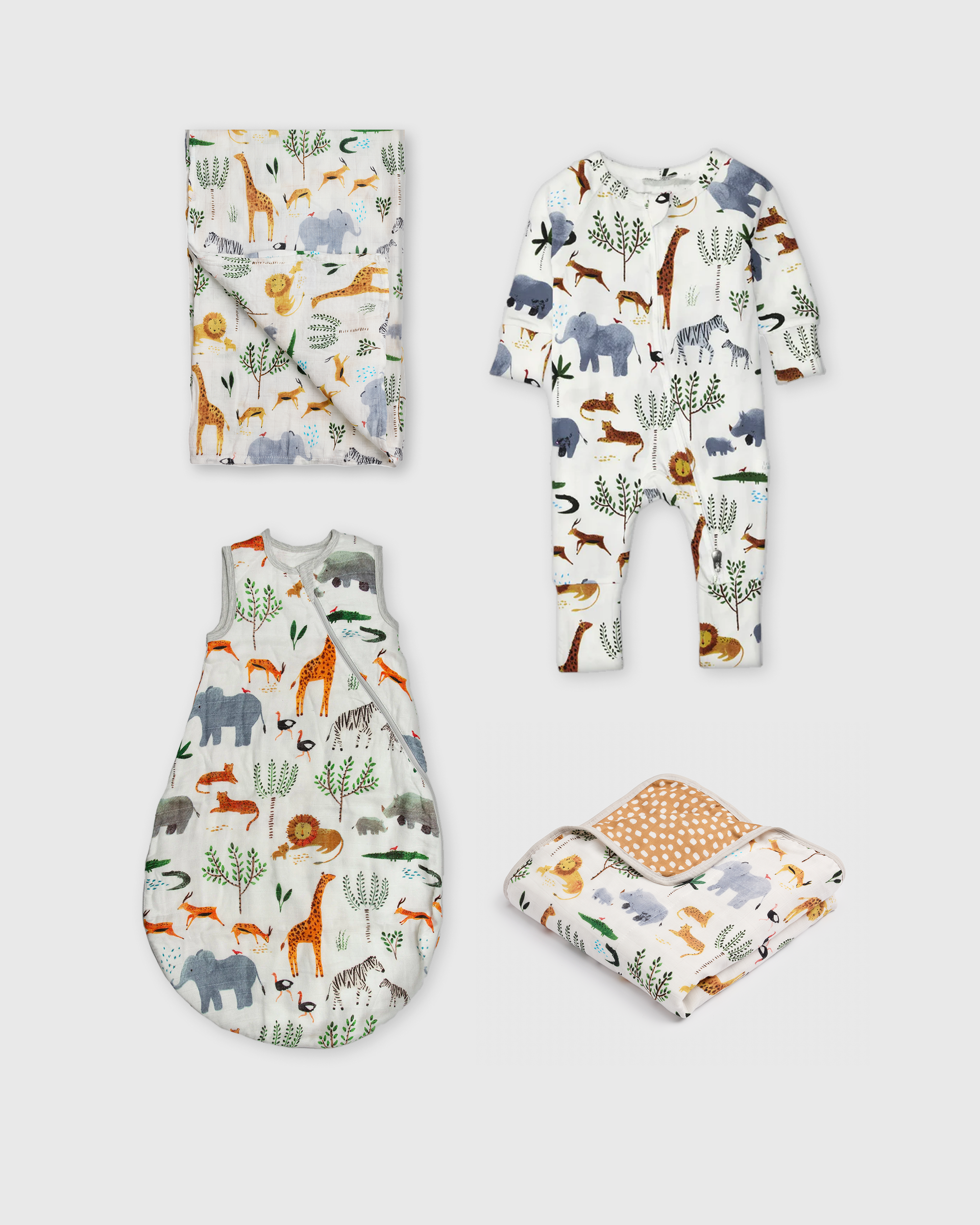
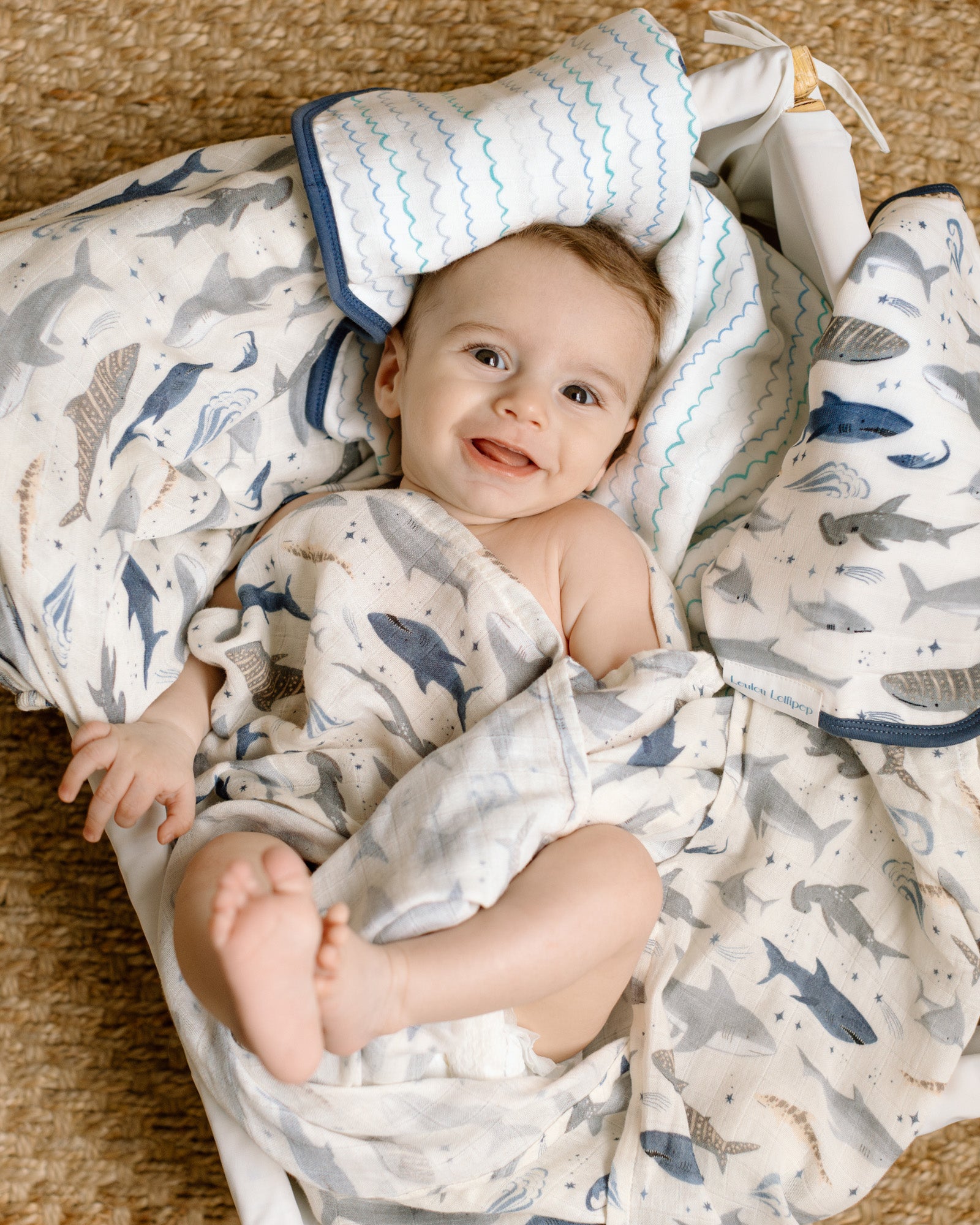
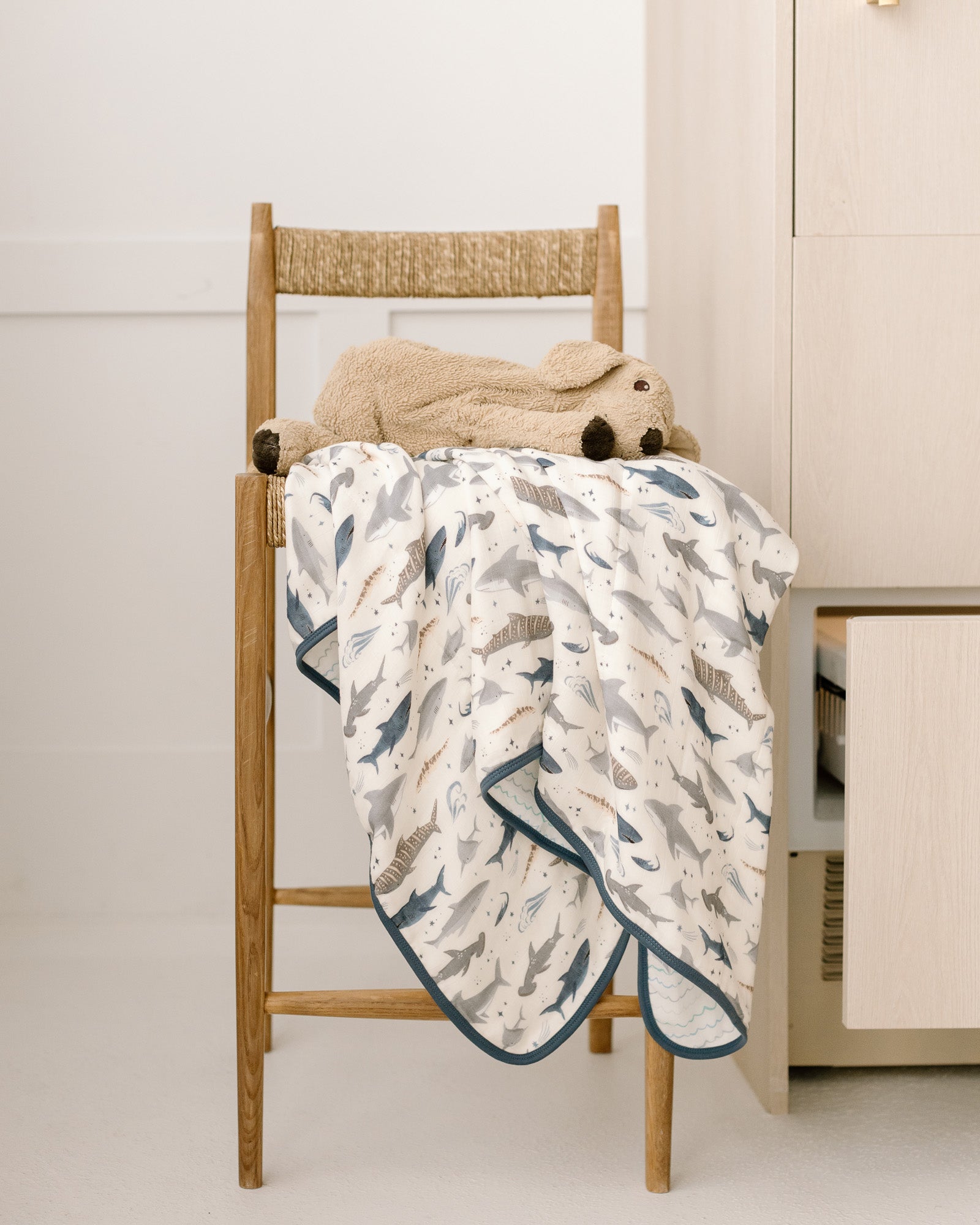
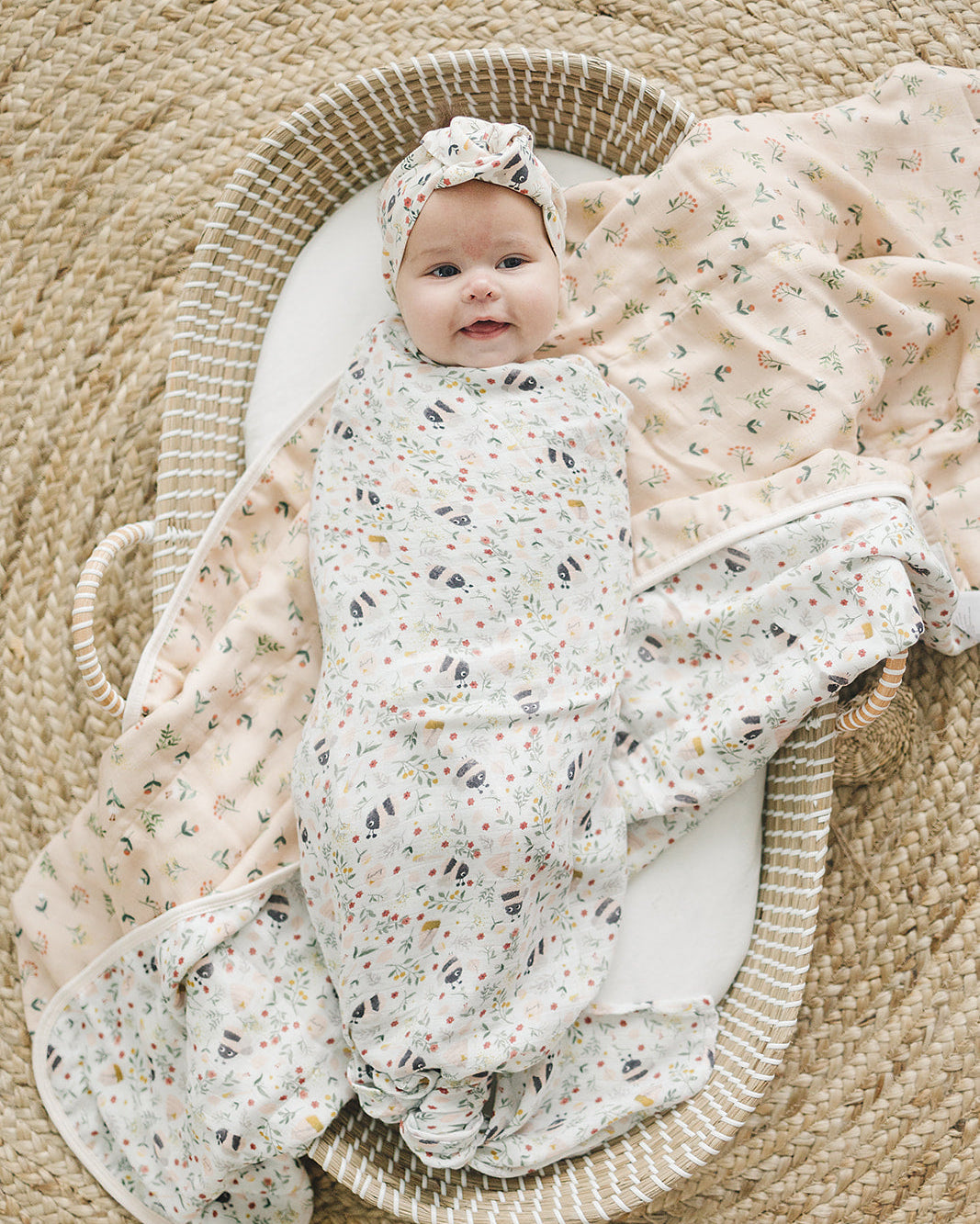
Pair the sleeper with a matching sleep bag, swaddle, and quilt. Same print, fully coordinated, 14% off the set.
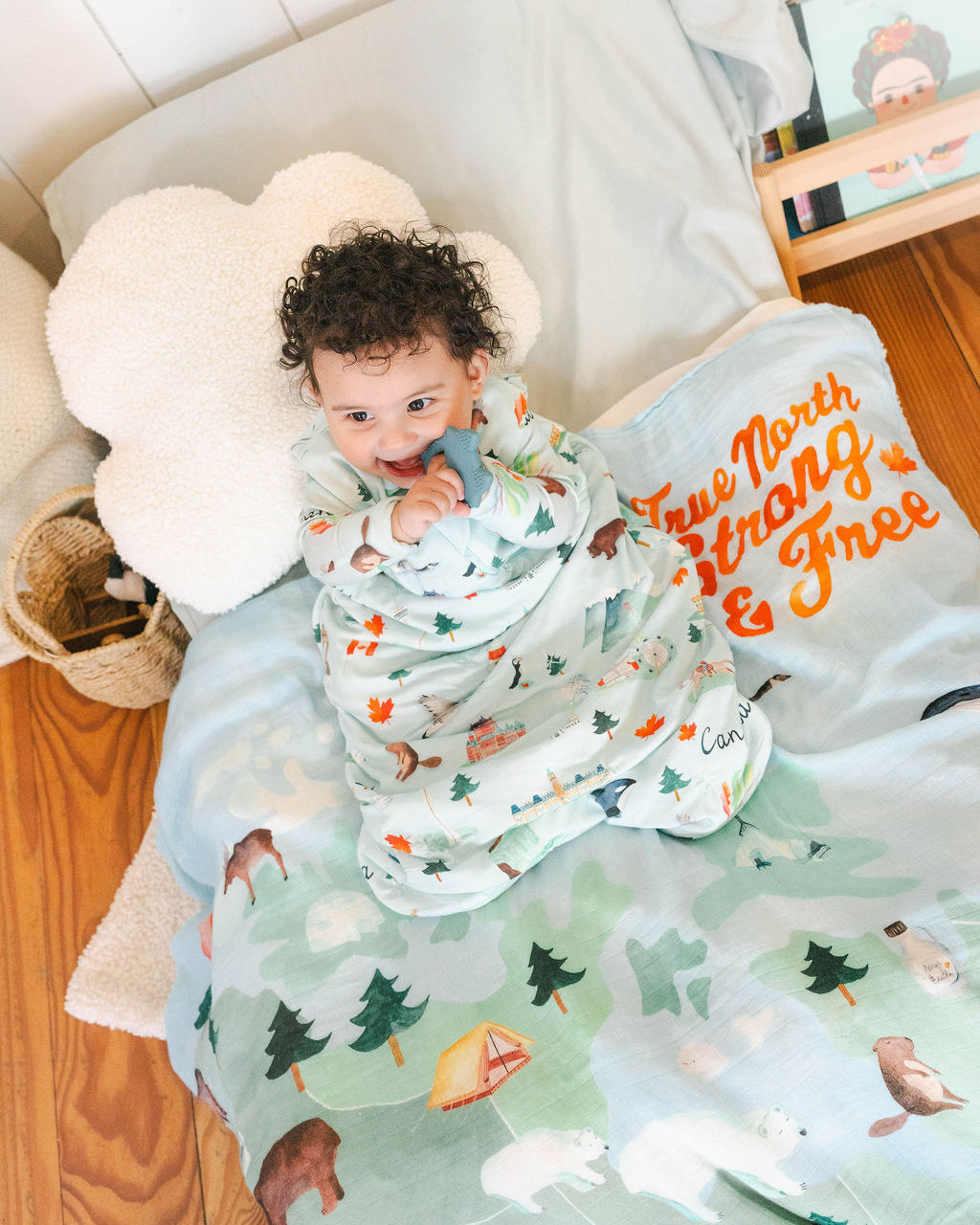



Care & Sizing
How do I wash a TENCEL™ sleeper?
Machine wash cold on a gentle cycle. Tumble dry low or hang dry. No bleach, no fabric softener — softener coats the fibres and reduces moisture-wicking performance over time. TENCEL™ actually gets softer with each wash, so no special treatment needed.
What size should I get?
Sleepers are sized by weight and height, not age. Check the size guide on the product page for exact measurements. Snug fit is important for safe sleep — when between sizes, do not size up as excess fabric is not recommended.
How should I layer with a sleep bag?
A TENCEL™ sleeper under a 1.0 TOG sleep bag is the most common pairing for year-round nurseries (20–24°C). For warmer rooms (24°C+) use a short-sleeve bodysuit under a 0.5 TOG bag. For cooler rooms (below 20°C), the same long-sleeve sleeper under a 2.5 TOG bag. One more layer than you'd wear is the right rule of thumb.
Frequently Asked Questions
How does TENCEL™ compare to bamboo for baby sleepers?
Both are soft at first, but TENCEL™ Lyocell outperforms bamboo rayon over time. Bamboo rayon pills and thins through repeated washing. TENCEL™ holds its surface through fifty wash cycles — important for a garment your baby wears three or four nights a week. For the first few washes, bamboo may feel marginally softer. By month three, TENCEL™ wins.
Can my baby sleep in just a sleeper without a sleep bag?
Yes — on warmer nights or in rooms above 24°C, a TENCEL™ sleeper alone is enough. For cooler rooms, pair it with a TOG-rated sleep bag. The sleeper is designed to work both ways.
Is TENCEL™ good for babies with sensitive skin or eczema?
Yes. TENCEL™ Lyocell has a smooth, continuous fibre structure that lies flat against skin — less friction and less irritation than cotton or synthetic fabrics. Its moisture-wicking properties also keep skin dry overnight, which matters for babies prone to eczema flare-ups. The National Eczema Society lists TENCEL™ alongside cotton as suitable for sensitive skin.
What do the fold-over hand cuffs do?
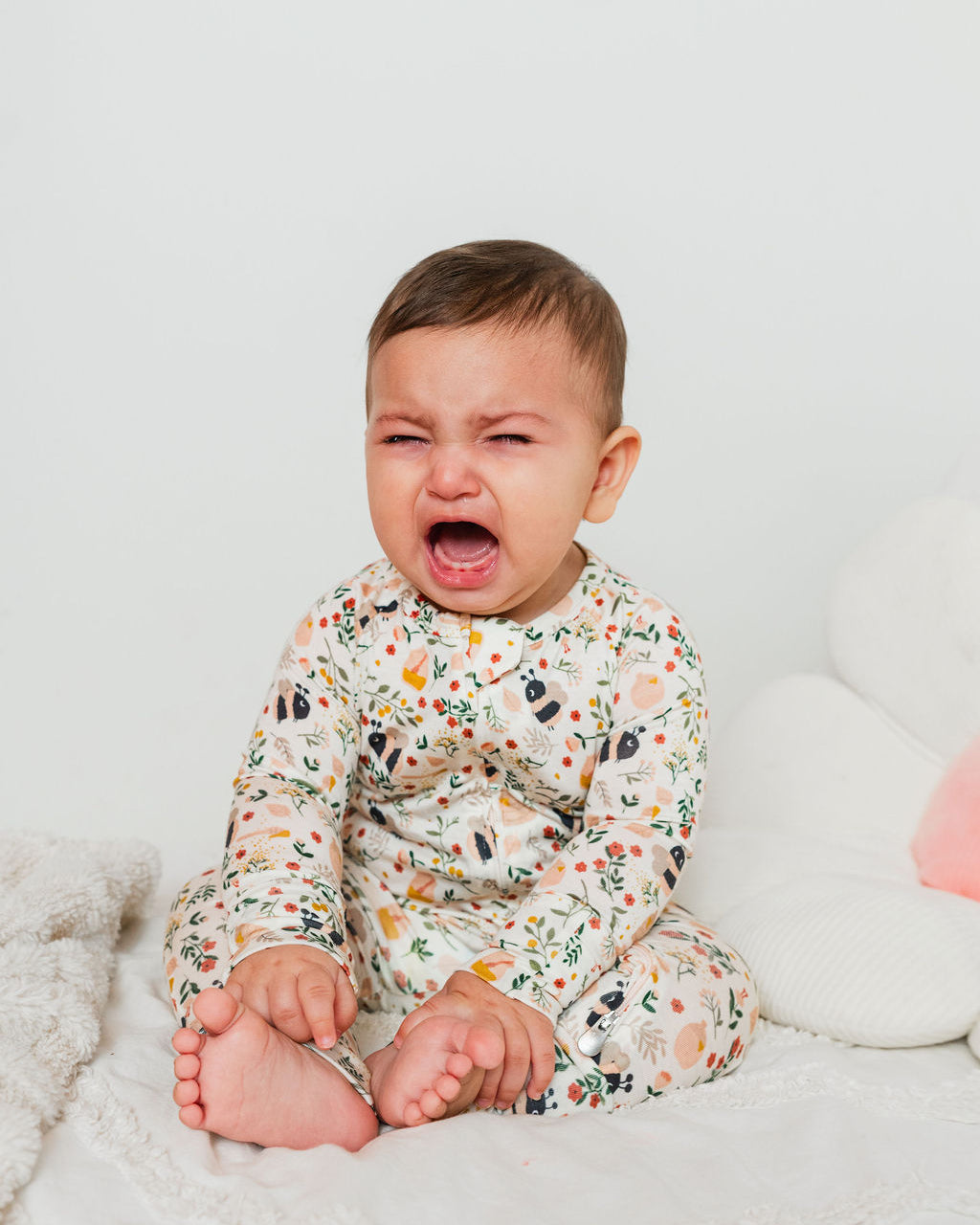
Newborn fingernails grow fast and babies frequently scratch their own faces during sleep. The fold-over cuffs cover the hands without needing separate mittens that fall off. Around 4–6 months, fold them back — the baby wants hands free to explore.
When do babies move out of footed sleepers?
Most families switch to two-piece pajamas around 18 months, when the toddler starts potty training or protests the zipper. Some children stay in one-piece footed sleepers through age 3. There's no fixed age — it's about what works for your child and your routine.