Canada
 United States



The Sleep Bag Built for Real Nights

Our award-winning sleep sacks stay on all night — no kicked-off blankets, no disrupted sleep. Available in TENCEL™, and Tanboocel® Bamboo Viscose, from 0.5 to 2.5 TOG.
Which TOG do I need?
TOG (Thermal Overall Grade) measures how warm a sleep bag keeps your baby. The right TOG depends on your room temperature — not the season. The ideal sleep temperature is 18–20°C. Set your nursery temperature below and we'll show you the weight, the layer underneath, and the bags that match.
Your nursery temperature
1.0 TOG in 6–18 M suits most homes and most babies, and it's the weight and size parents reorder most. Sizing goes by height and weight rather than the age label — the chart below has the exact ranges. Don't buy a size up to grow into: a sleep bag needs to be snug at the neck and armholes so baby can't slip down inside.
Winter and cool rooms
16–20°C 61–68°F
Extra warmth for cold bedrooms or winter nights. If the room drops below 16°C, add a warmer layer underneath rather than a warmer bag.
Wear underneath: a full-coverage sleeper
Spring, fall and mild rooms
20–24°C 68–75°F
Our most popular weight and the safe default — most homes sit between 20–24°C year-round. Versatile enough for three-season use.
Wear underneath: a long-sleeve bodysuit or fitted sleeper
Summer and warm rooms
24–27°C 75–81°F
Lightweight and breathable. Ideal when room temperature stays above 24°C — top-floor bedrooms, heatwaves, and rooms without air conditioning.
Wear underneath: a short-sleeve bodysuit or light onesie
Your baby's size
50 sleep bags
See all sleep bags2.5 TOG
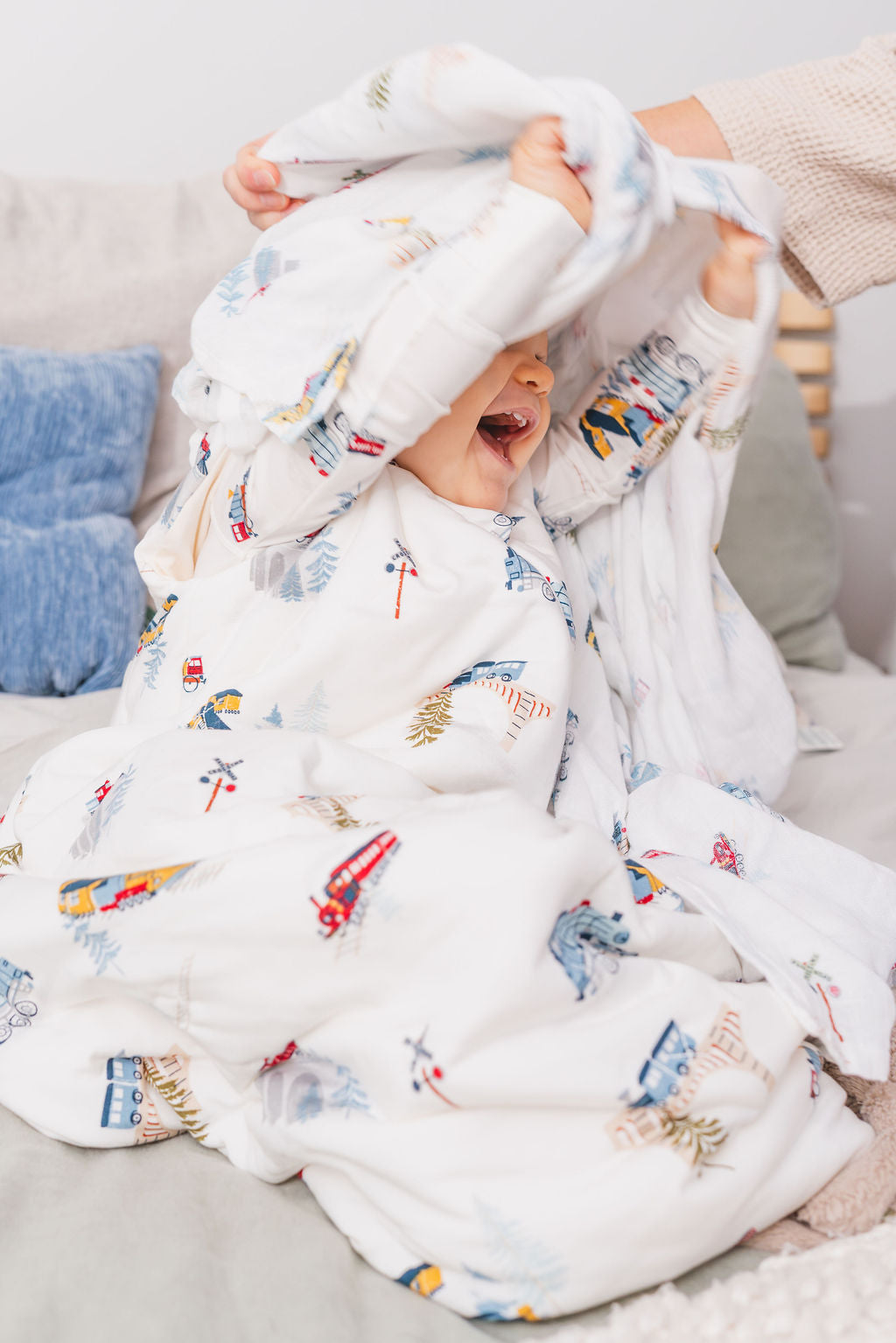
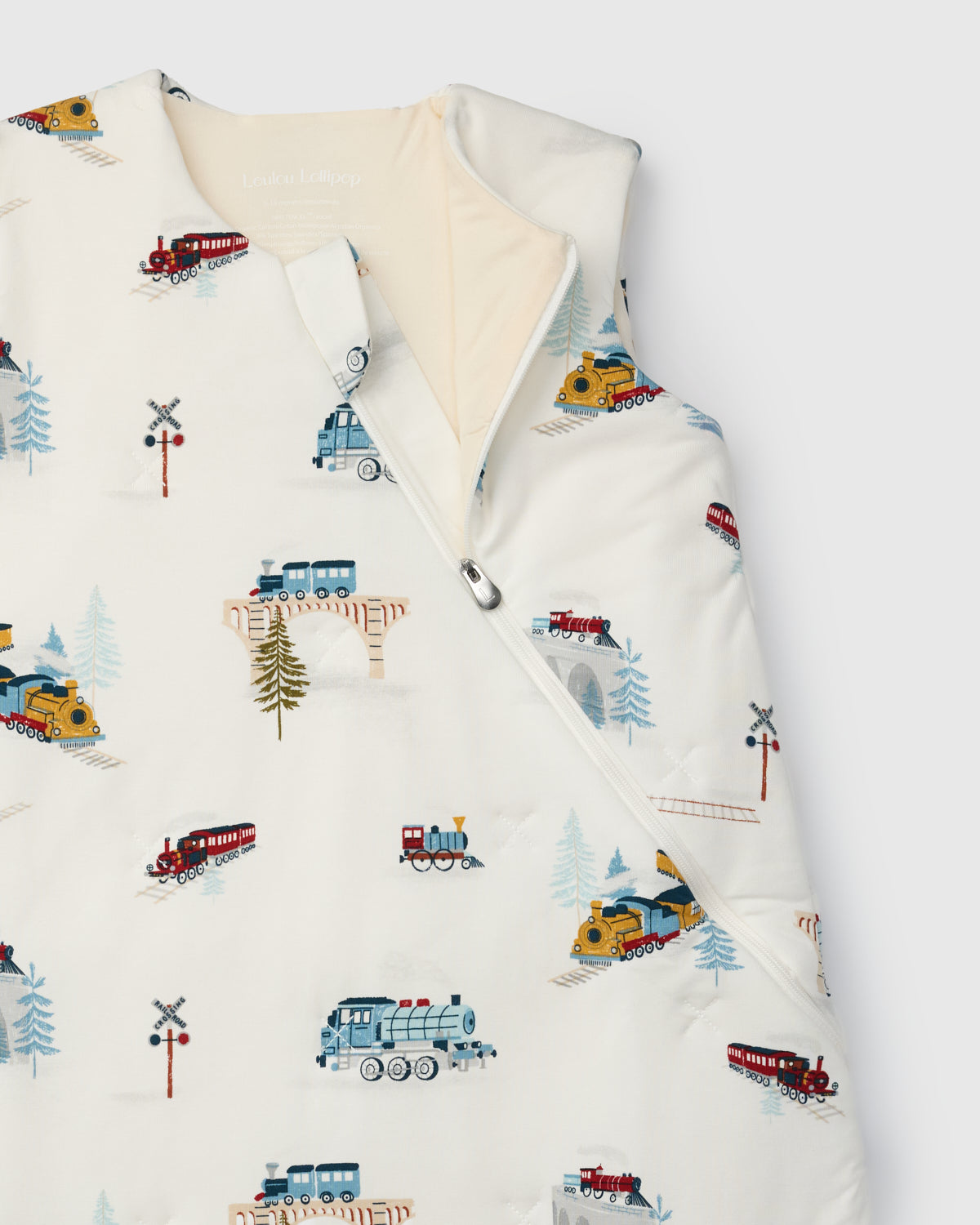
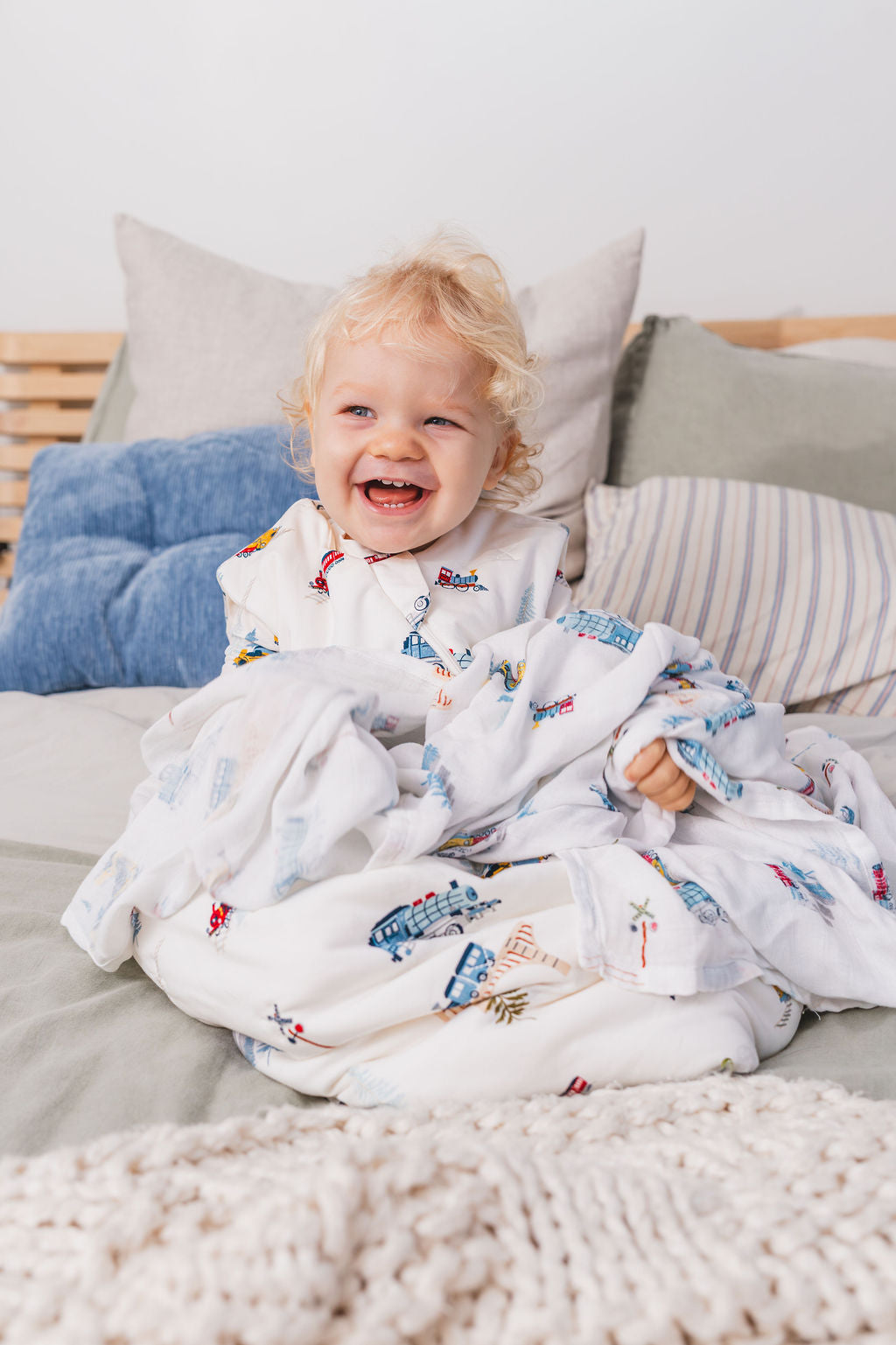
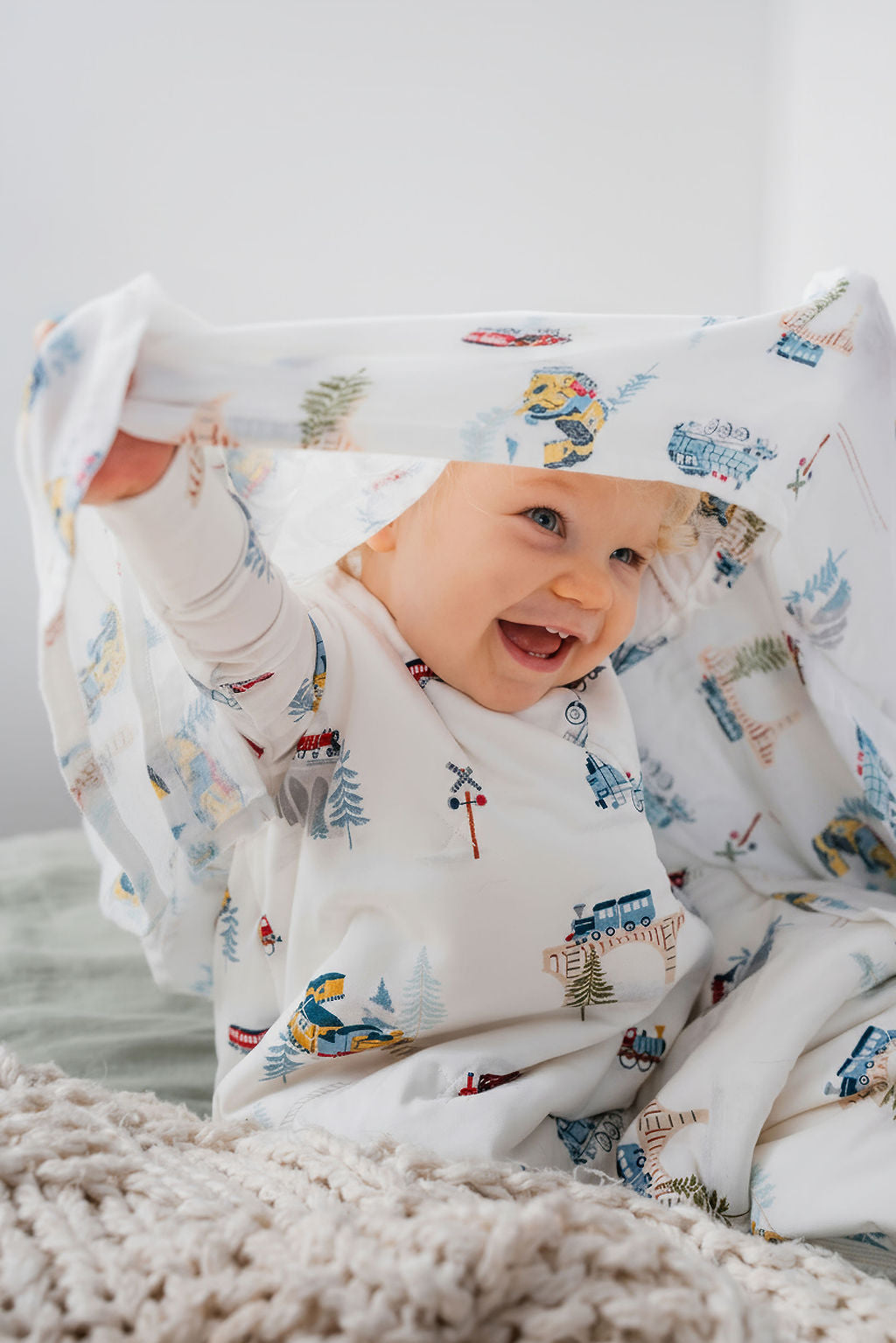
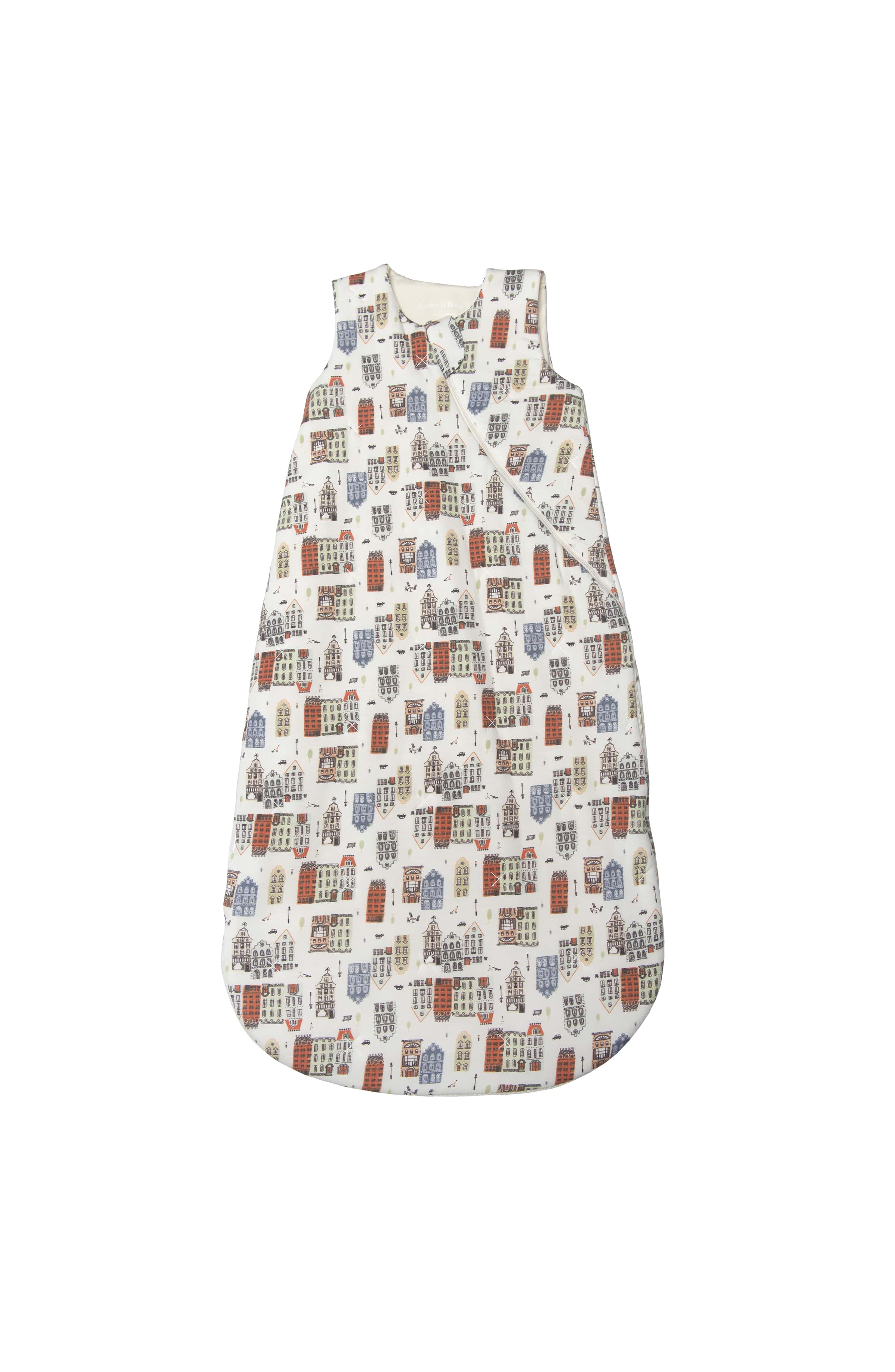


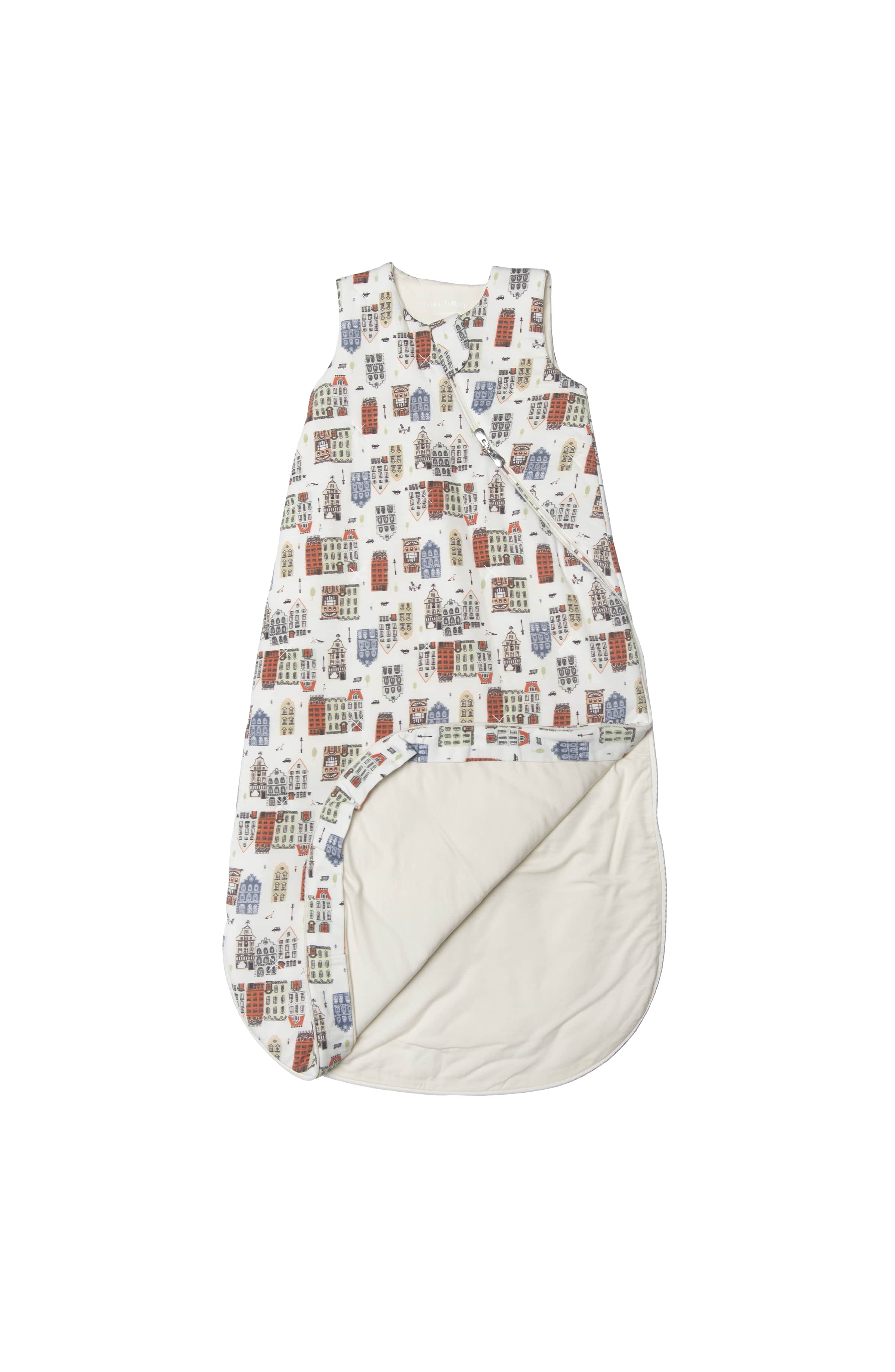
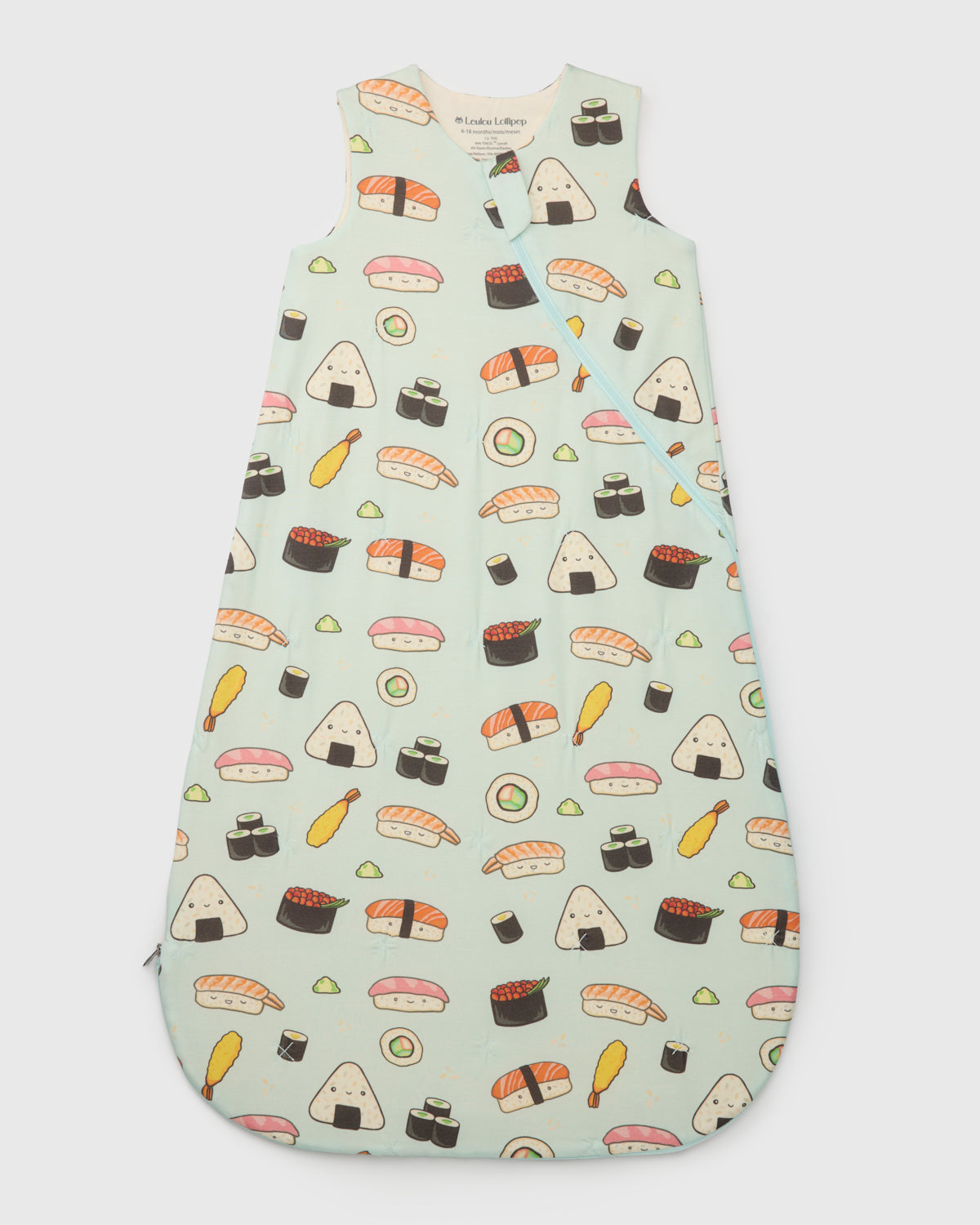
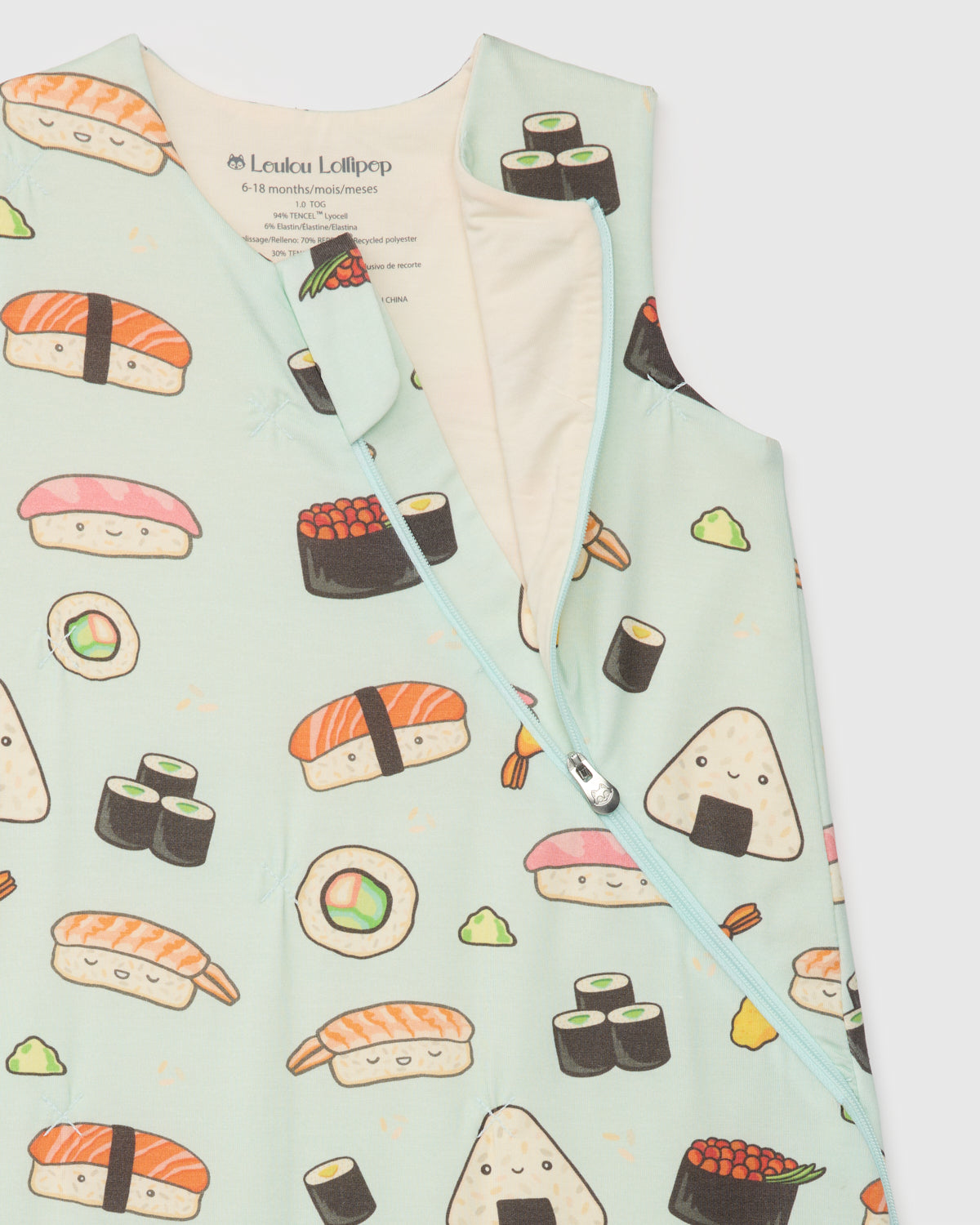
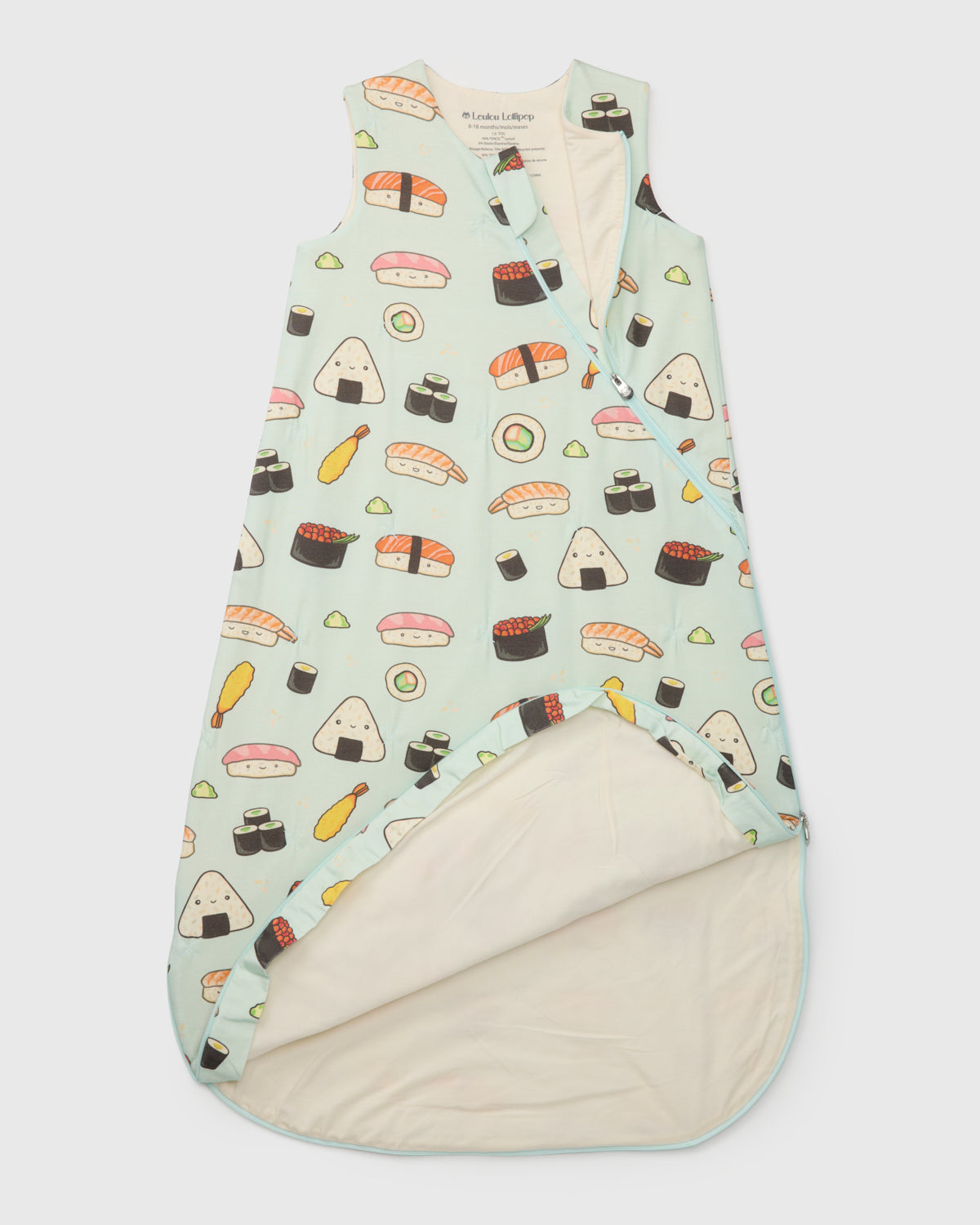
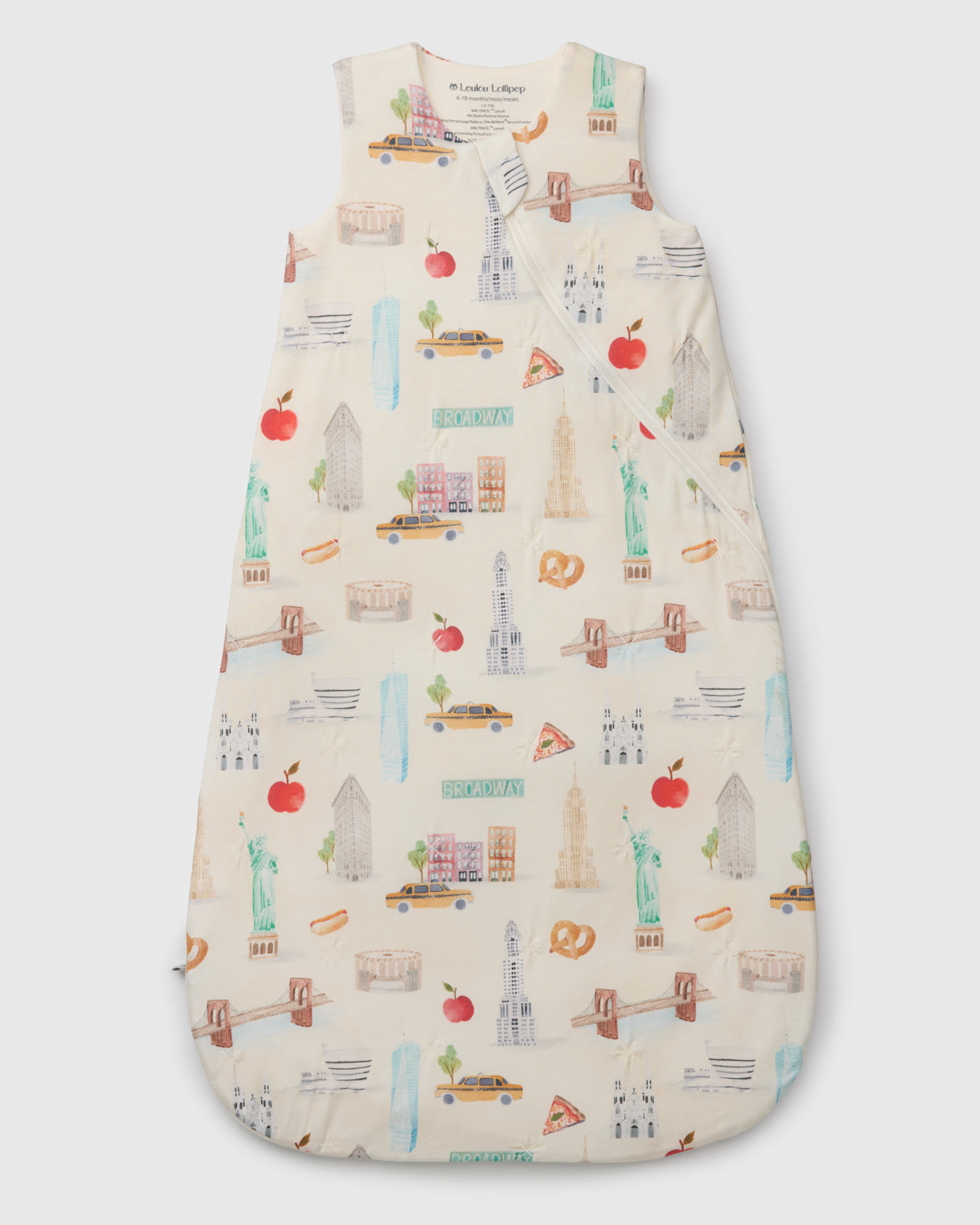
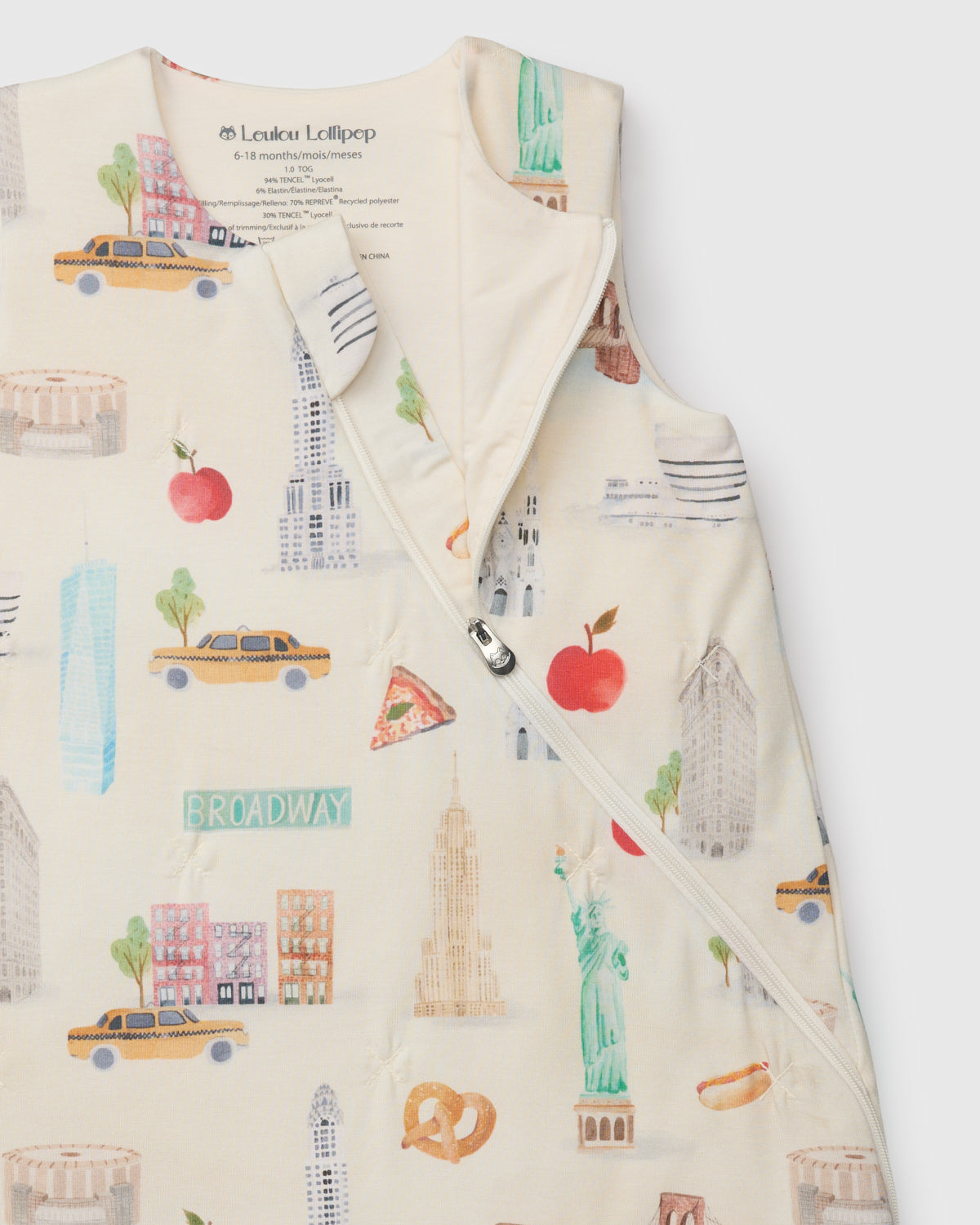
1.0 TOG
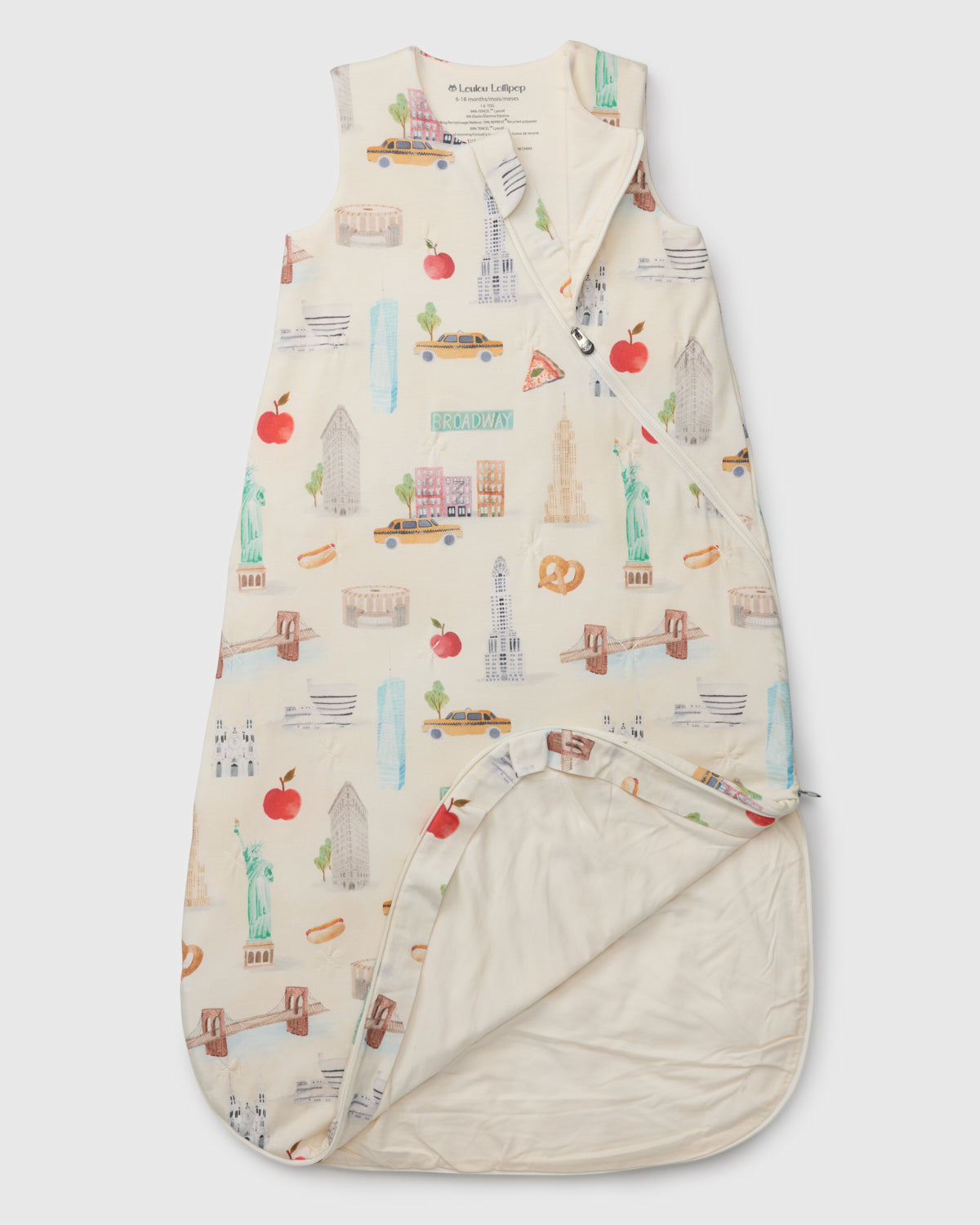
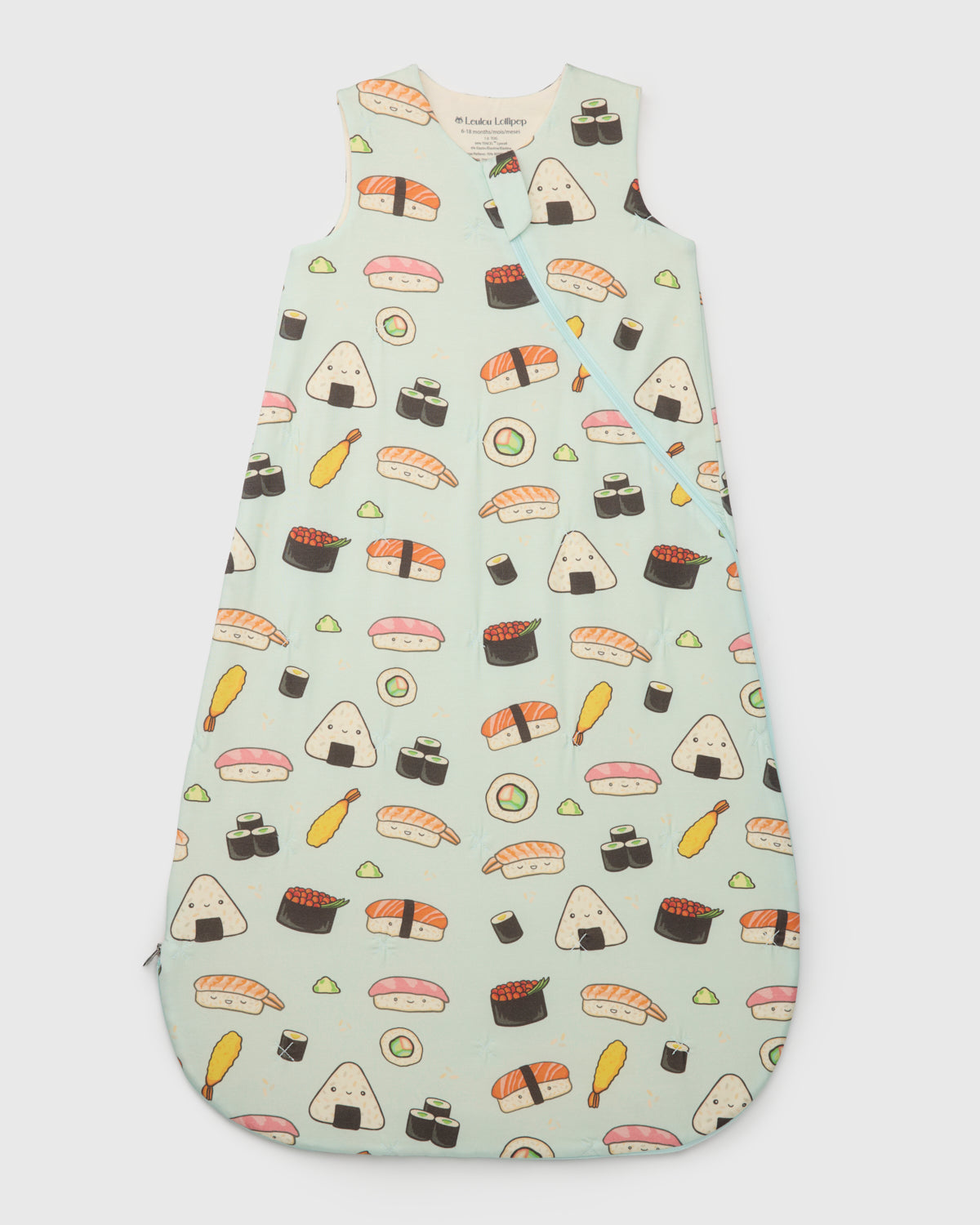
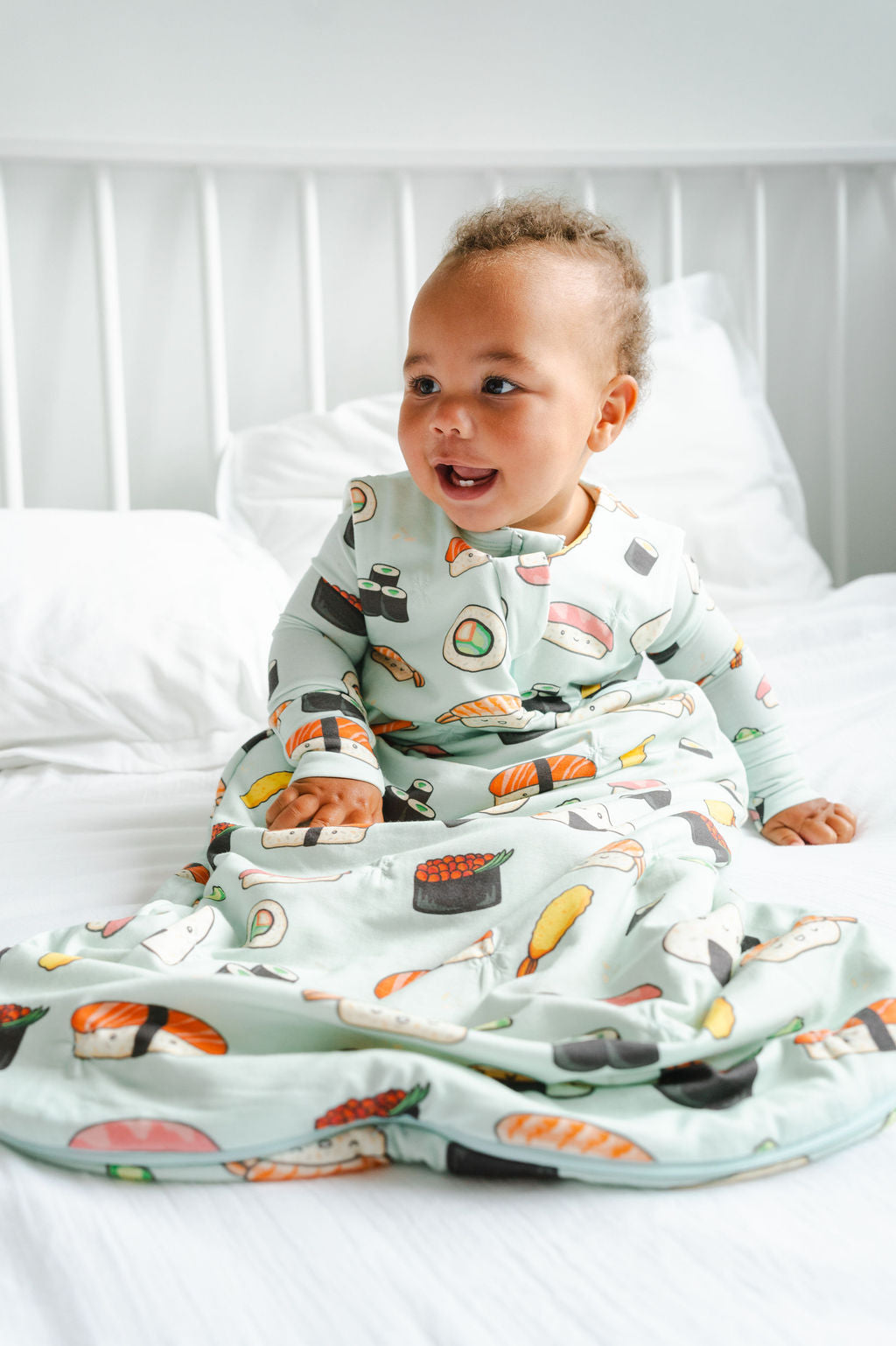
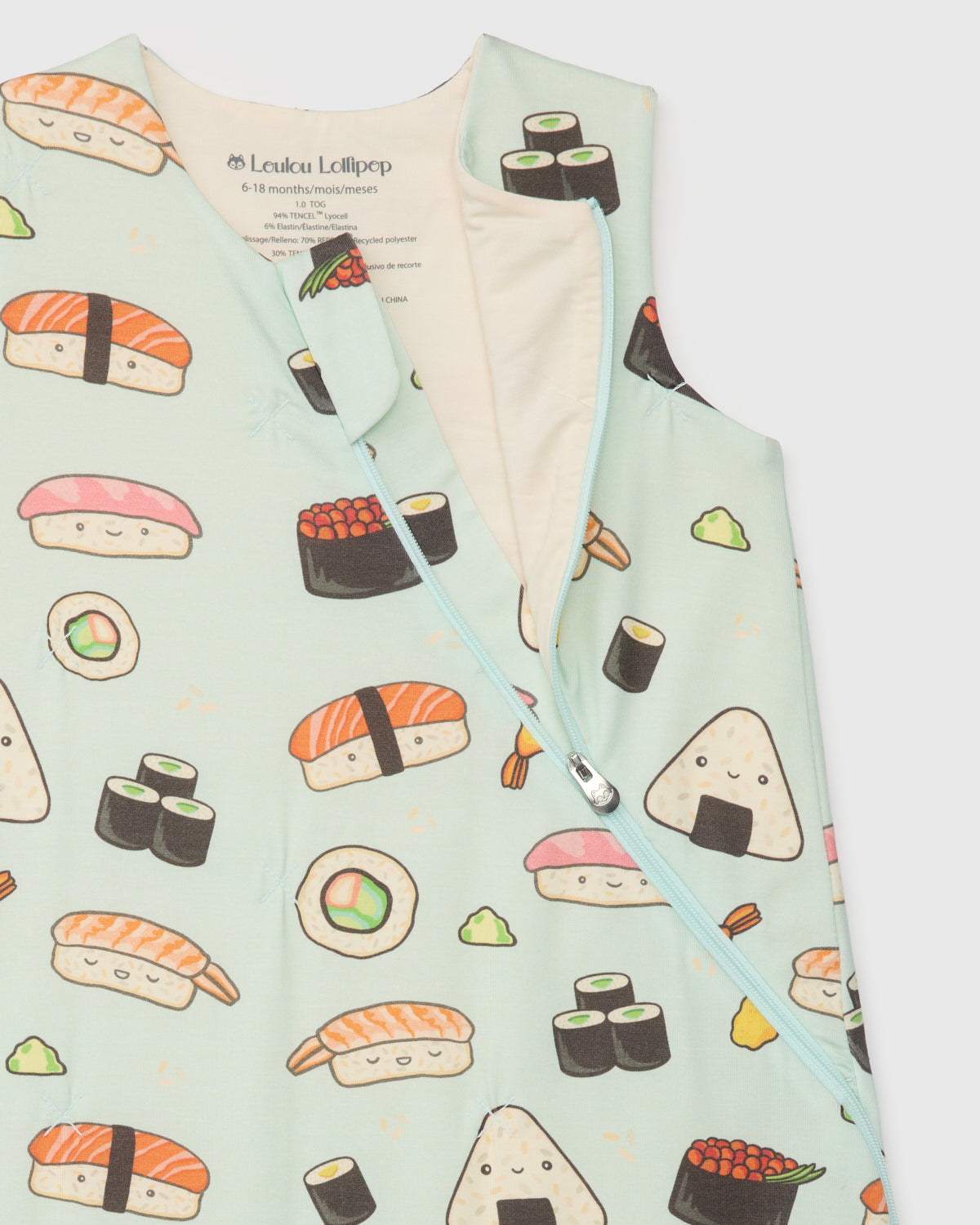
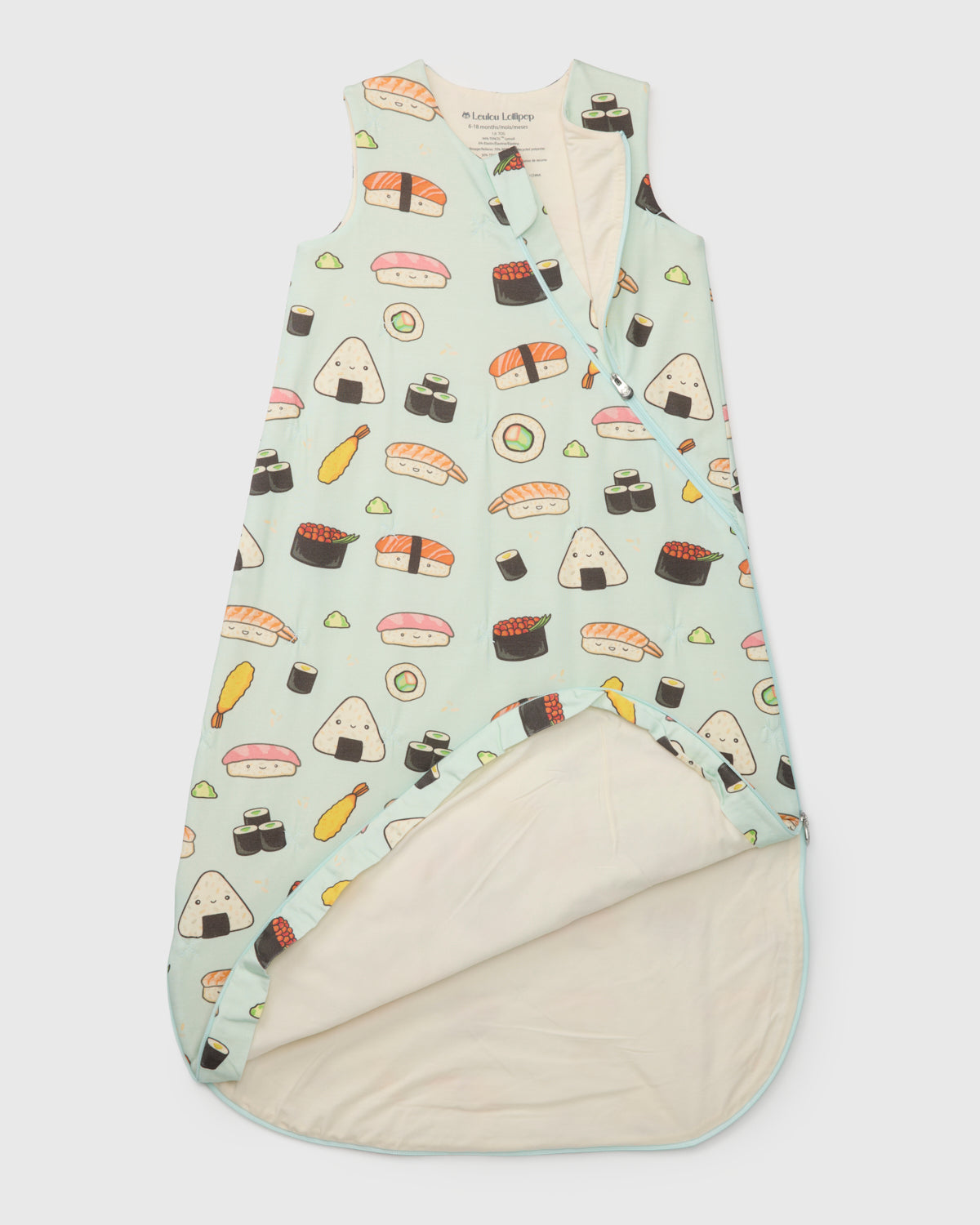
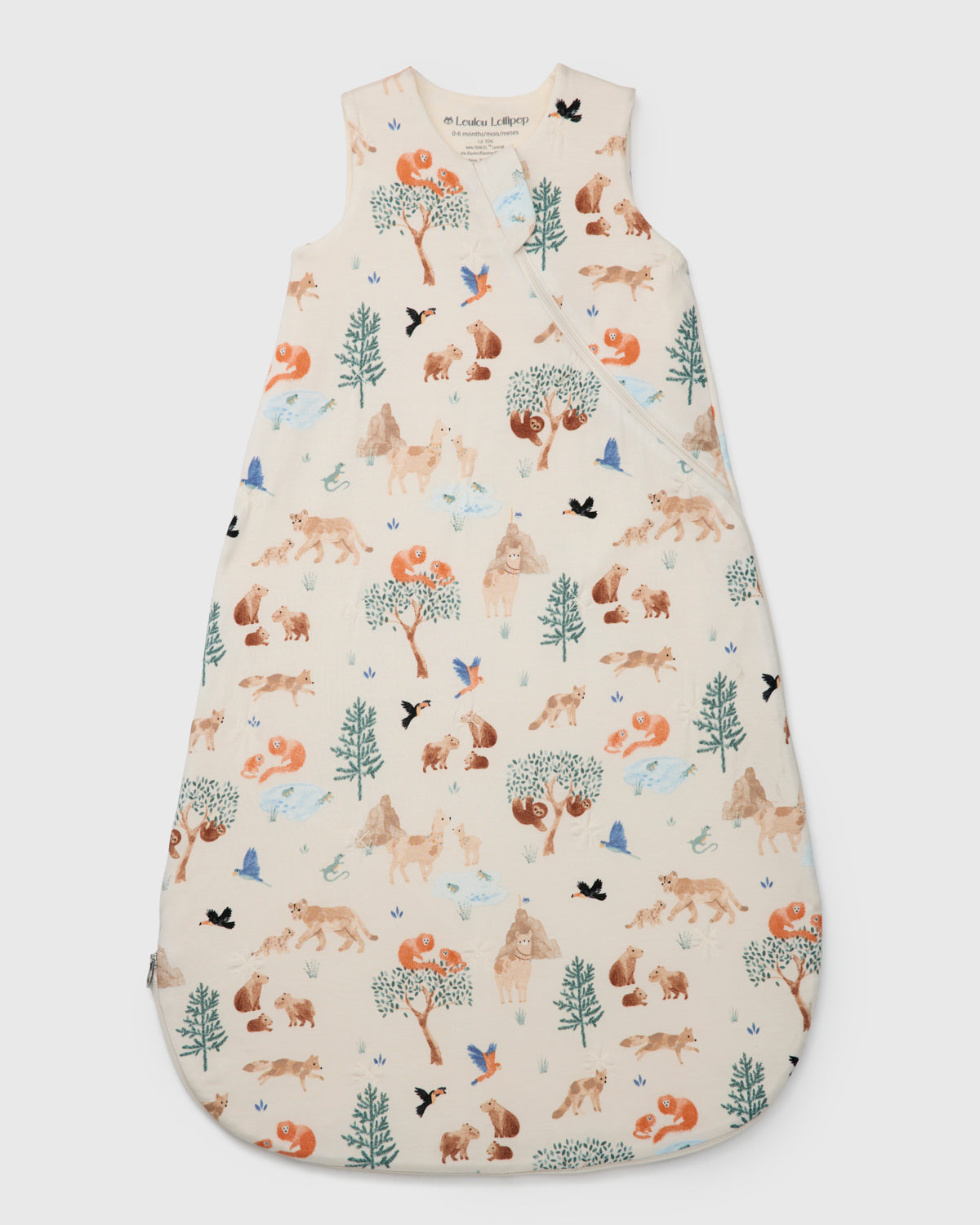
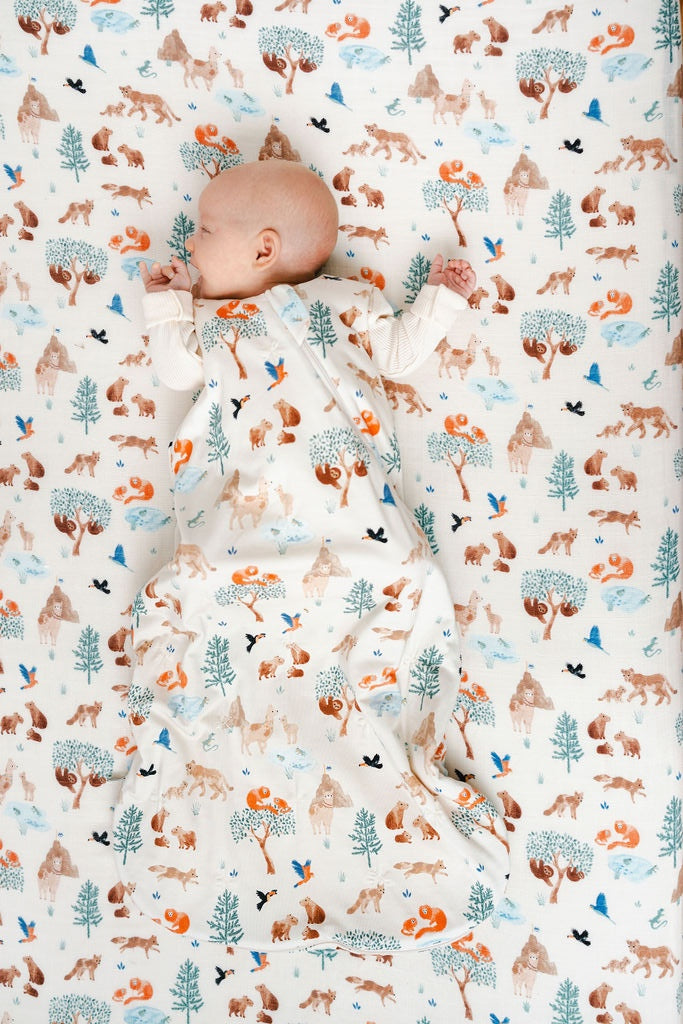
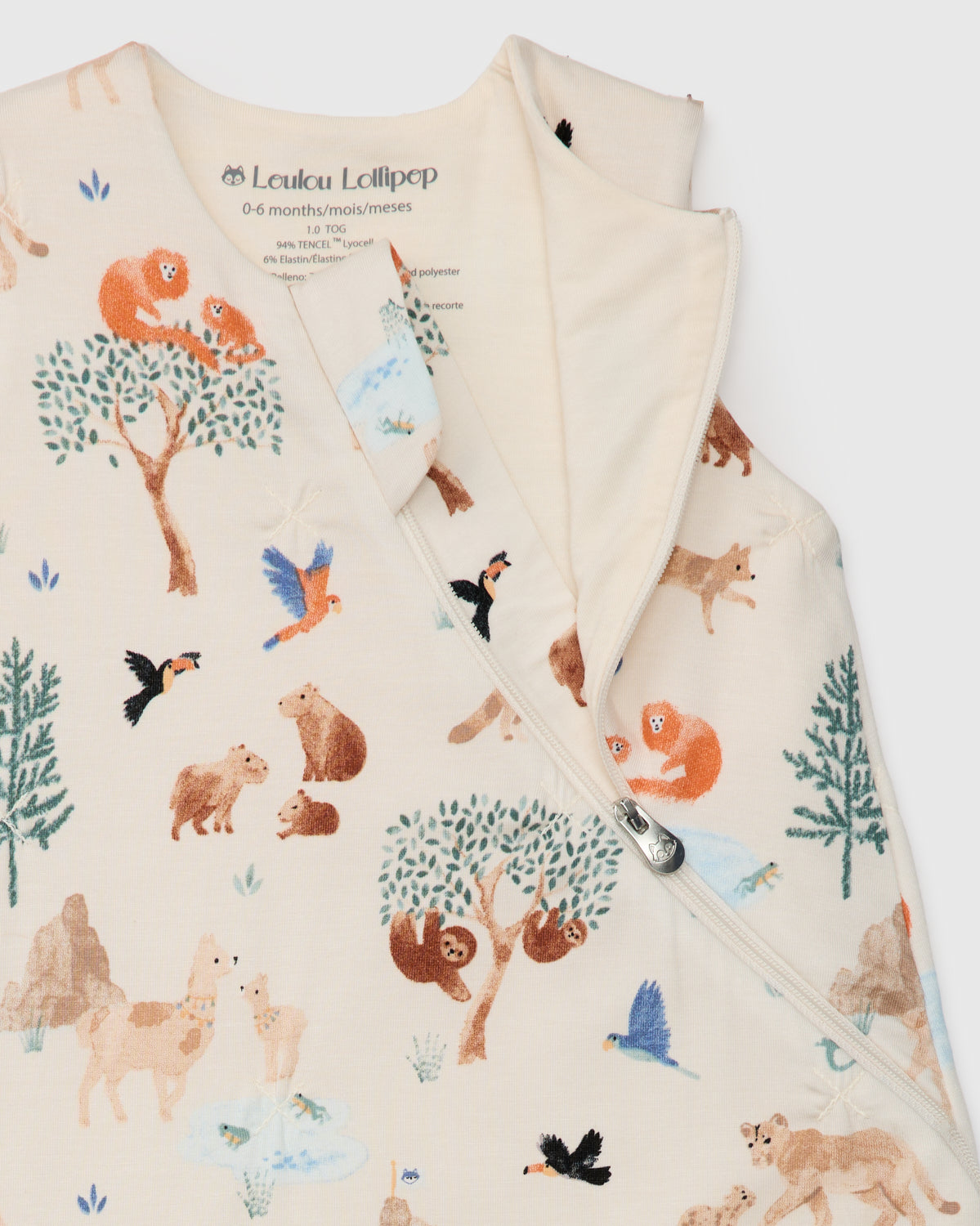
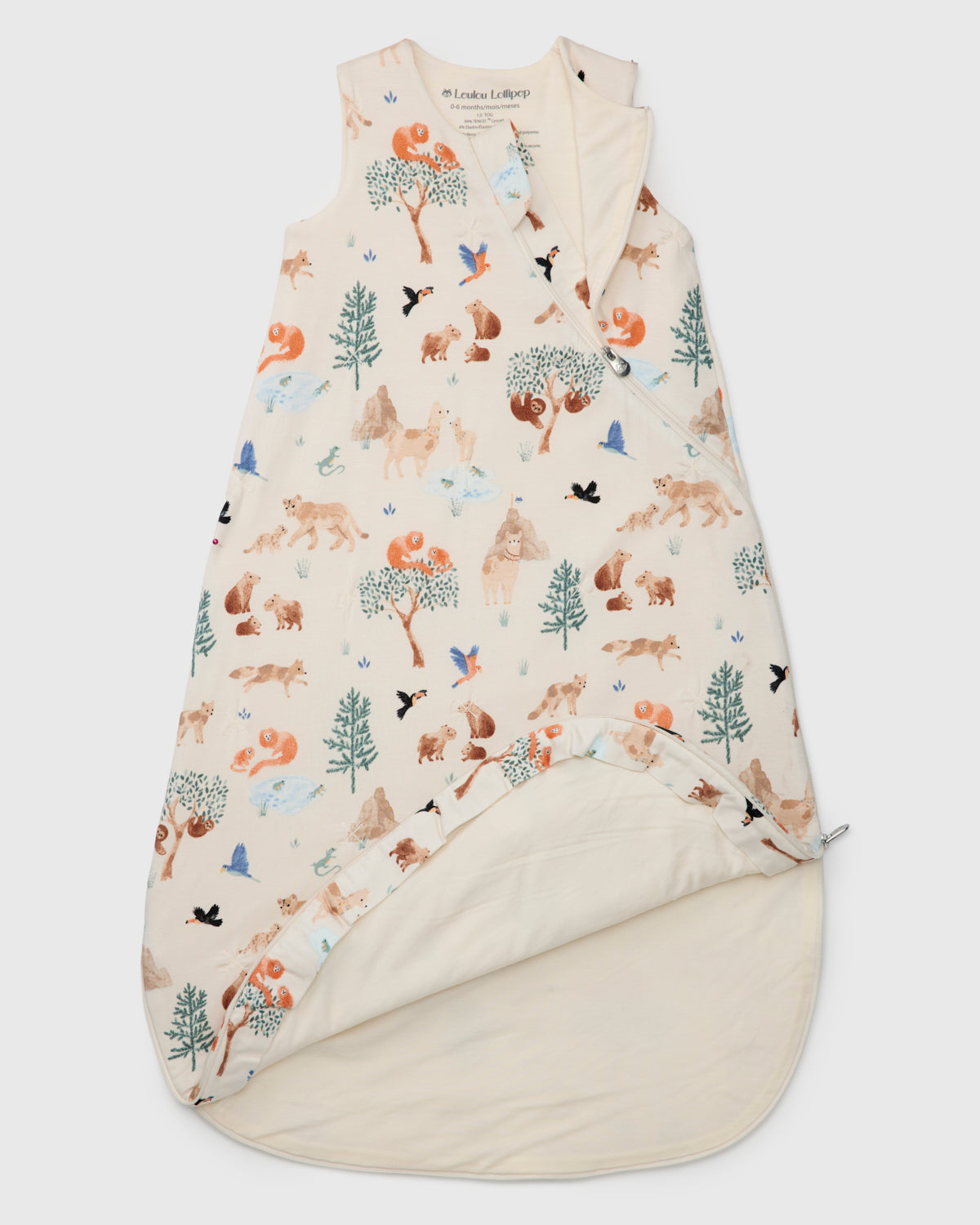
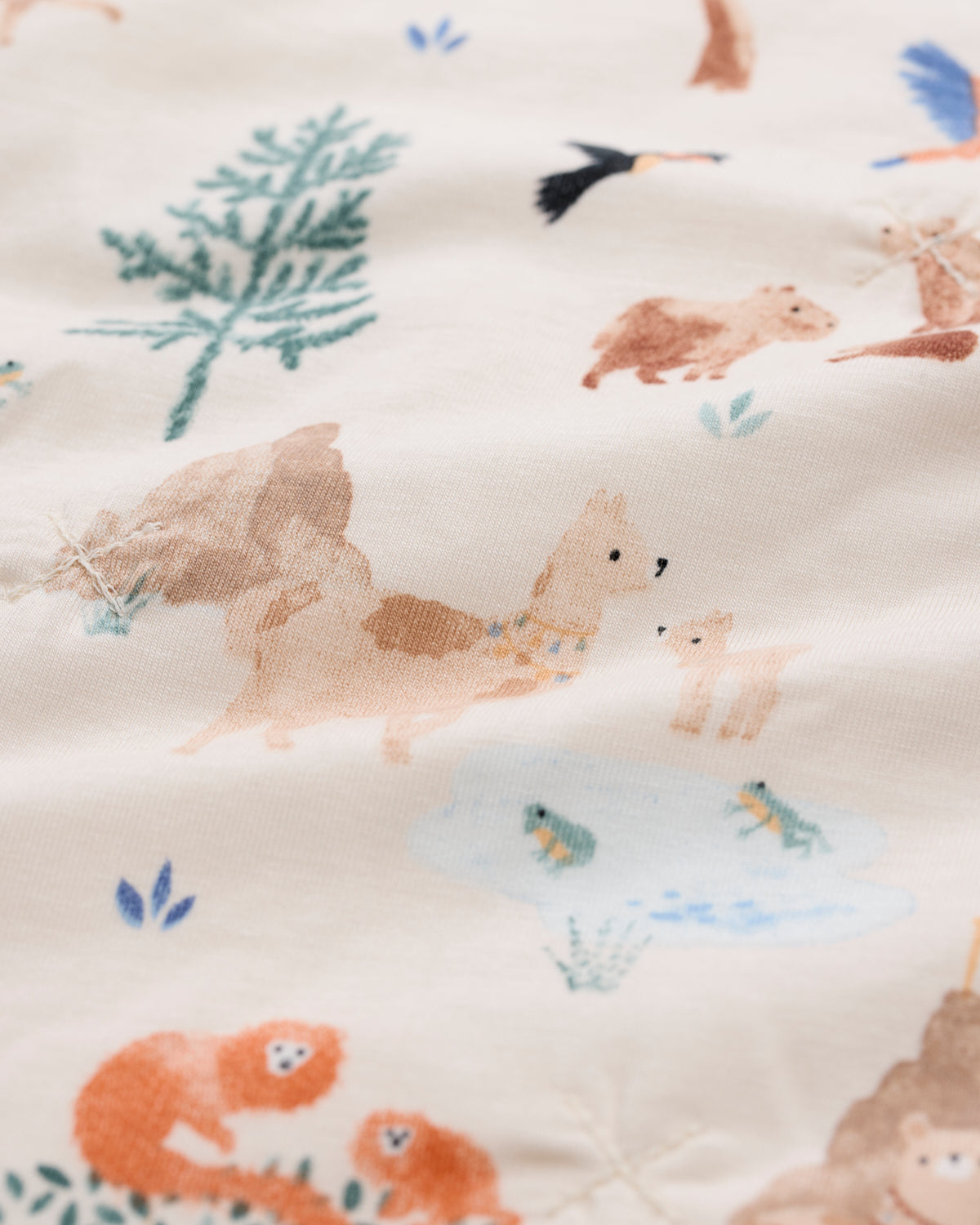


0.5 TOG
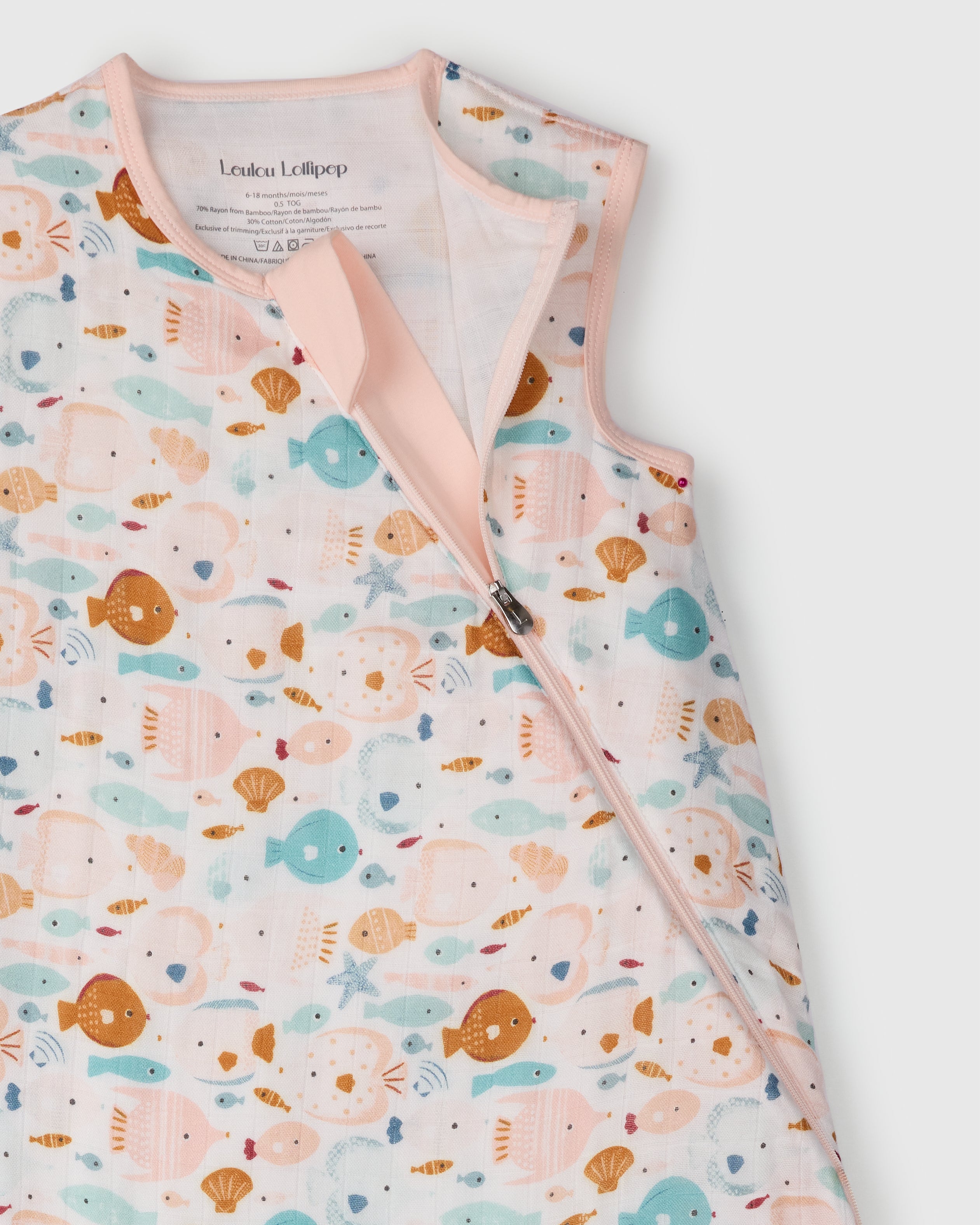
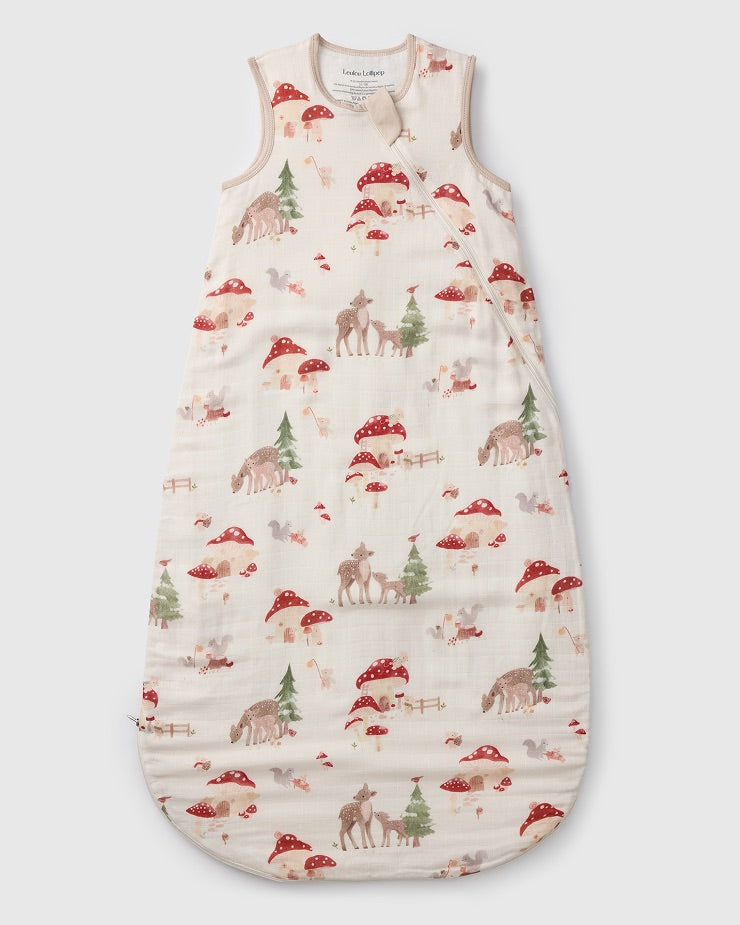
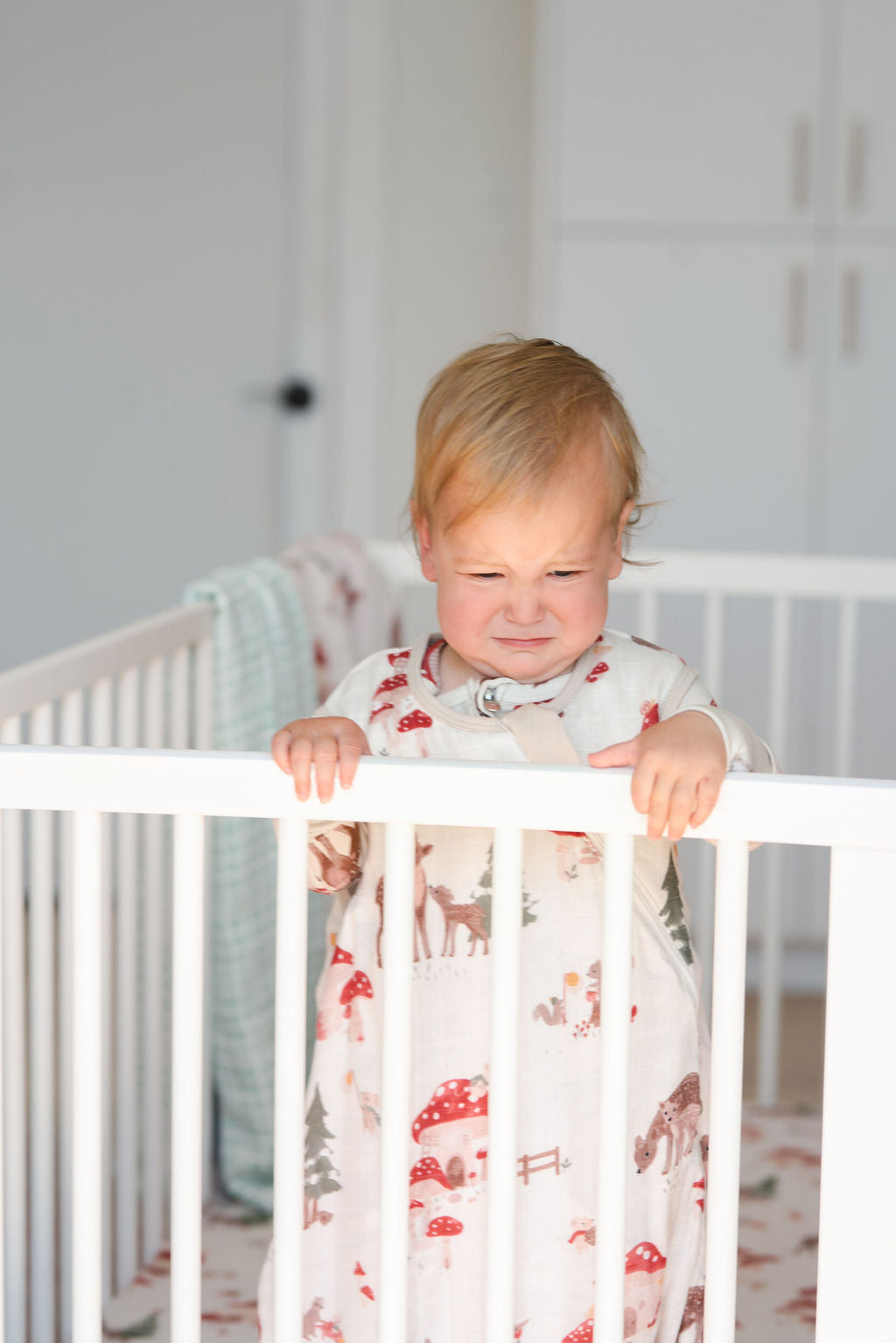
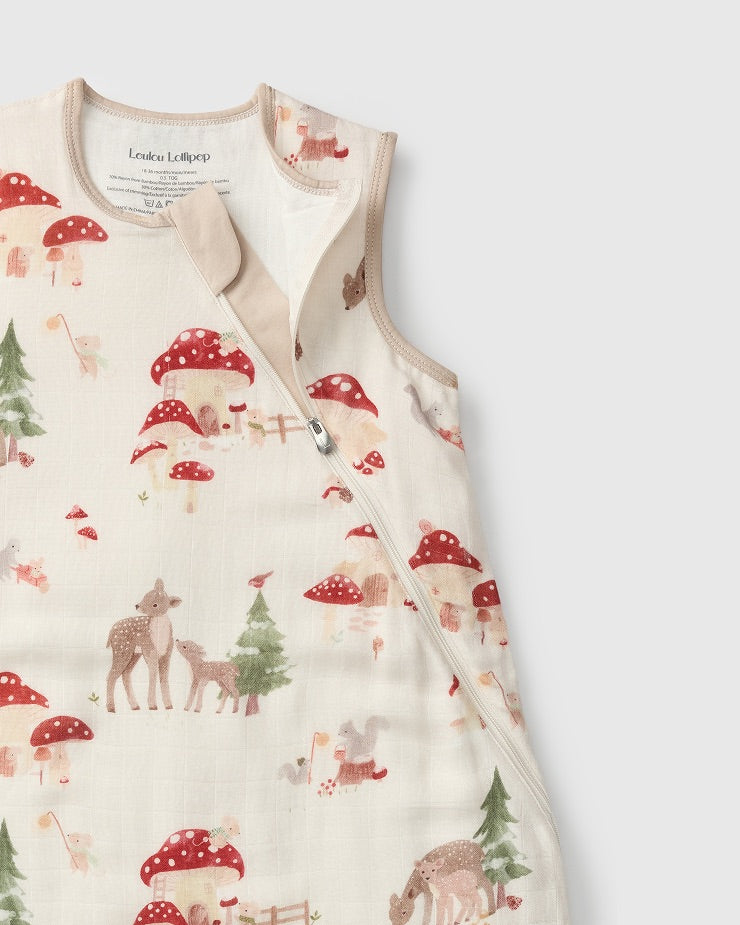
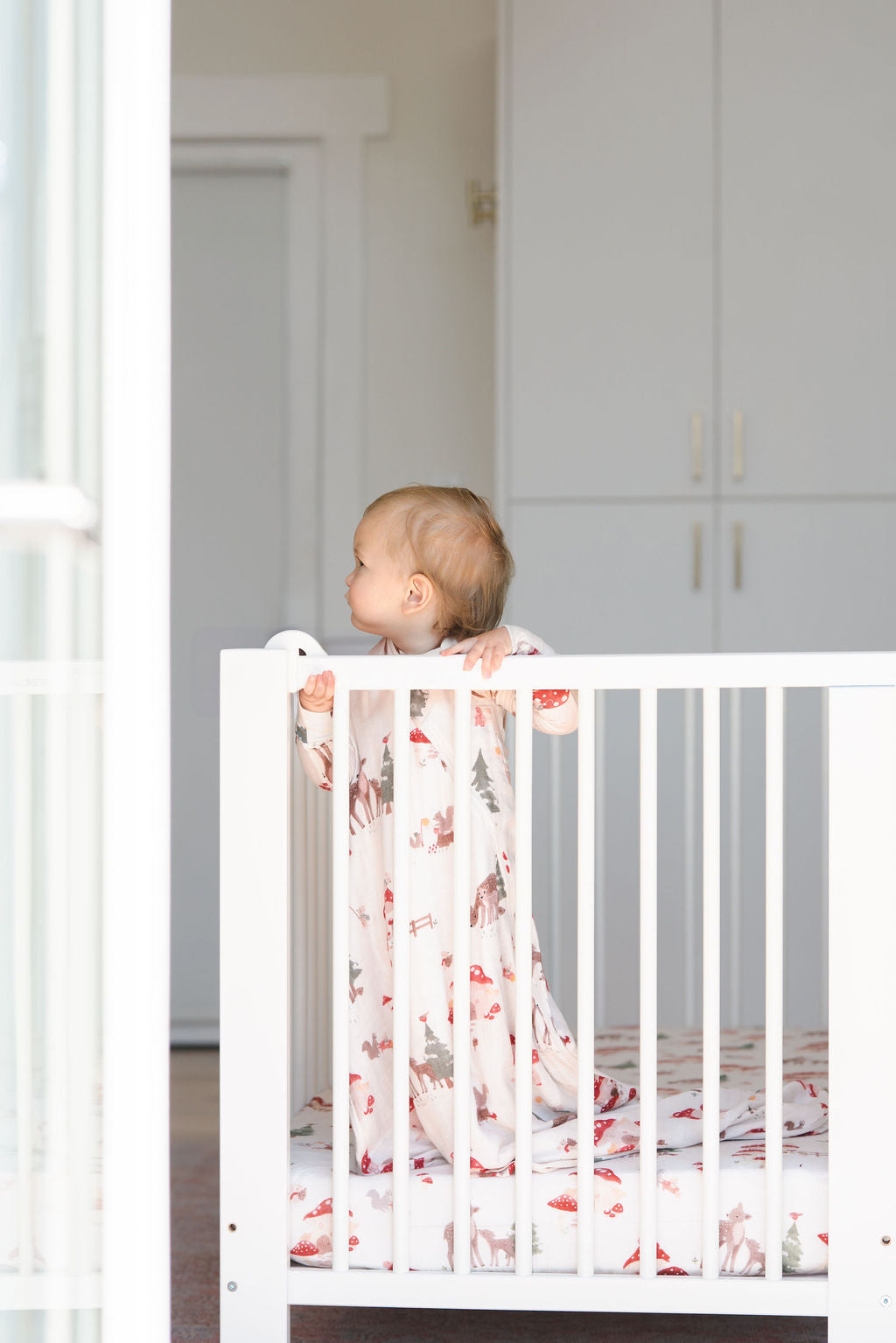
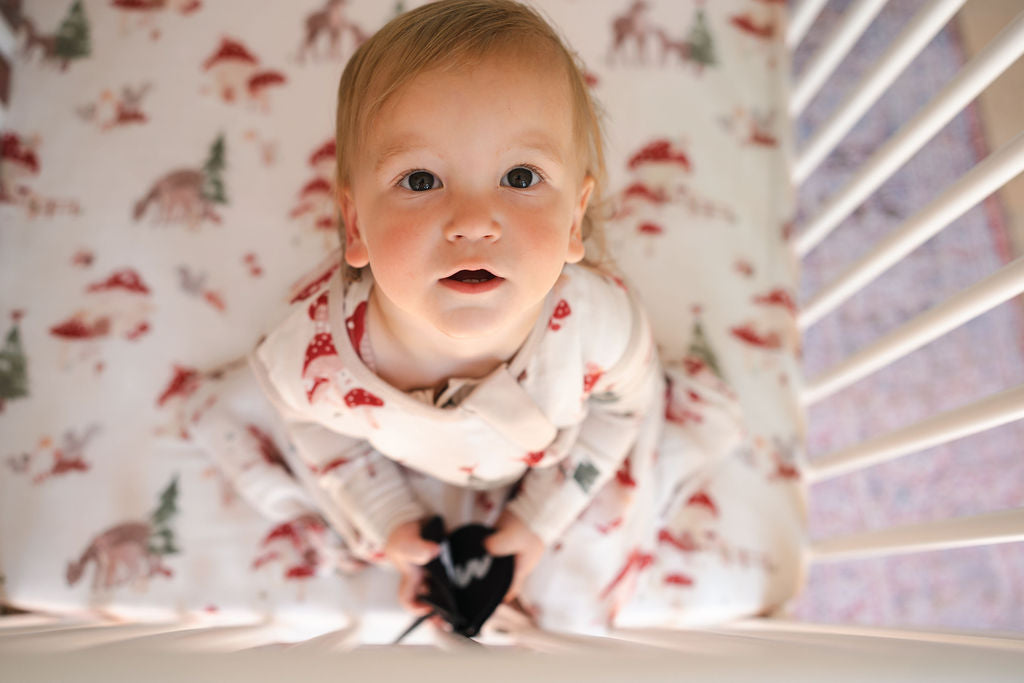
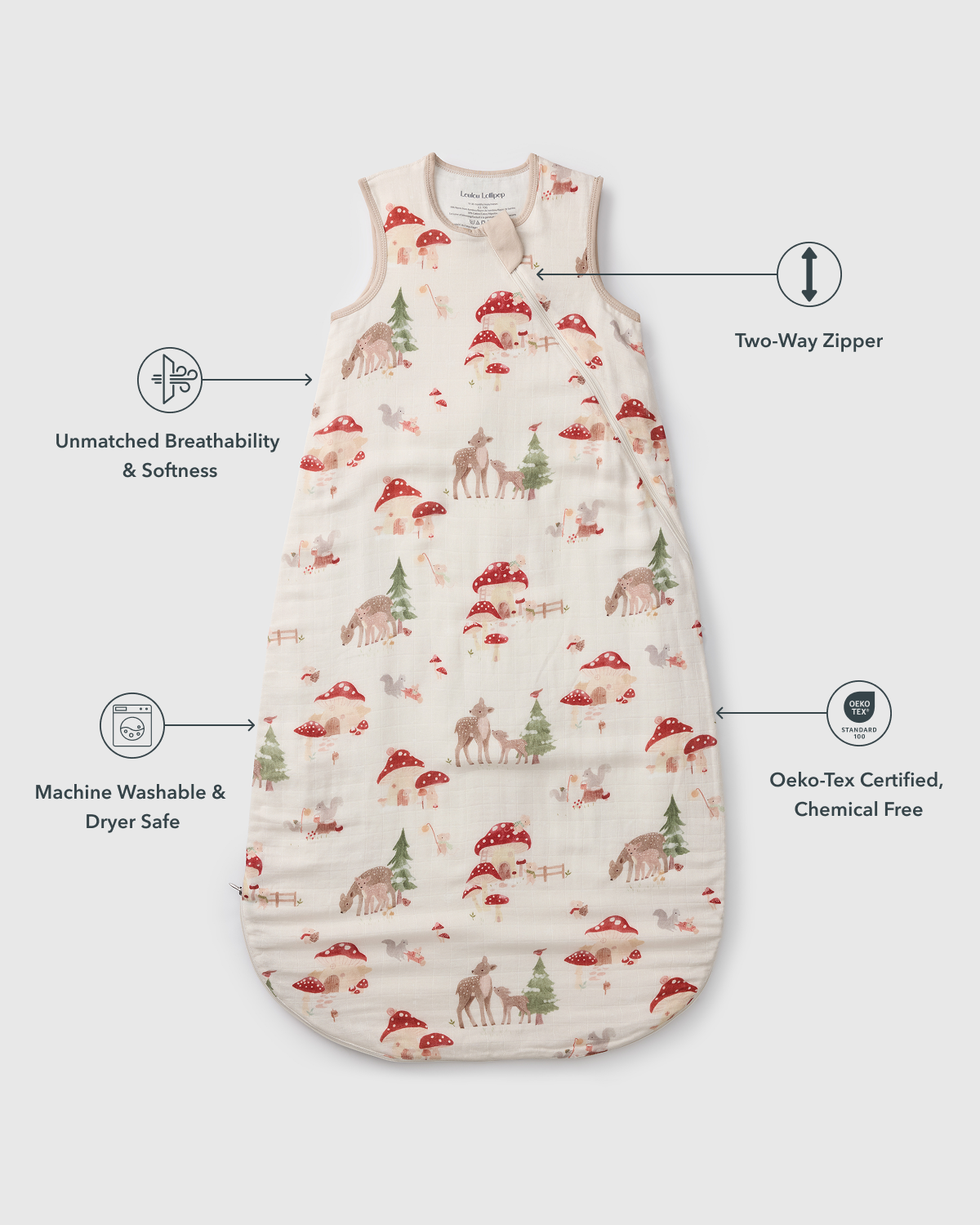


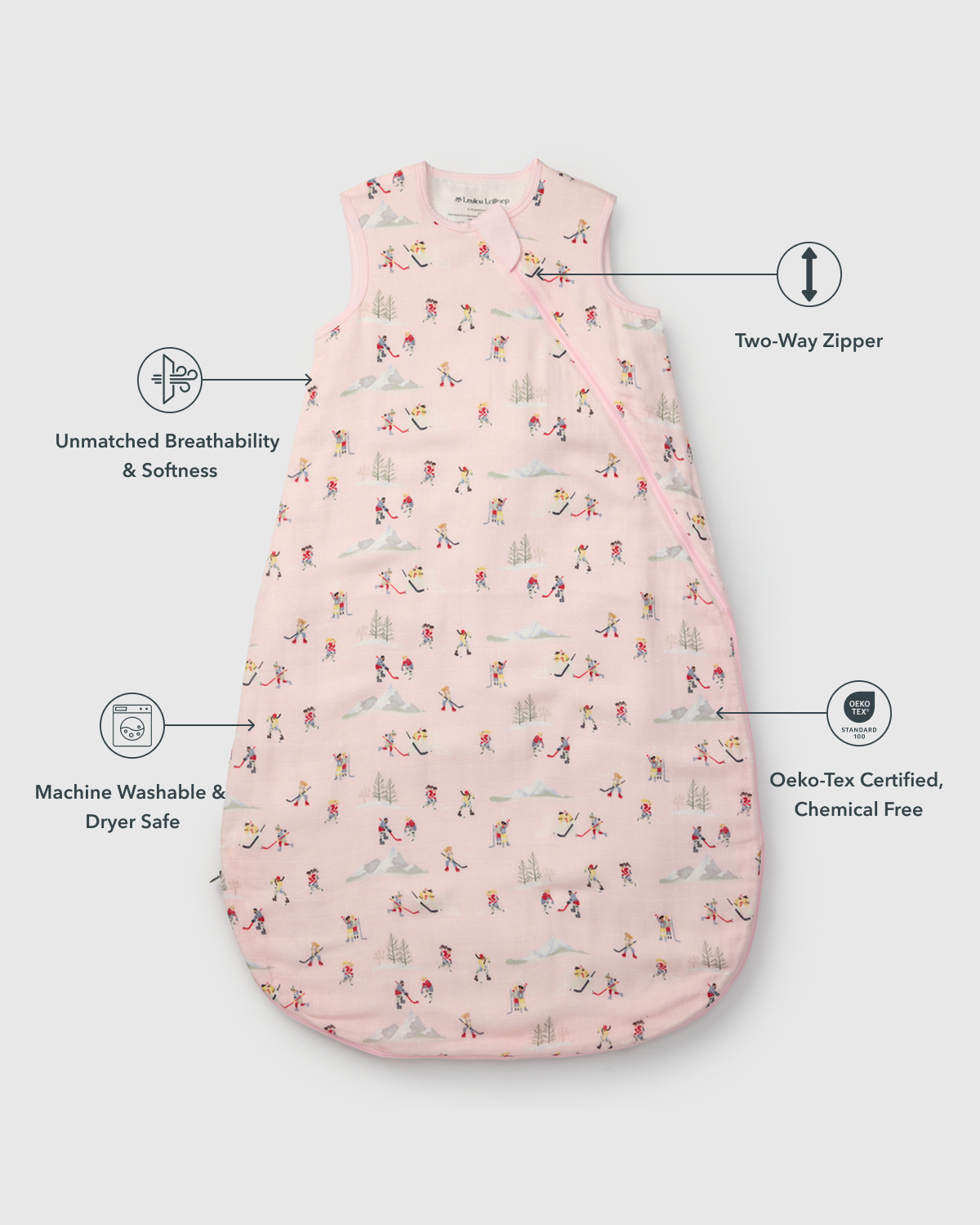
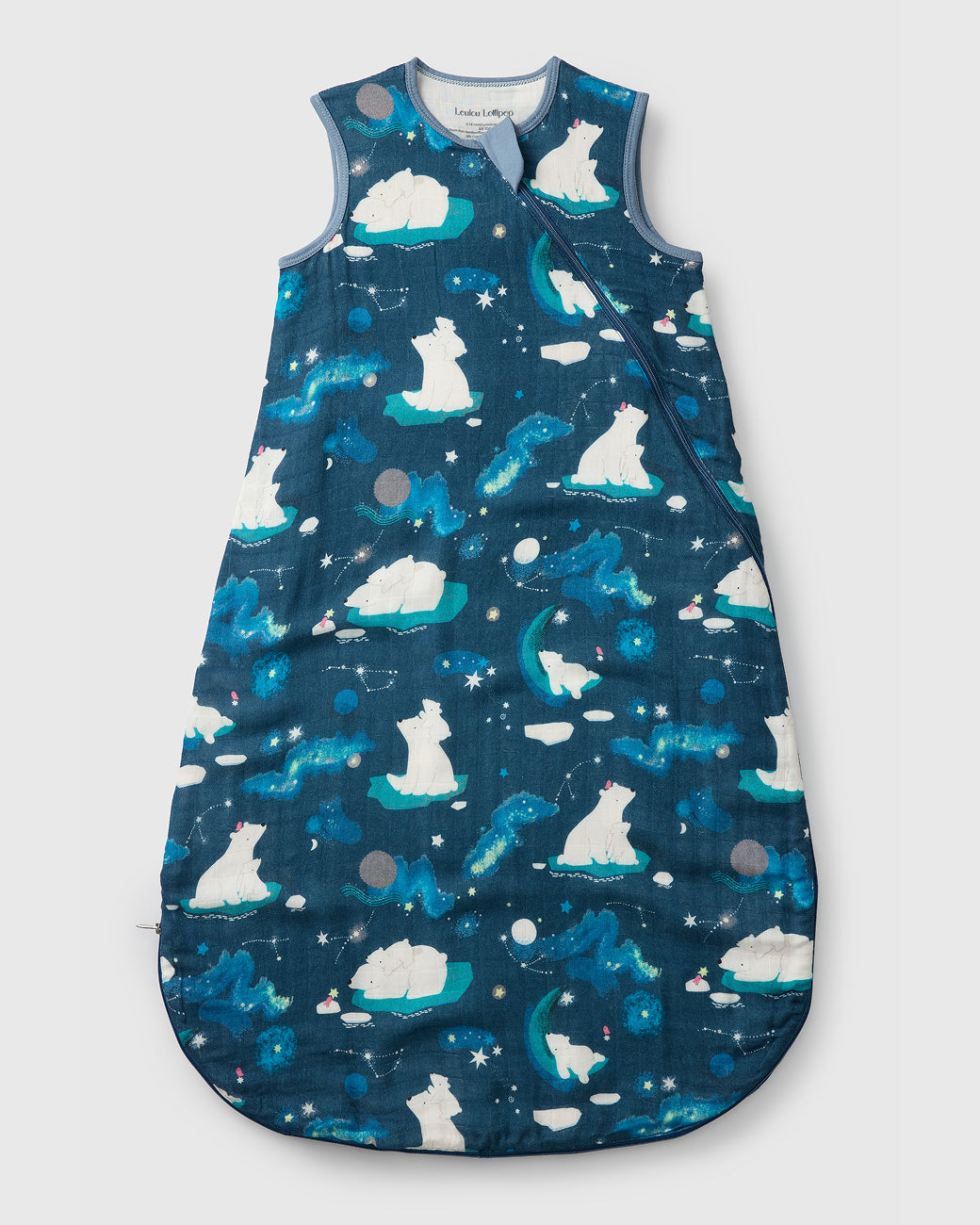

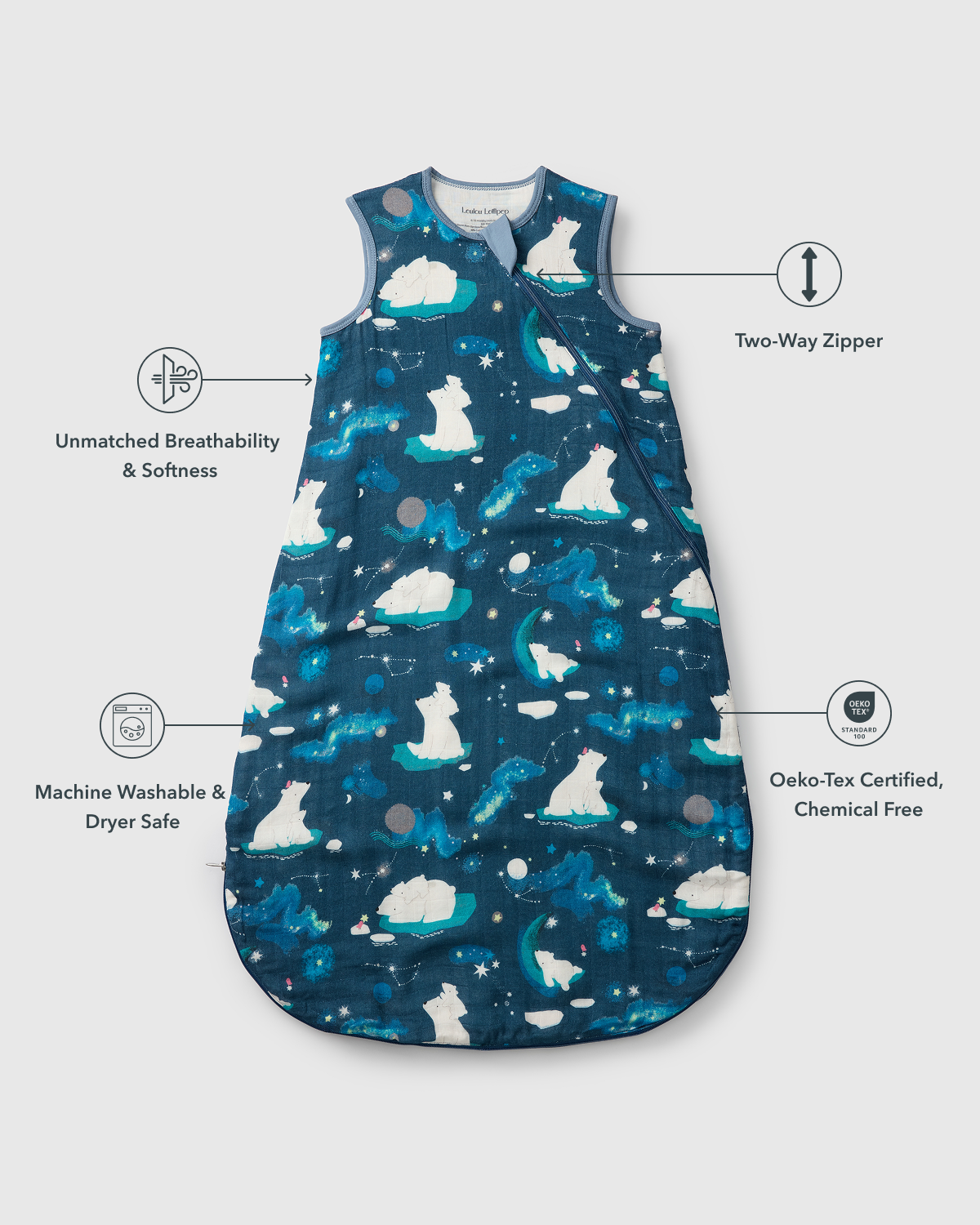
No bags in that size are in stock in this weight right now.
Comfort check: baby's chest and tummy should feel warm and dry — not clammy, sweaty, or cold. Hands and feet run cooler and aren't a reliable guide. If your room temperature changes between seasons, adjust the layer underneath before you change the TOG.
What size sleep bag do I need?
Sleep bags come in three sizes: 0–6 M, 6–18 M and 18–36 M. The age on the label is a rough guide — babies of the same age vary a lot. Measure instead.
| Size | Height | Weight |
|---|---|---|
| 0–6 M | 23–26" 58–66 cm | 10–16 lbs 4.5–7.3 kg |
| 6–18 M | 26–34" 66–86 cm | 16–26 lbs 7.3–11.8 kg |
| 18–36 M | 34–40" 86–102 cm | 26–40 lbs 11.8–18.1 kg |
If your baby falls between two sizes, go by weight rather than the age label. Weight is the better predictor of fit around the chest and shoulders, which is the part of a sleep bag that has to be right.
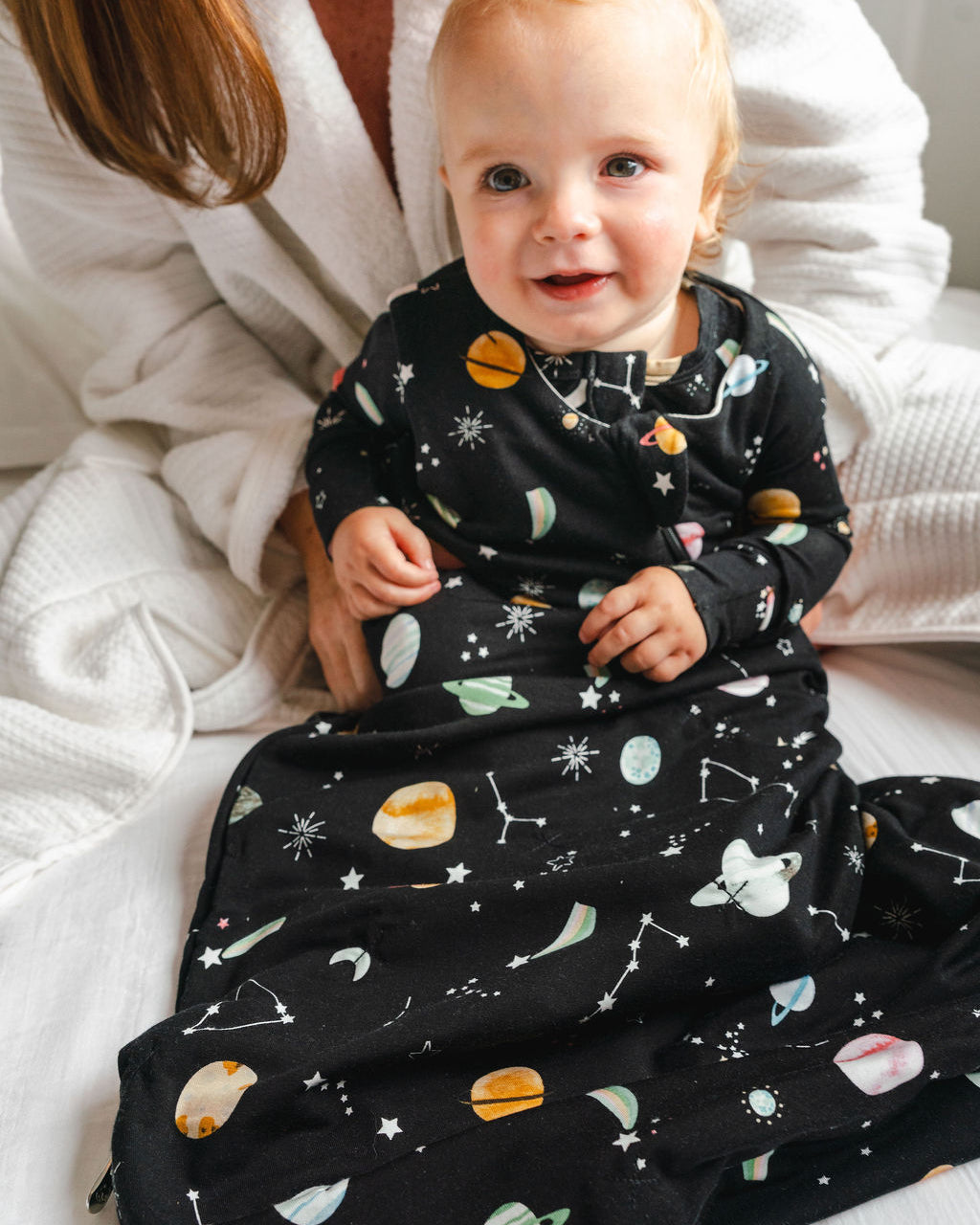
How it should fit: snug at the top, roomy at the bottom. The neck opening and armholes should be small enough that your baby can't slip down inside the bag, and the bottom should be wide enough for free hip and leg movement. This is why buying a size up "to grow into" isn't the safer choice it sounds like.
Shop sleep bags
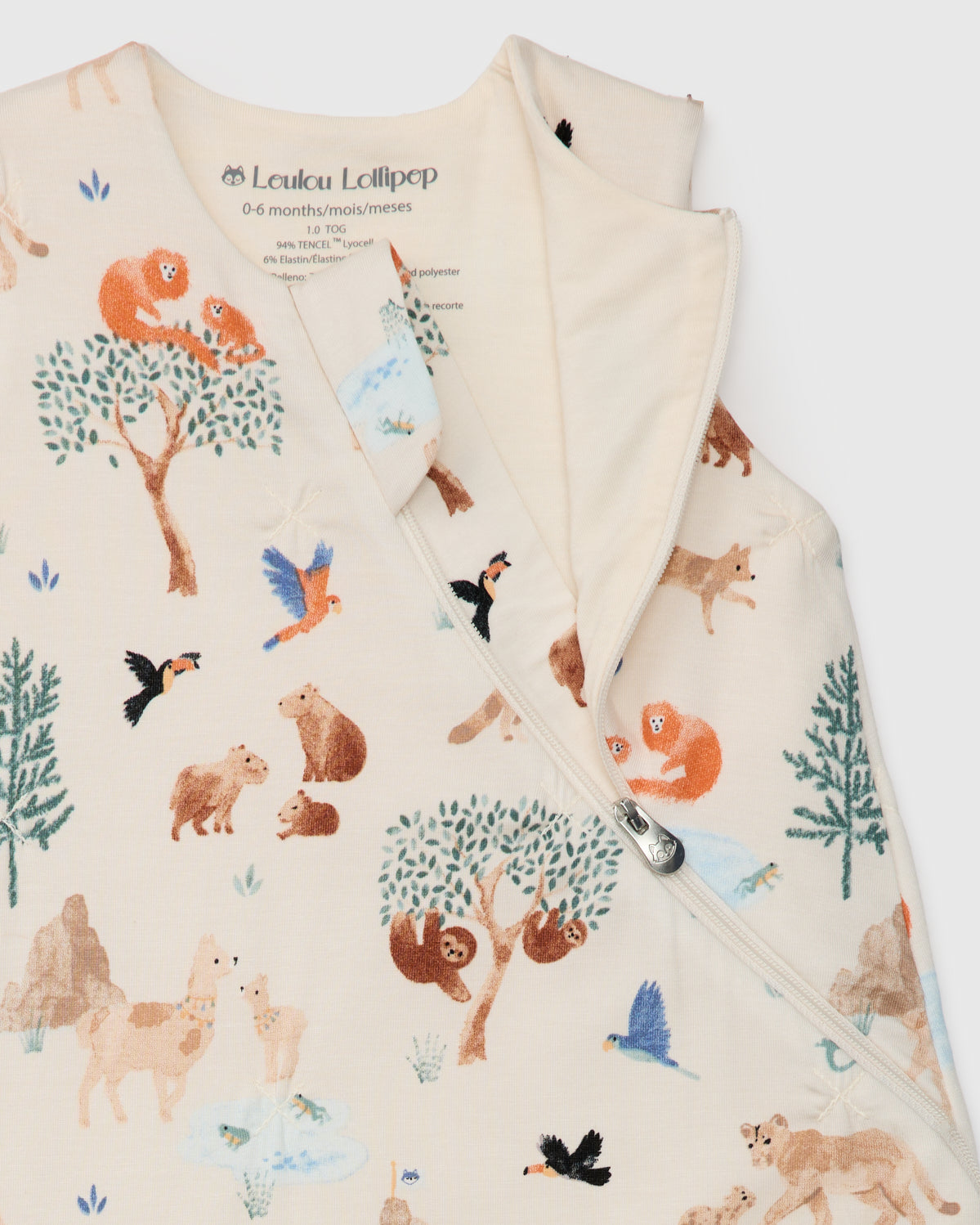
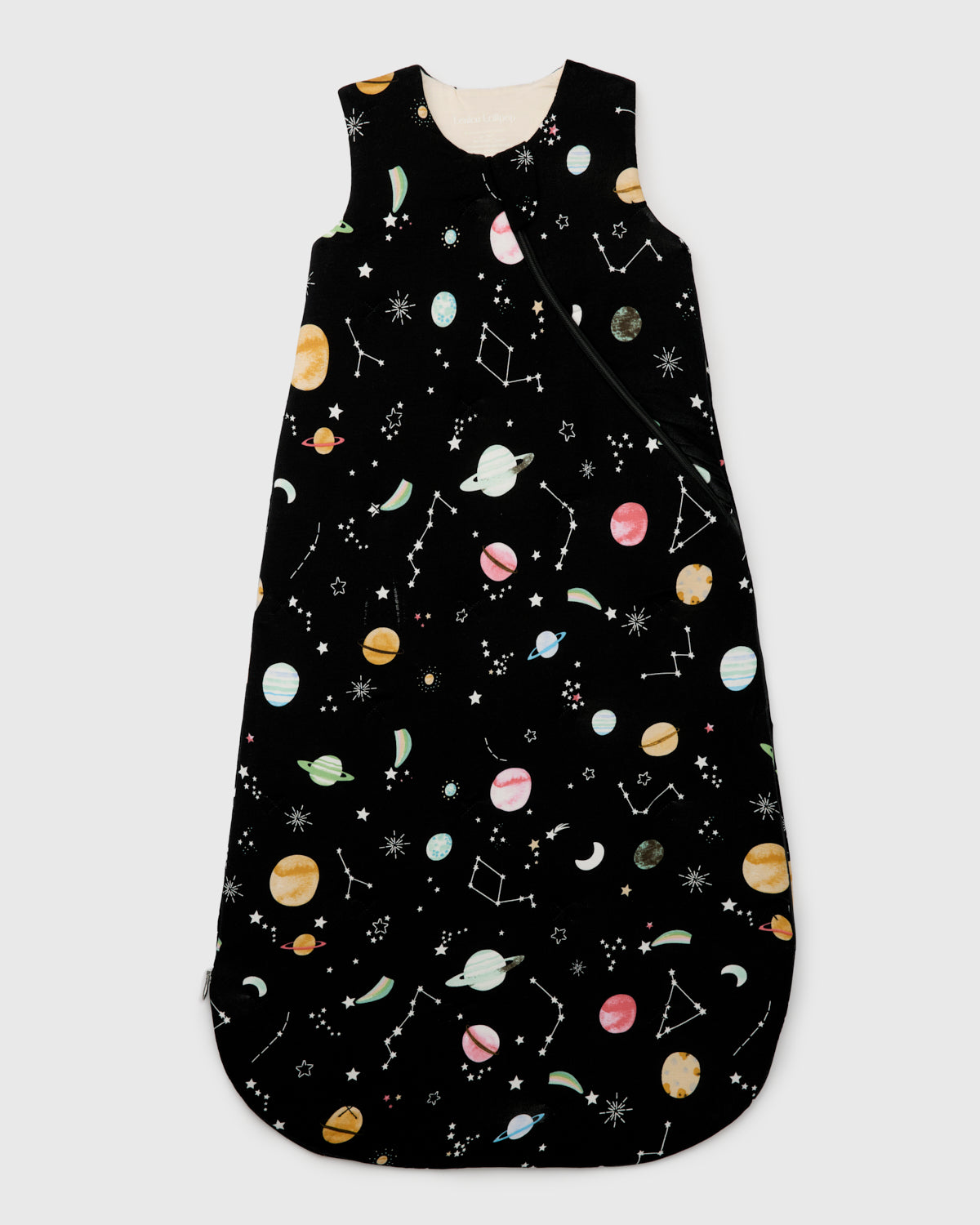
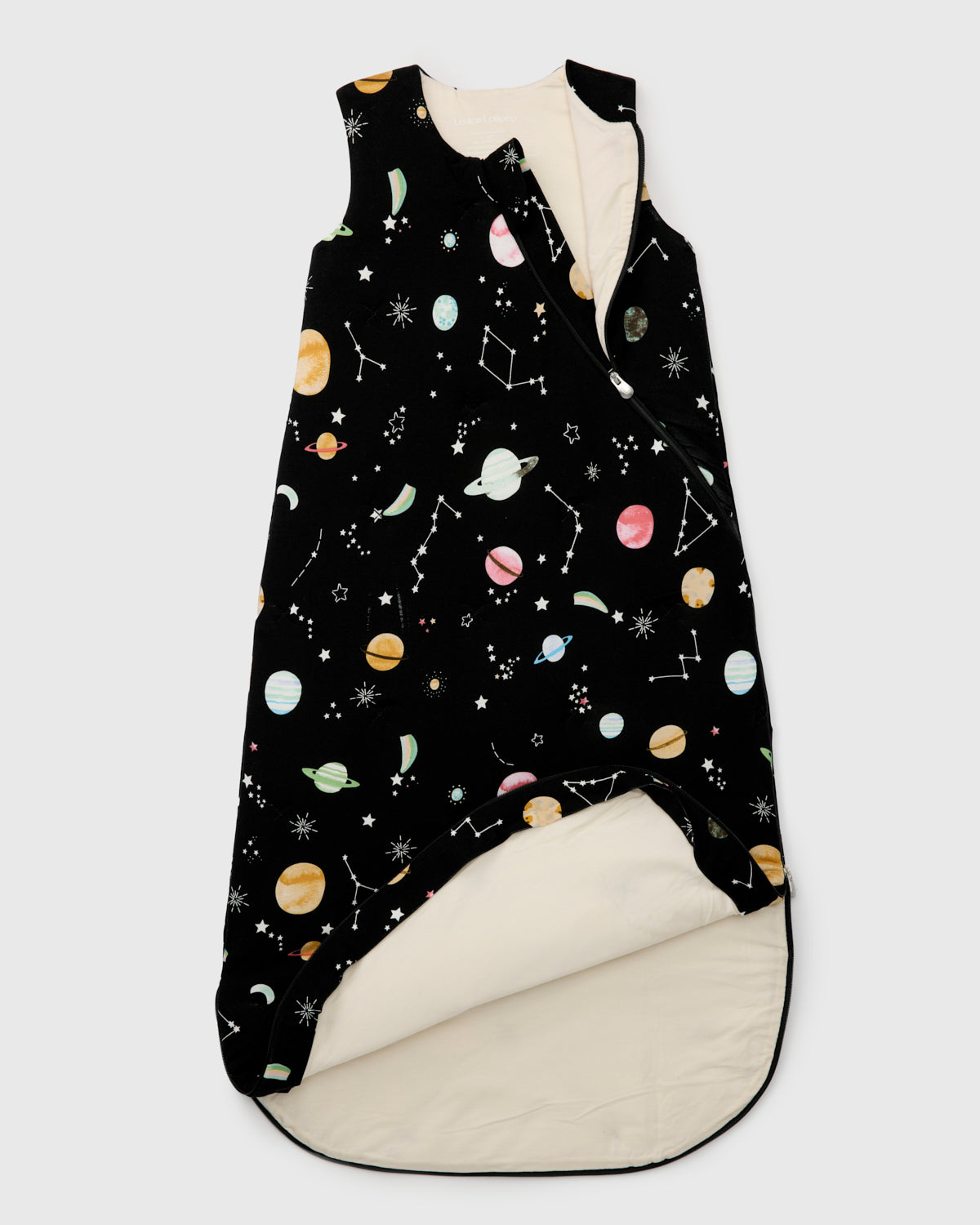
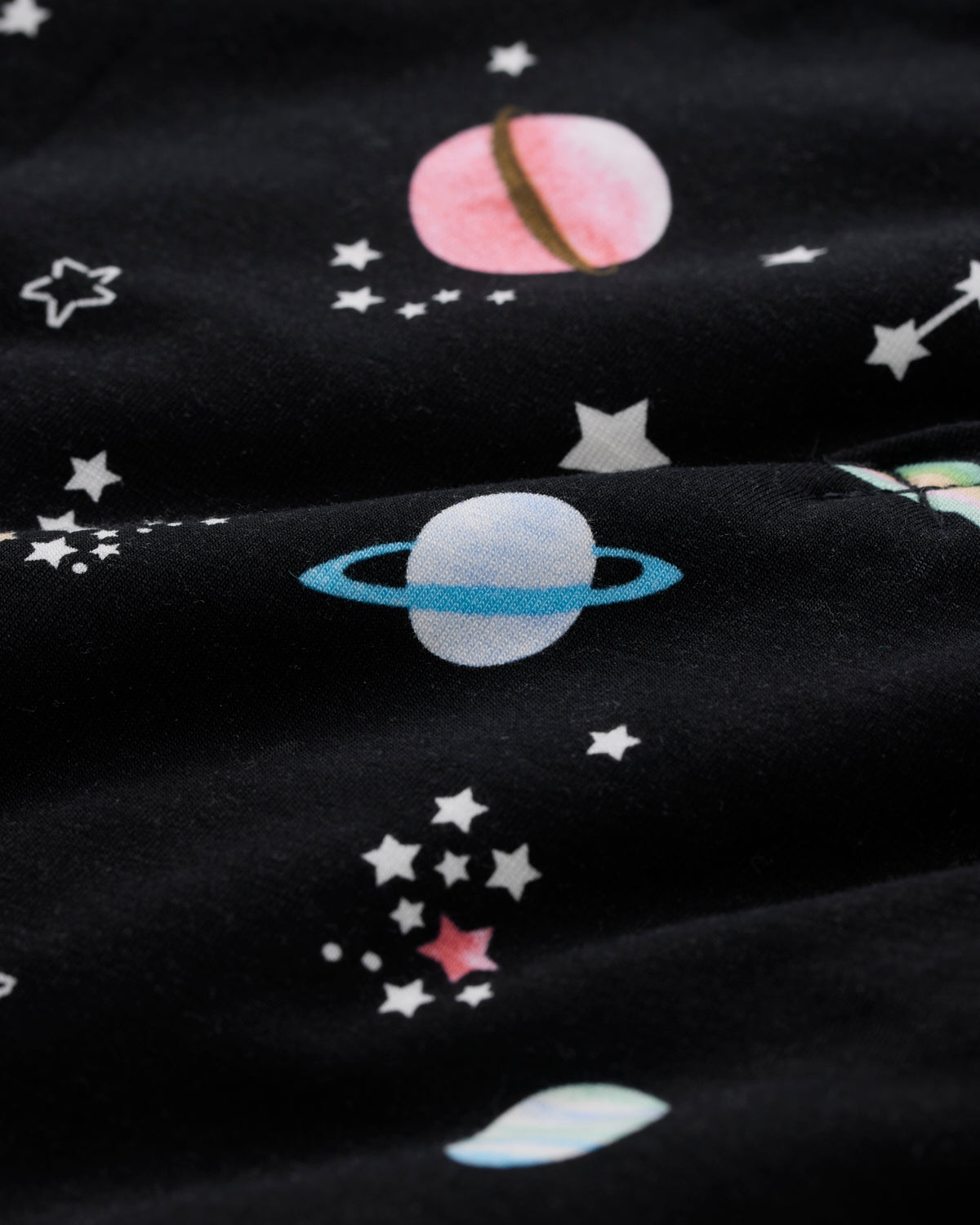
Know what you need? Every print and size, in buttery-soft TENCEL™ Lyocell or breathable Tanboocel® Bamboo Viscose, with the 2-way zip parents actually ask for.
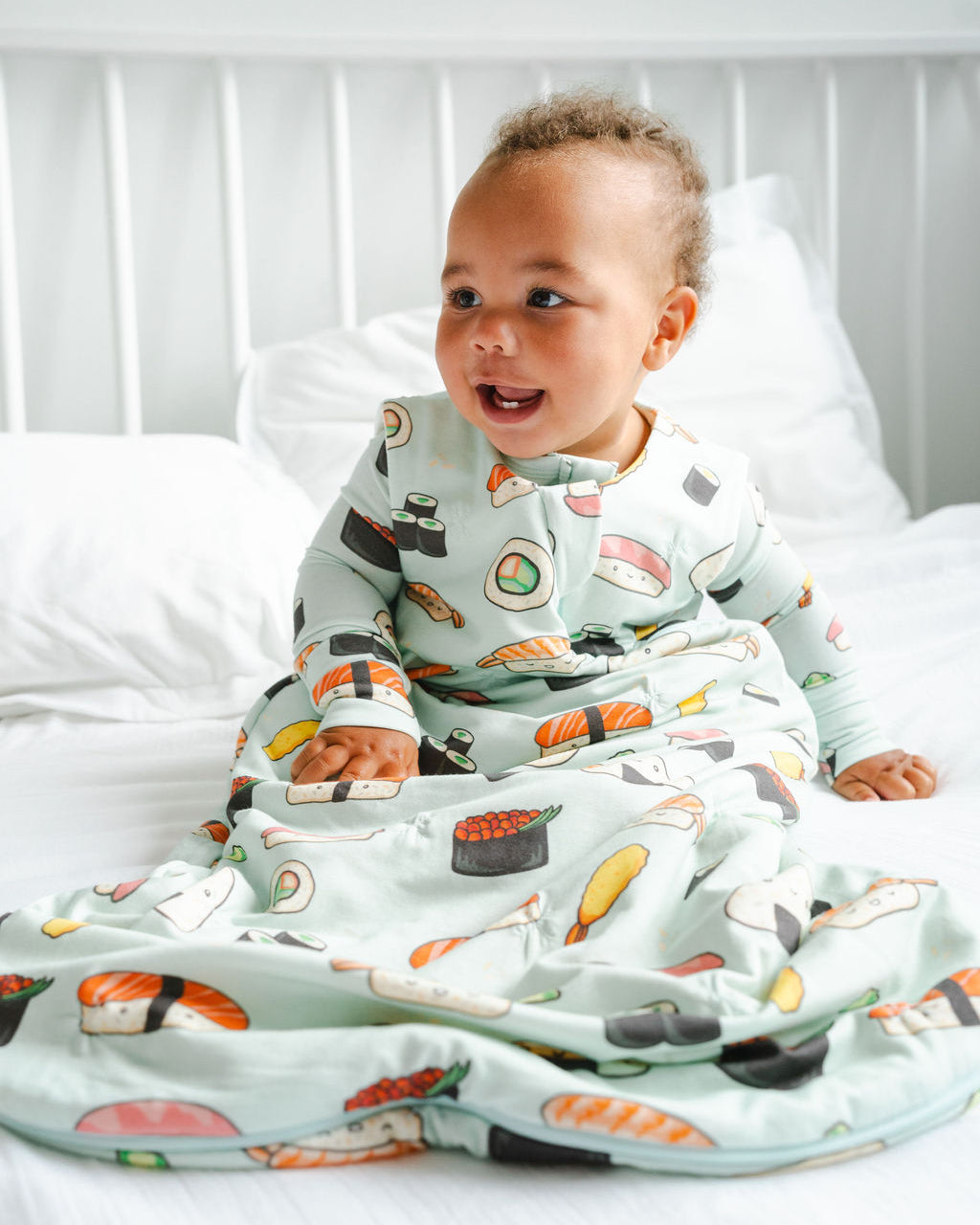
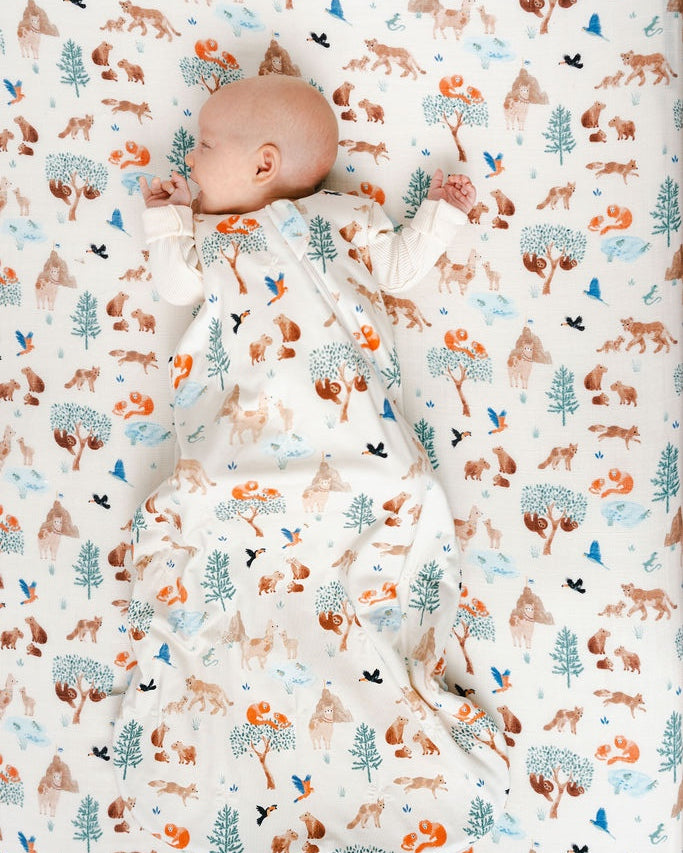





Why TENCEL™ for babies

Babies sweat. A lot. They can't regulate body temperature like adults, and bad sleepwear makes the problem worse — clammy fabric, restless nights, parents up at 2am with a wide-awake baby.
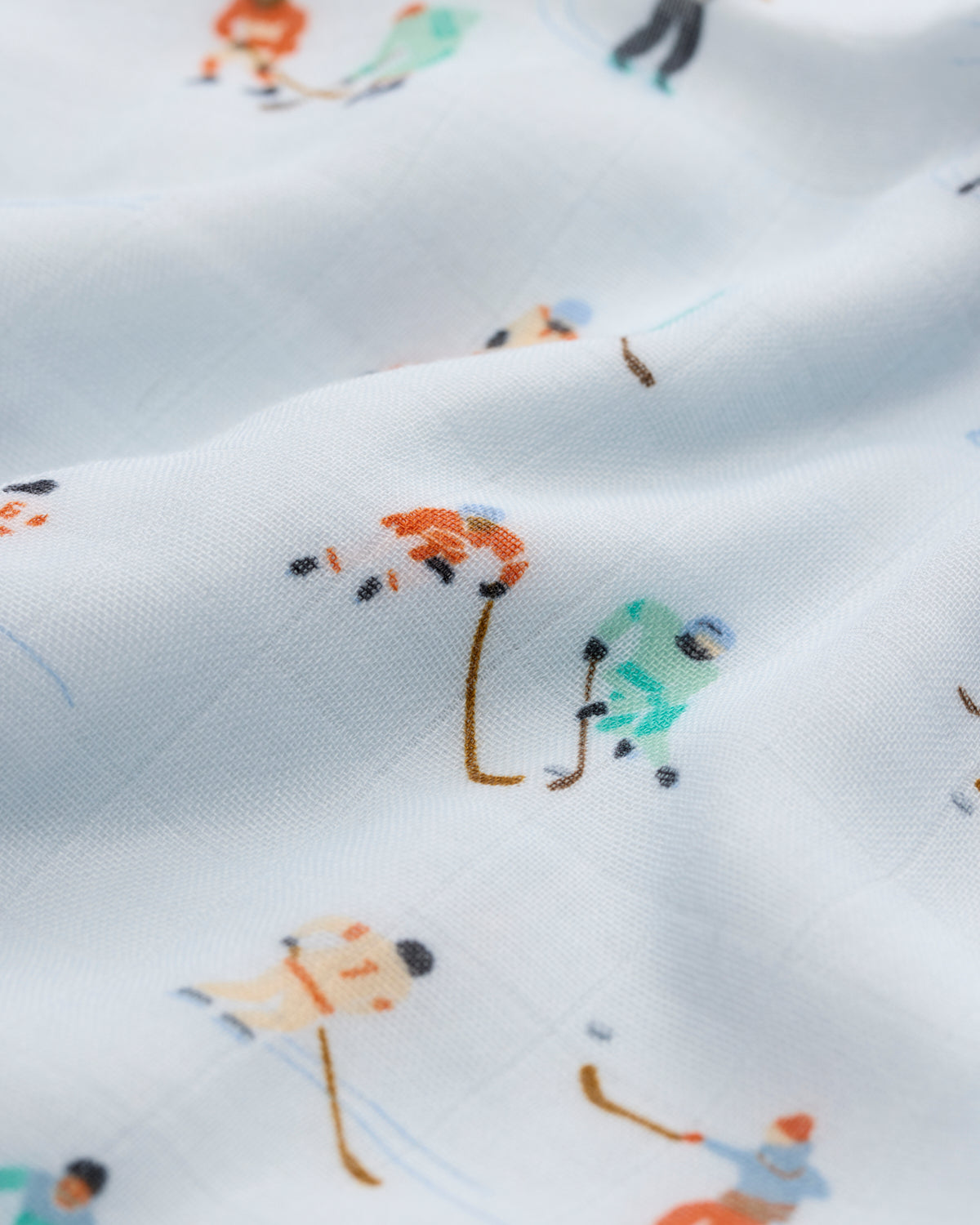
TENCEL™ Lyocell solves a real problem. It's a botanic fiber made from eucalyptus wood pulp, and independent testing shows it absorbs moisture roughly 50% more efficiently than cotton. When cotton gets damp, it clings. TENCEL keeps wicking. That difference matters when your baby is in the same garment for 10–12 hours.
Regulates temperature in both directions
Cool in summer, warm in winter — without bulk.
Stays dry against the skin
Less sweat trapped means fewer wakeups from being uncomfortable.
Gentle on eczema-prone skin
The National Eczema Society lists TENCEL alongside cotton as suitable for sensitive skin. Smooth fiber surface means less friction.
Closed-loop production
99% of the solvent used is recycled. Less water, less waste than conventional cotton.
Sleep bag vs loose blanket
Loose blankets have been the default for generations. Here's how they actually stack up.
| Loulou Lollipop Sleep Bag | Loose Blanket | |
|---|---|---|
| Wearable fit | Yes — wraps securely around baby | No — loose around baby all night |
| Stays on all night | Always — can't be kicked off | Often kicked off, baby wakes cold |
| Temperature control | TOG-rated for room temperature | Uncontrolled — too hot or too cold |
| Loose fabric in crib | None | Yes — bunches and shifts during sleep |
| Fabric type | TENCEL™ Lyocell — moisture-wicking, breathable | Typically synthetic or treated cotton |
| Sized for babies | Yes — 0–6 M, 6–18 M and 18–36 M | One size — not designed for infants |
Are sleep bags safe?
A sleep bag is a wearable blanket. It keeps your baby warm without putting anything loose in the crib — which is the reason paediatric guidance points to them in the first place.
The American Academy of Pediatrics' 2022 safe sleep recommendations put it directly: if you're worried about your baby getting cold, you can dress them in layers of clothing or use a wearable blanket. The same guidance notes that a baby needs only one more layer than you would wear in the same environment to be comfortable, and advises against weighted swaddles, weighted sleep sacks, and weighted objects placed on or near a sleeping baby. None of our sleep bags are weighted.
The rules that matter, every night:
- Back to sleep, on a firm flat surface. A sleep bag doesn't change this — baby still goes down on their back, in a crib or bassinet that meets current safety standards.
- Nothing else in the crib. A fitted sheet and the sleep bag. No pillows, bumpers, positioners, or loose blankets.
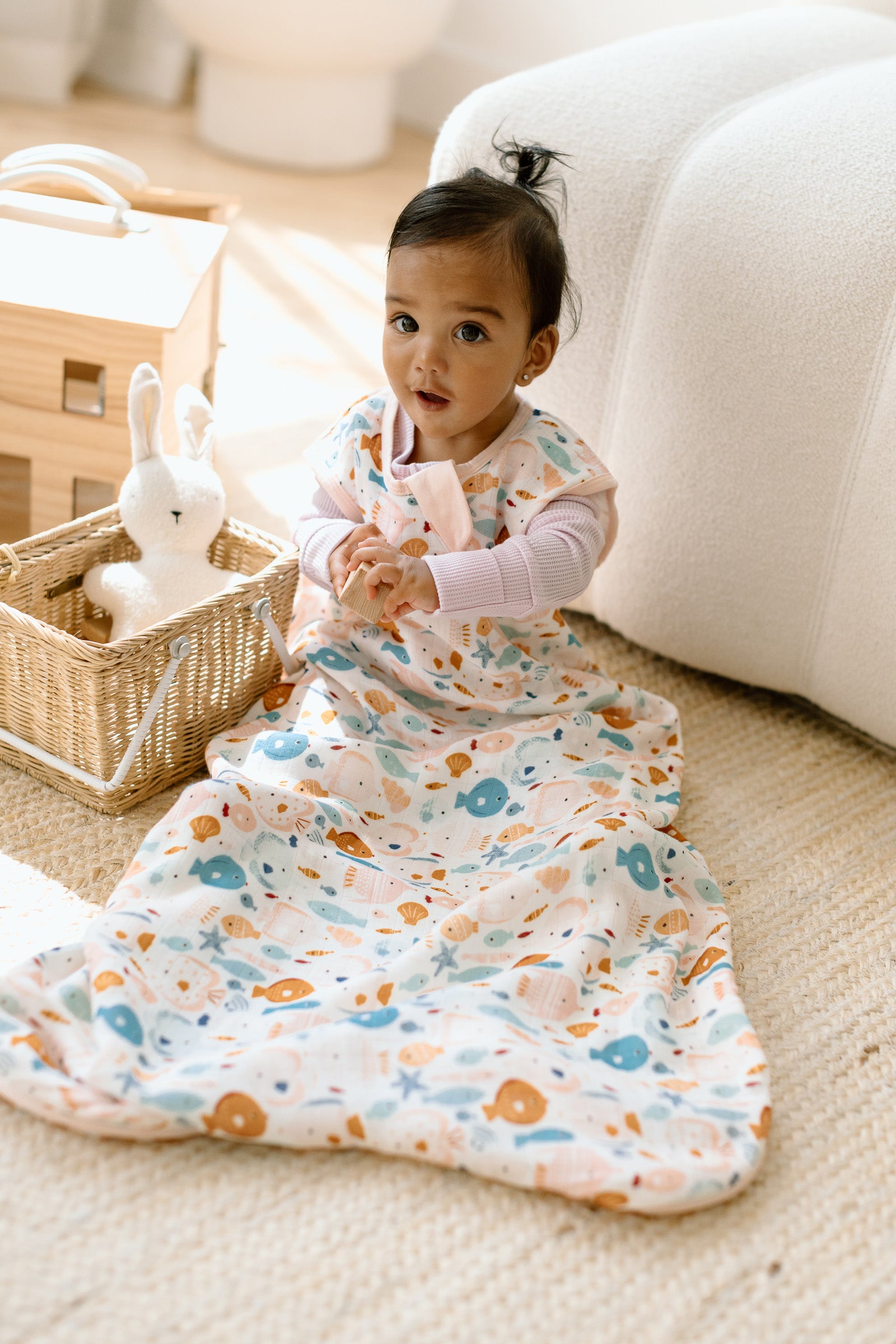
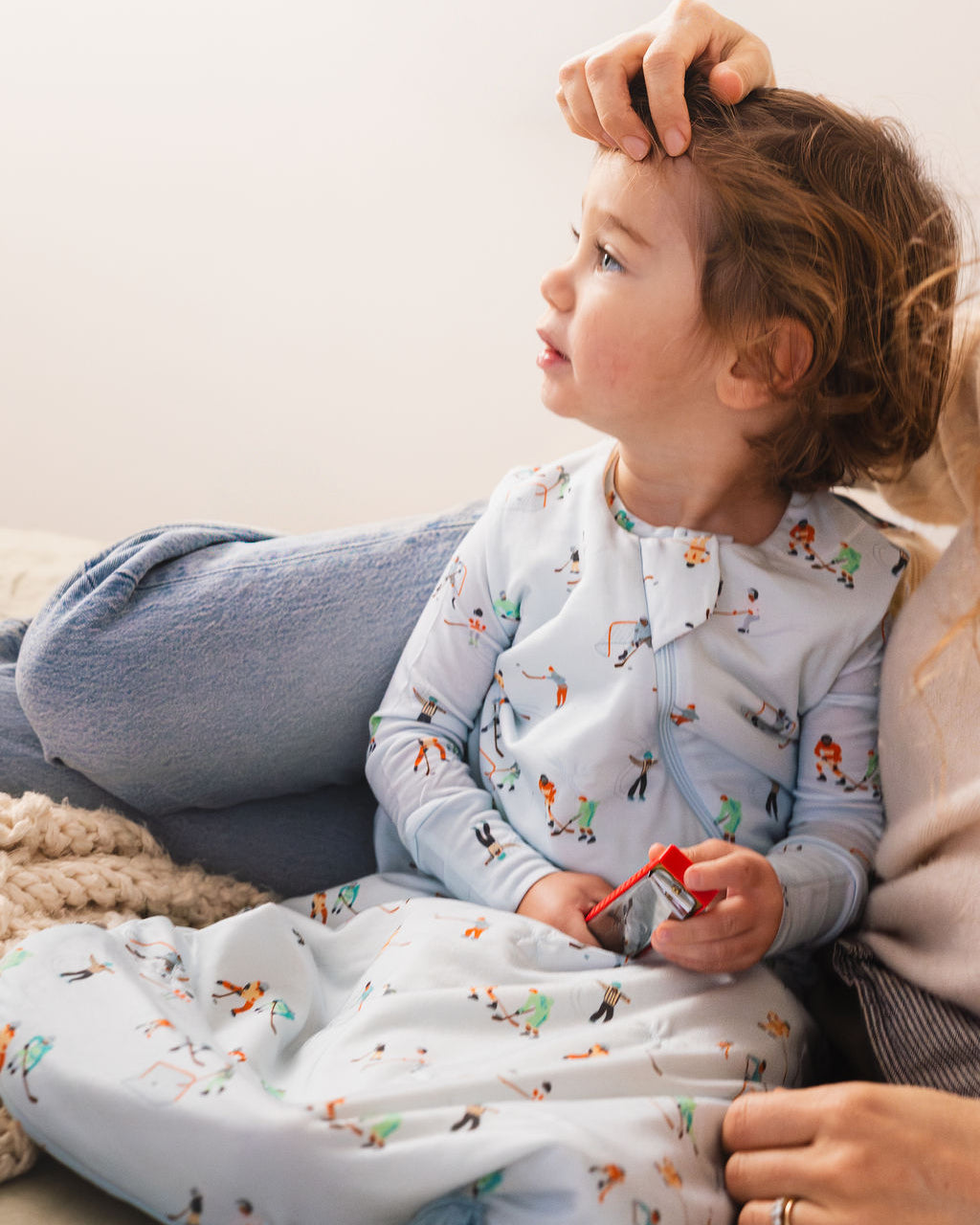
- Safe once your baby rolls. Sleep bags leave the arms free, so unlike a swaddle they don't have to be stopped when your baby starts rolling. Rolling is usually the signal to move from a swaddle into a sleep bag.
- Snug at the top, roomy at the bottom. The neck opening and armholes should be small enough that baby can't slip down inside; the bottom should be wide enough for free hip and leg movement.
- Don't over-layer. Check your baby's chest or back — it should feel warm and dry, not damp or hot. Hands and feet run cooler and aren't a reliable guide.
This is general information, not medical advice. For guidance specific to your baby, talk to your paediatrician or public health nurse. The full recommendations are published by the American Academy of Pediatrics at healthychildren.org.

Every detail, every night
Every Loulou Lollipop sleep bag is built around the details that make a real difference at 2am.
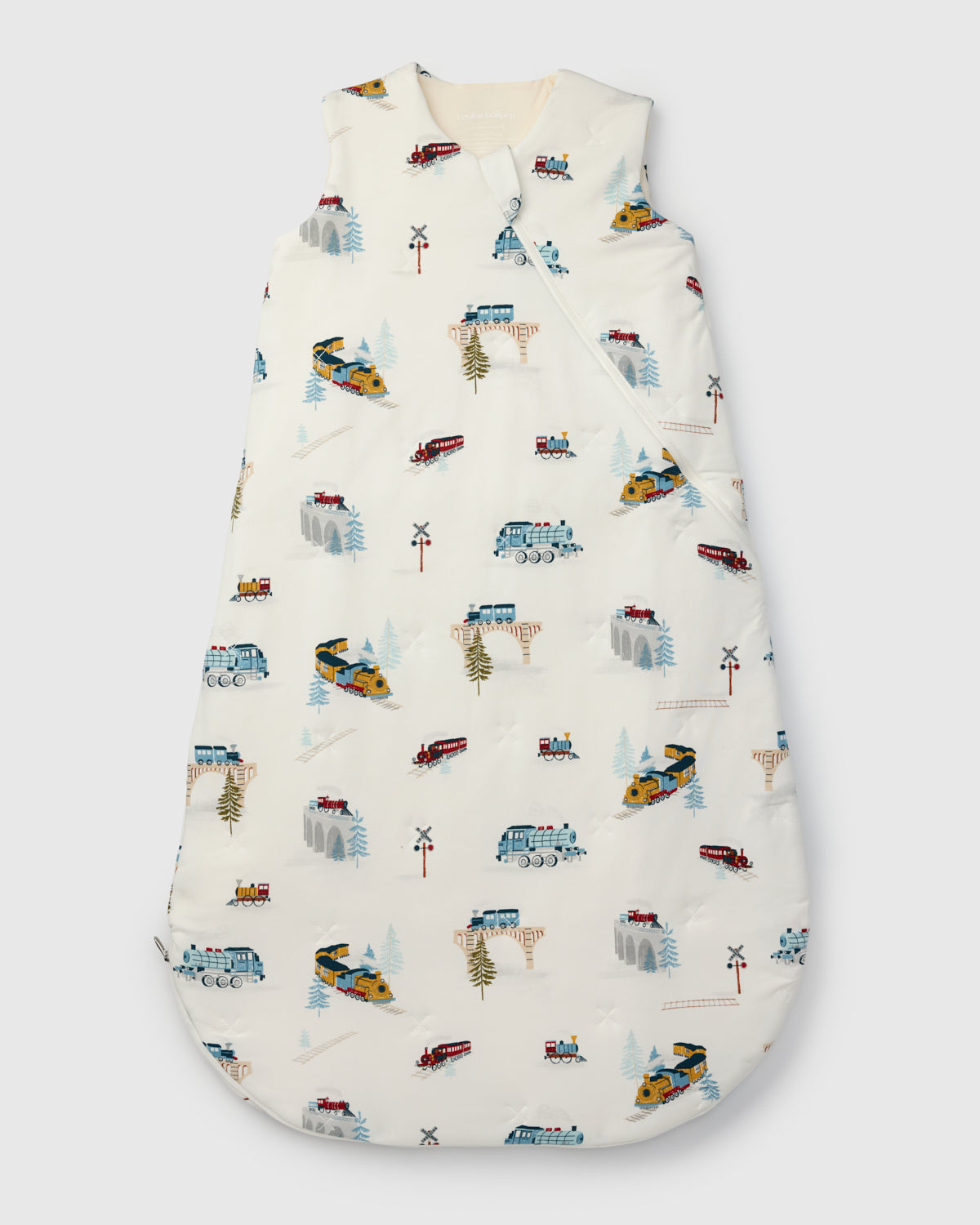
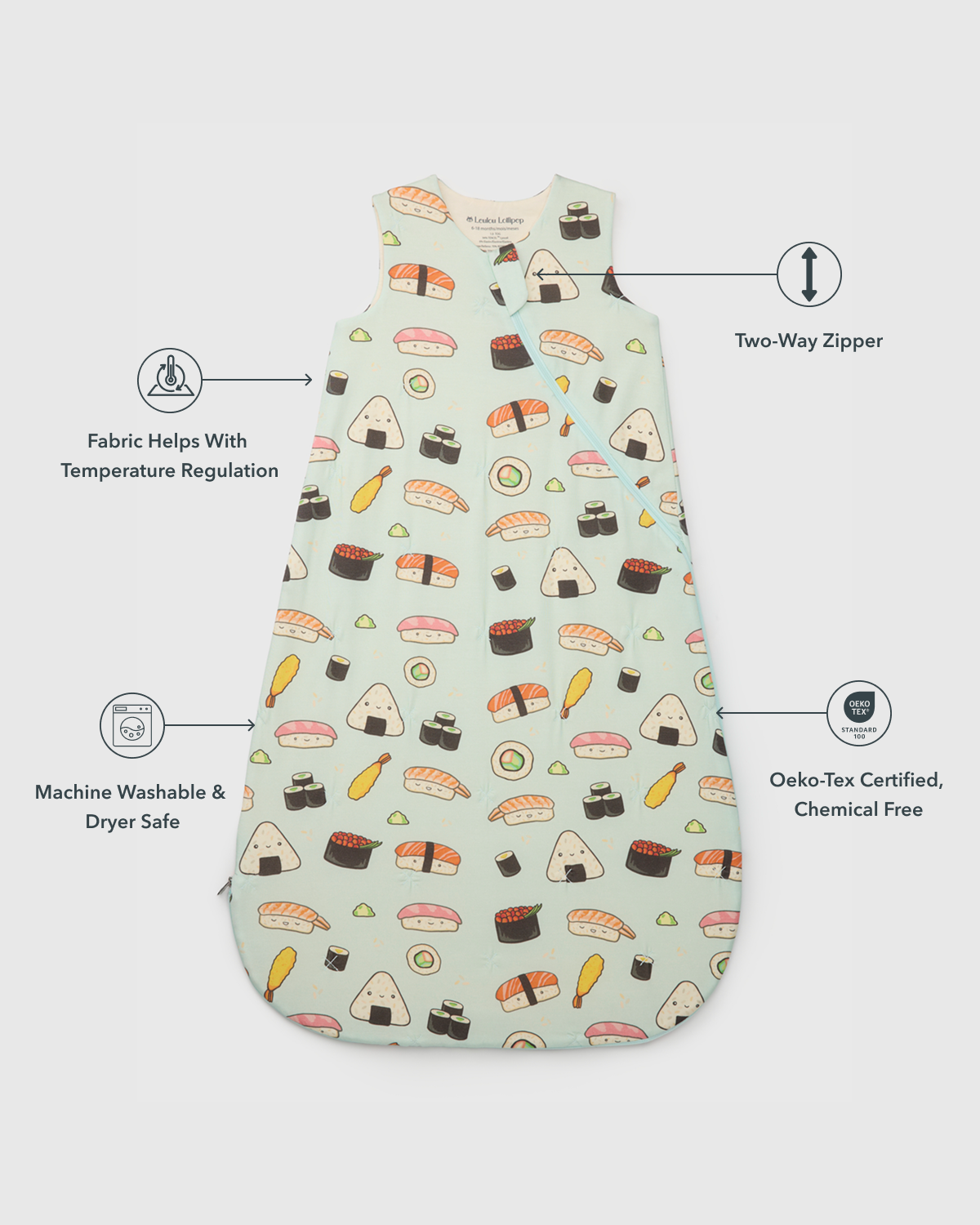
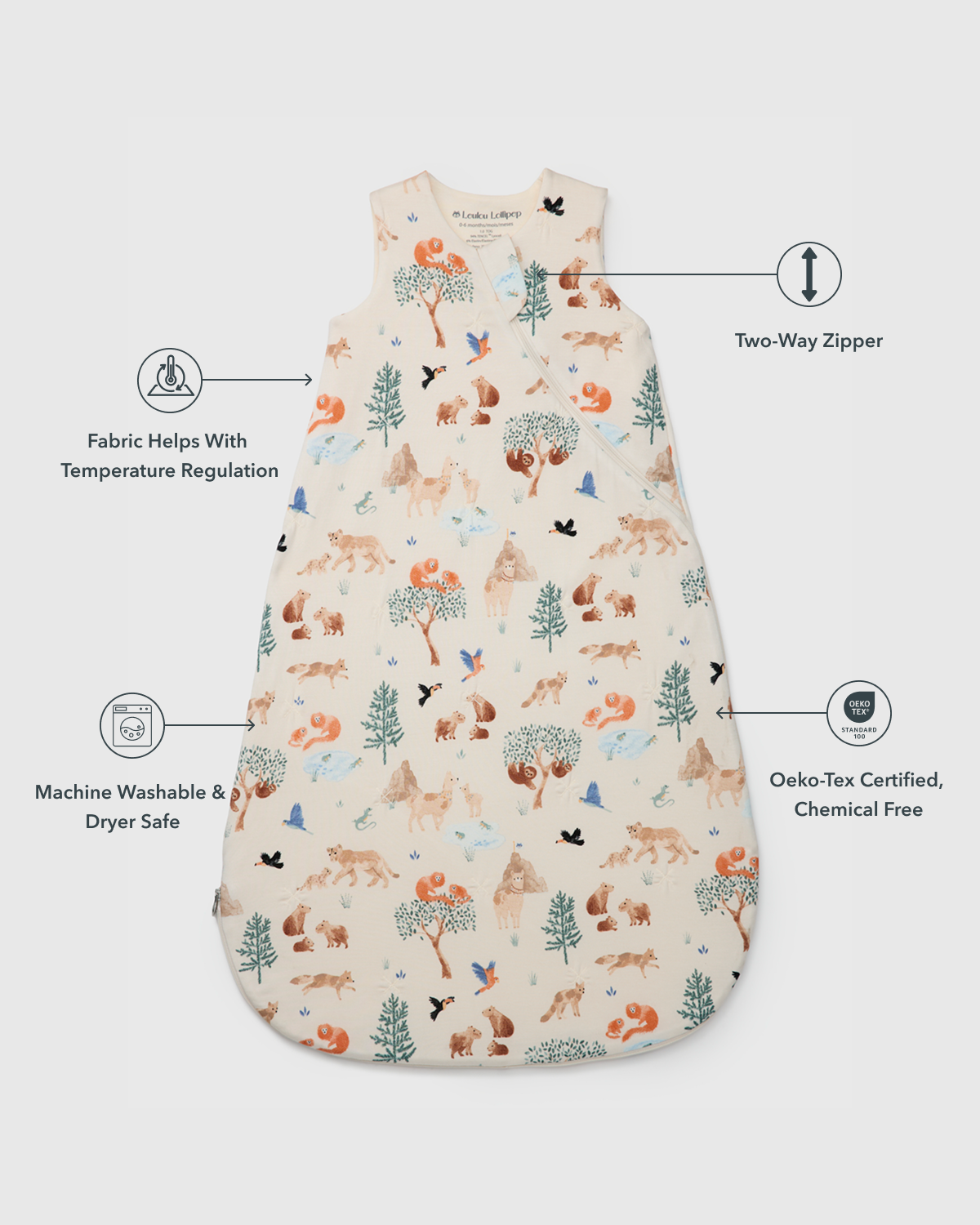
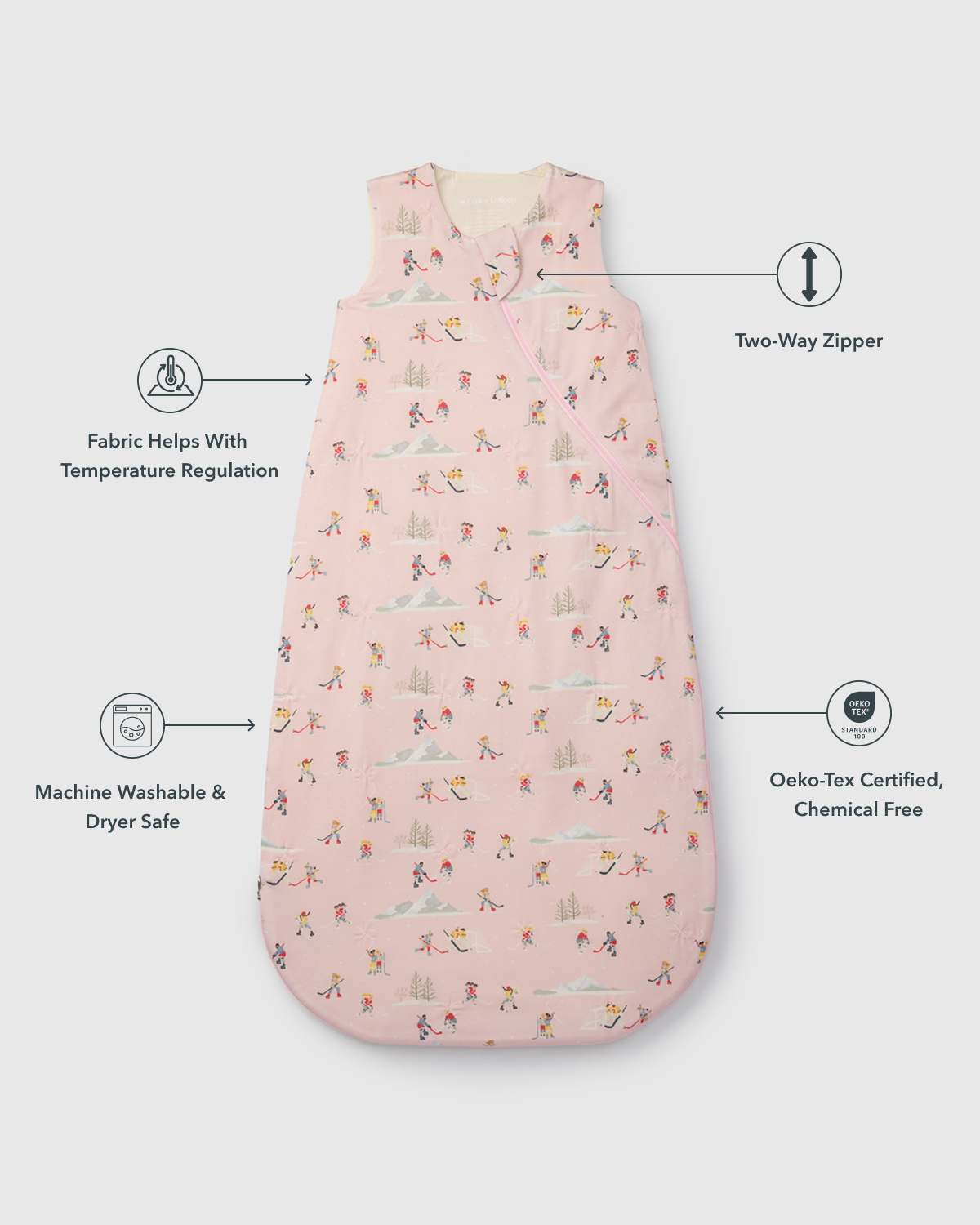
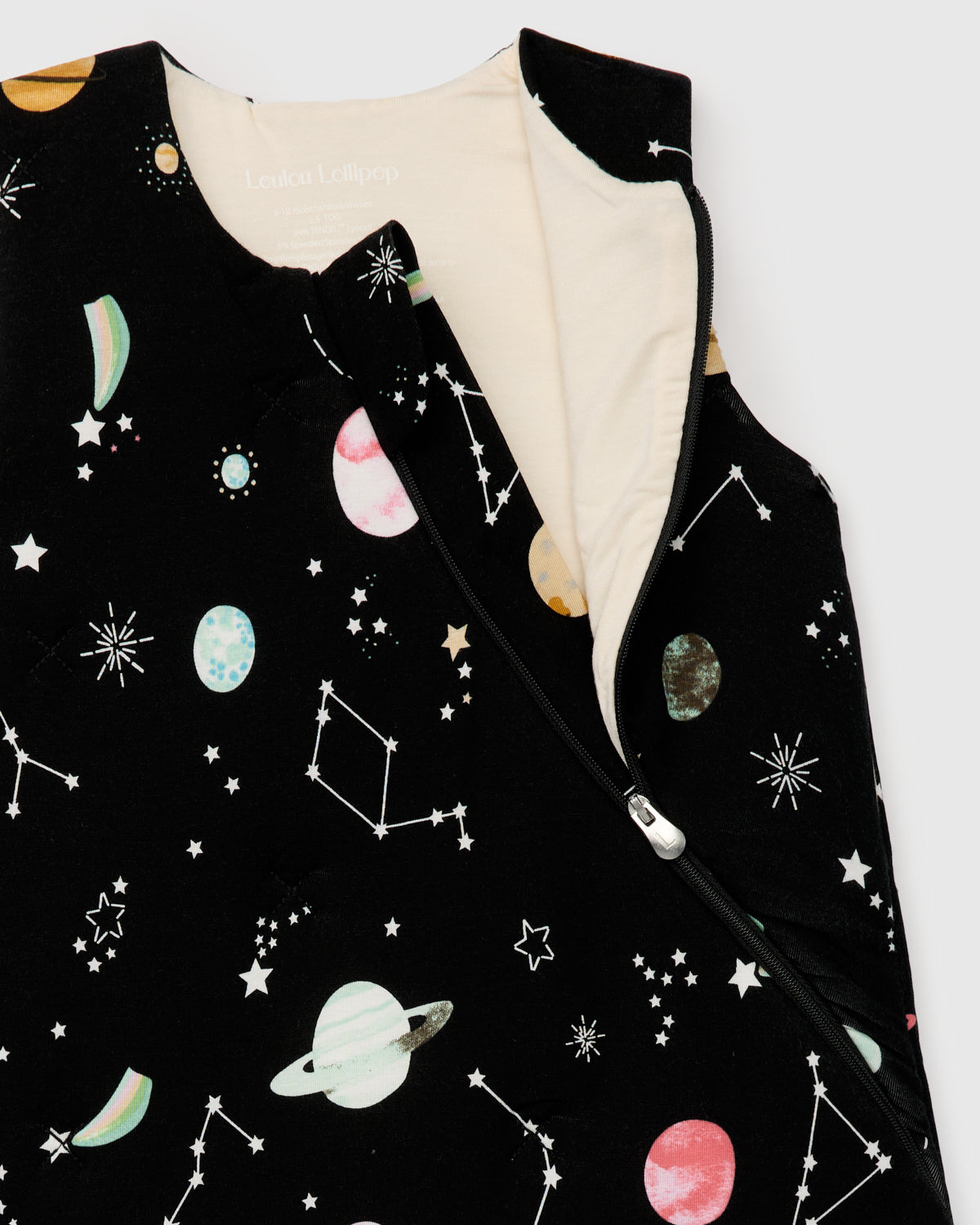
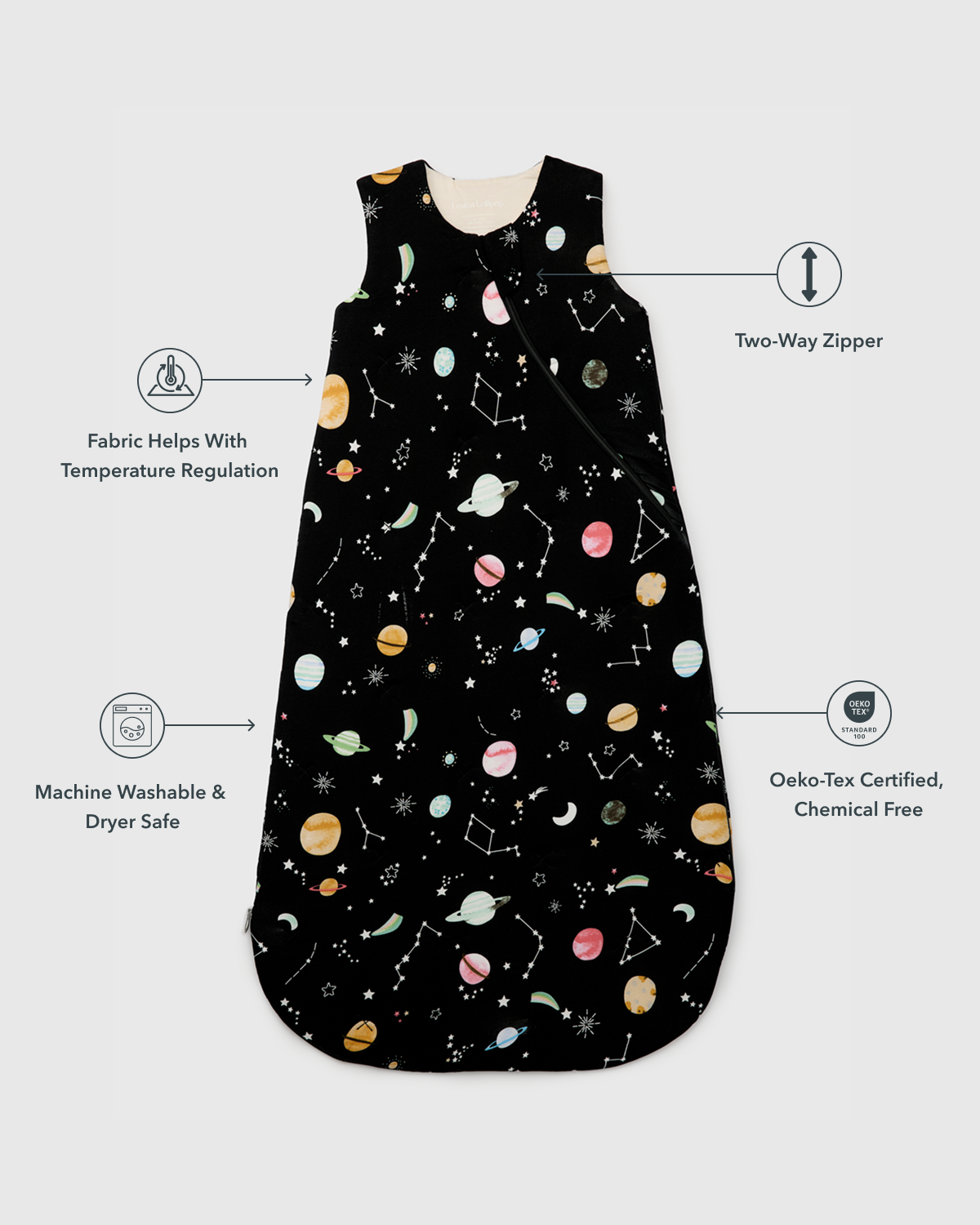
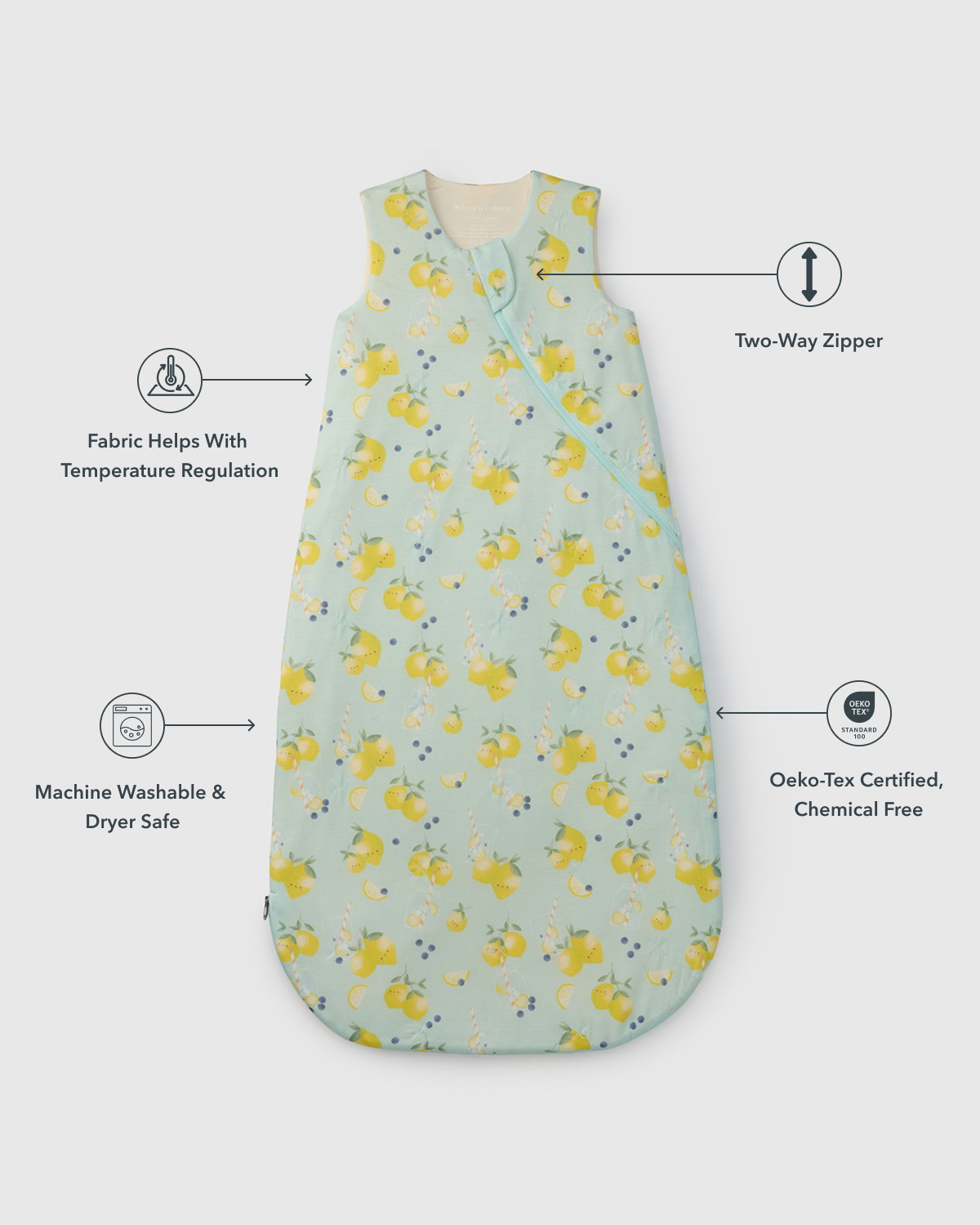
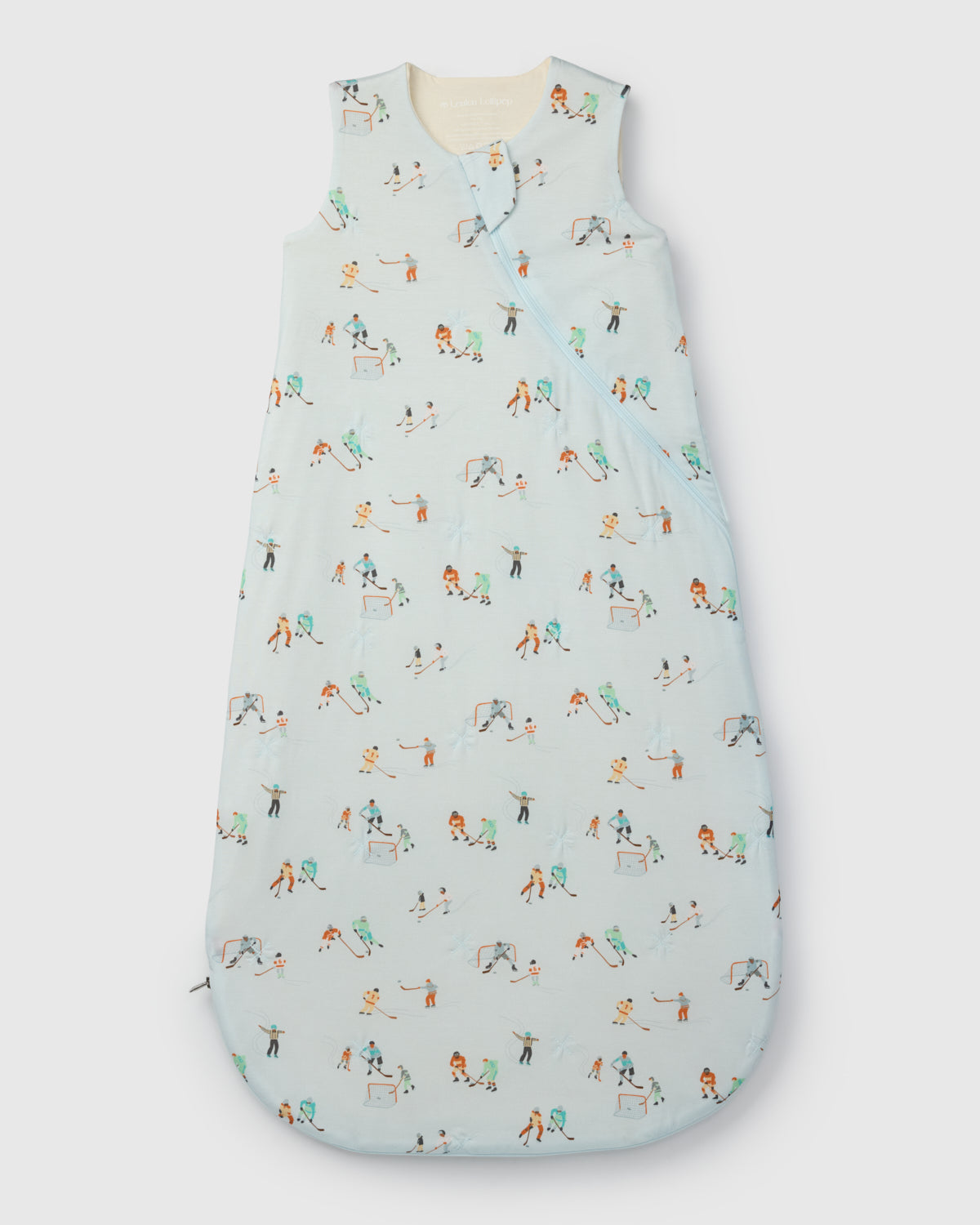
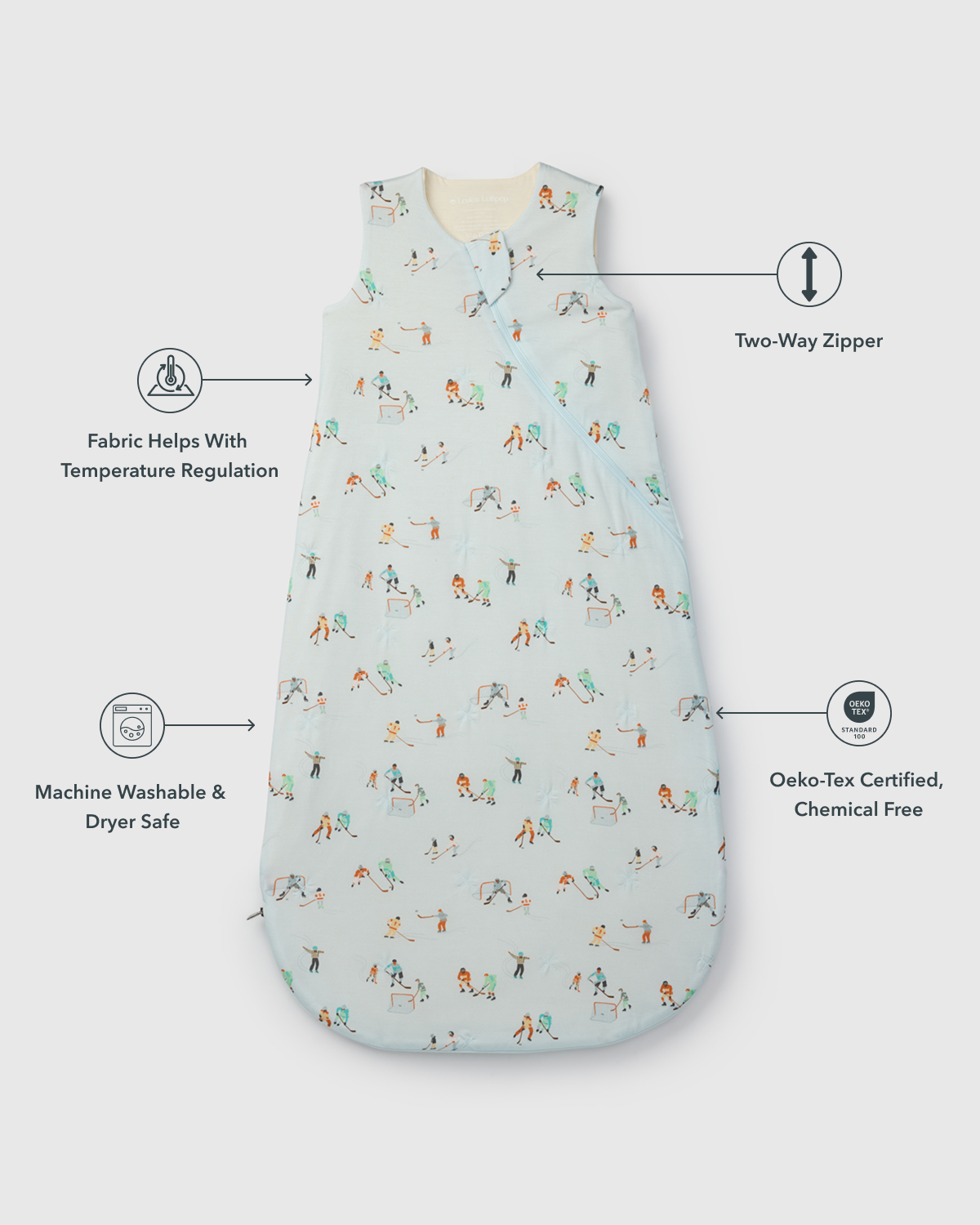
- 2-way zipper — opens from the bottom for quick diaper changes without fully unwrapping baby
- Sleeveless design — free arm movement for natural sleep positions
- Hidden seams + zipper guard — smooth against delicate skin, no friction points
- Wearable design — stays on all night, no loose fabric bunching or shifting
- TOG-rated in 0.5, 1.0, and 2.5 — matched to room temperature so baby is never too hot or too cold
Save with a sleep starter bundle
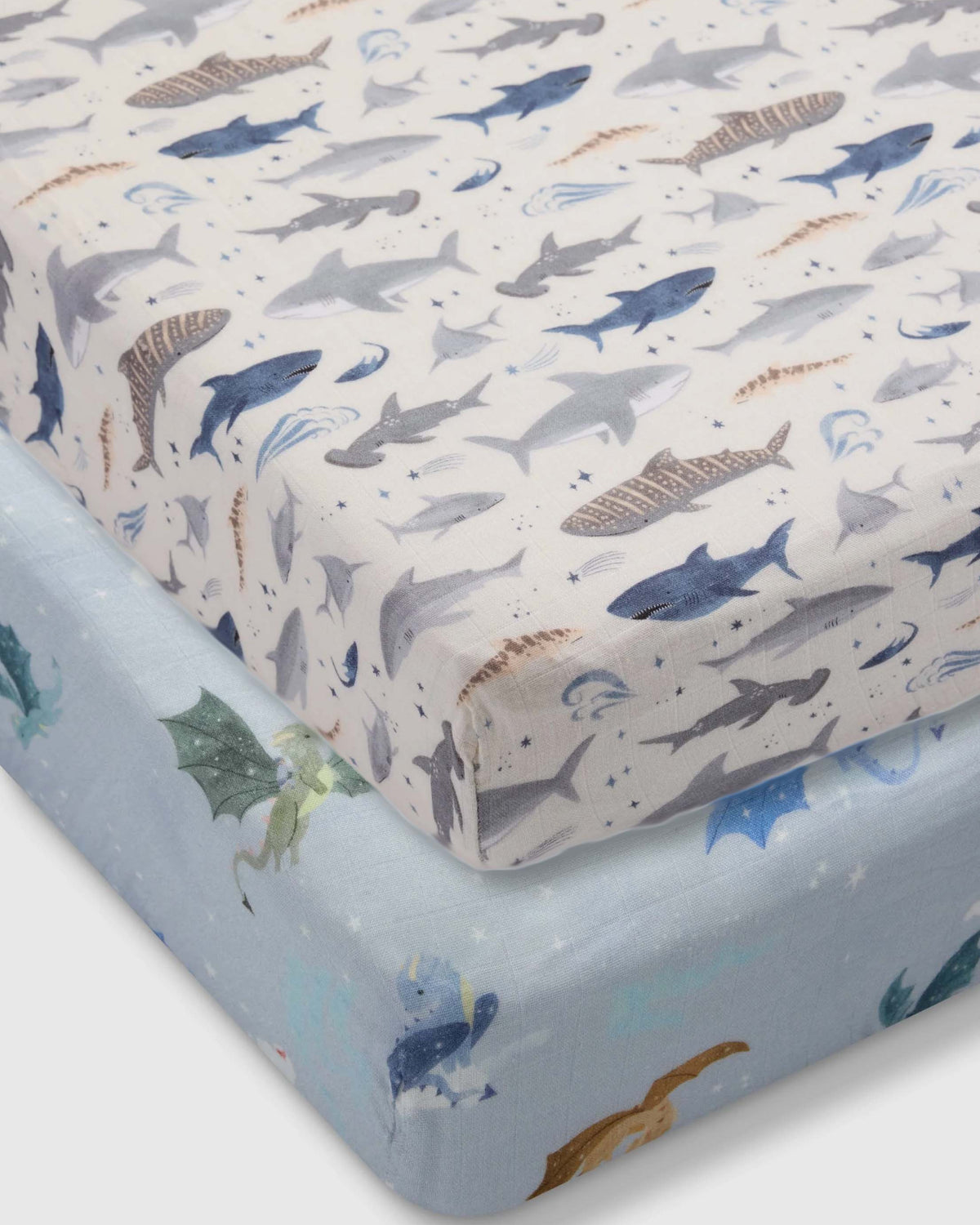
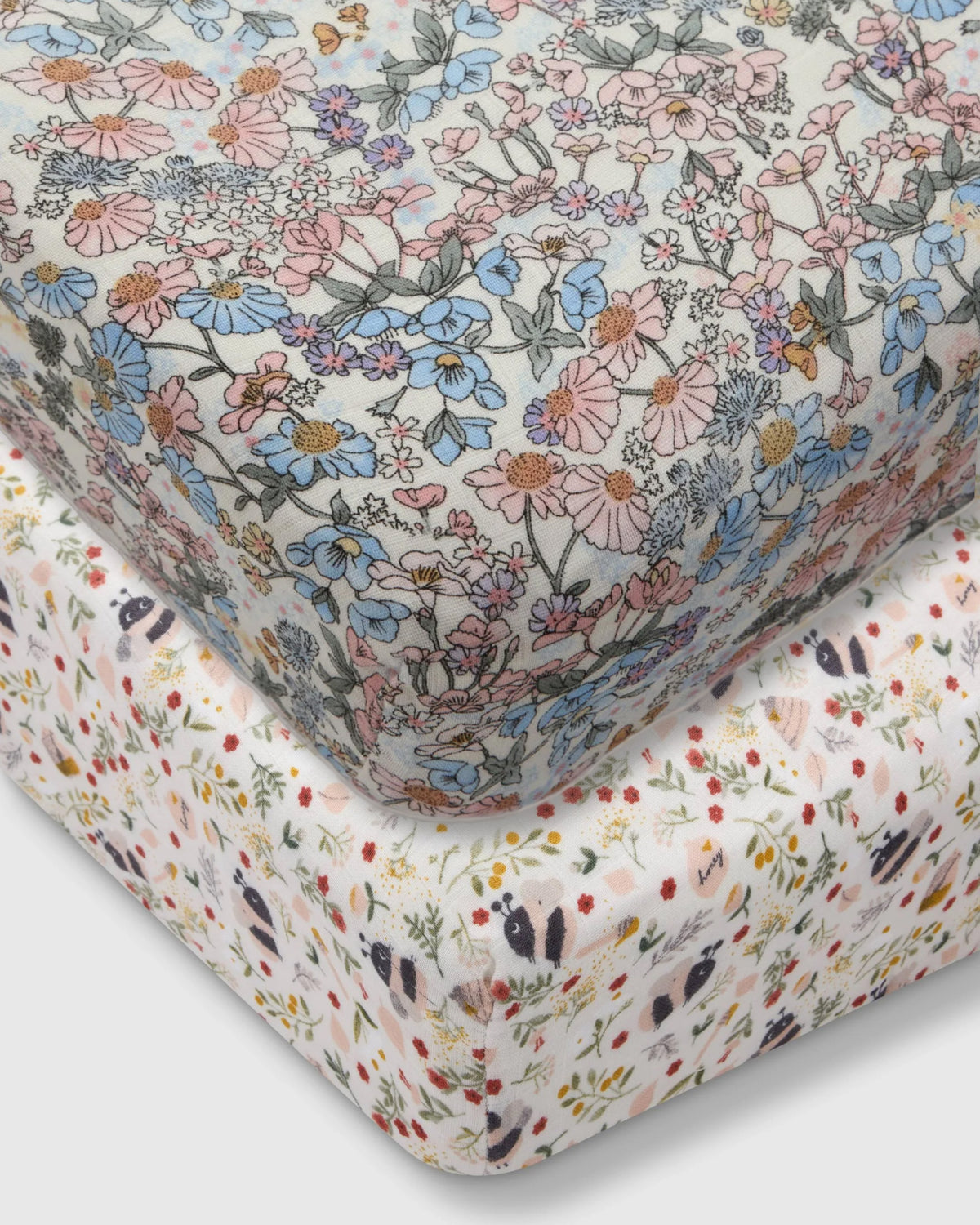
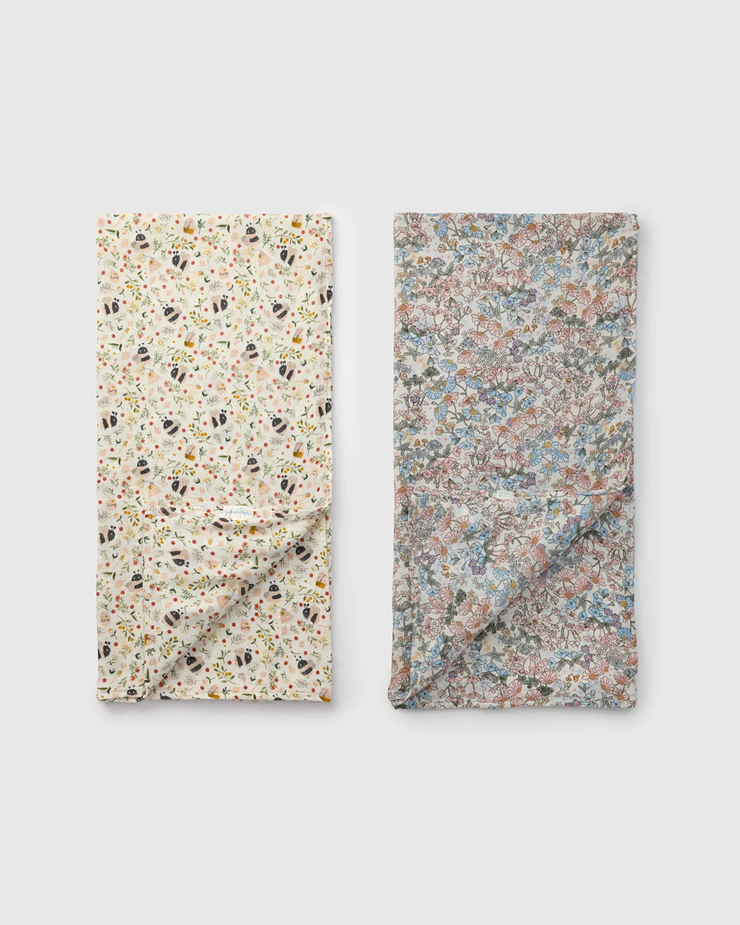
Pair the sleep bag with the swaddle and fitted sheet your baby will actually use. Same print, fully coordinated.

Care and sizing
How do I wash a sleep bag?
Machine wash cold on a gentle cycle. Tumble dry low or hang dry. No bleach, no fabric softener — softener coats the fibres and reduces moisture-wicking performance on TENCEL™.
What size should I get?
Sleep bags are sized by height and weight, not age — see the size chart on this page or on any product page for the exact ranges. If your baby falls between two sizes, go by weight rather than the age label. The fit that matters is at the top: the neck and armholes should be snug enough that baby can't slip down inside the bag, with plenty of room to kick at the bottom.
Which TOG do I need?
0.5 TOG for rooms 24°C and above. 1.0 TOG for year-round use in rooms 20–24°C. 2.5 TOG for cool rooms below 20°C or winter use. Always check room temperature before dressing baby for sleep.
Frequently Asked Questions
When can a baby start using a sleep bag?
From birth. Our smallest sleep bag is 0–6 M, which fits 23–26" and 10–16 lbs — check the size chart on this page to confirm your baby is in range, and make sure the neck opening is snug enough that they can't slip down inside.
Is TENCEL™ good for babies with sensitive skin?
Yes. TENCEL™ Lyocell has a smooth, continuous fibre structure that lies flat against skin — less friction and less irritation than cotton or synthetic fabrics. Its moisture-wicking properties also help keep skin dry throughout the night, which matters for babies who sleep 10–12 hours in the same garment.
Can my baby wear a sleeper under the sleep bag?
Yes — most parents do. A fitted TENCEL™ sleeper under a 1.0 TOG bag is the most common combo. Avoid too many layers: one more layer than an adult would wear is a good rule of thumb.
Are sleep bags good for babies with eczema?
Many parents with eczema-prone babies tell us yes. TENCEL™ Lyocell's smooth fibre structure reduces friction against skin, and its moisture-wicking properties keep skin dry throughout the night — both factors that matter for babies with sensitive or reactive skin. Talk to your paediatrician for your child's specific situation.
How does TENCEL compare to cotton for babies?
For babywear, TENCEL™ Lyocell outperforms cotton in moisture absorption — independent testing shows it absorbs roughly 50% more moisture than cotton. It also has a naturally smooth fibre structure, which means it stays soft wash after wash without pilling or roughening. Cotton tends to get stiffer and more textured over time. For babies in the same garment all night, that difference shows up quickly.