Canada
 United States



Walk through any baby gear section in a Canadian department store and you’ll find plastic tableware in nearly every aisle — colourful stacking bowls, divided plates with cartoon characters, sippy cups in every shade imaginable. It’s everywhere, and for decades it was considered perfectly fine. Then came the research. Then came the label-reading. And now a growing number of parents are standing in those same aisles, turning products over in their hands, squinting at fine print, and wondering whether the stuff they were handed at a baby shower is actually what they want their six-month-old gumming on.
This isn’t a simple question to answer, partly because “plastic” covers an enormous range of formulations — some genuinely safer than others — and partly because the marketing language on baby products has become sophisticated enough to obscure rather than clarify. So here’s what the material science actually says, what age-appropriateness looks like in practice, and why food-grade silicone has become the default recommendation from most paediatric feeding specialists working in Canada in 2026.
What’s Actually Inside Plastic Tableware
Plastic is not one material. High-density polyethylene (HDPE), polypropylene (PP), polycarbonate, melamine, and acrylonitrile butadiene styrene (ABS) are all “plastics” — and they behave very differently at a chemical level.
The headline concern most parents know is BPA (bisphenol A), a chemical used to harden polycarbonate plastics. Research linking BPA to endocrine disruption — meaning it can interfere with hormonal development — prompted Health Canada to add it to the list of toxic substances under the Canadian Environmental Protection Act back in 2010. Most reputable baby brands have since moved away from polycarbonate. A “BPA-free” label on a baby product sold in Canada today is, more or less, the baseline expectation.
But BPA-free does not mean chemical-free. Several studies published between 2018 and 2024 — including work out of the University of Calgary — found that many BPA-free plastics leach substitute chemicals like BPS and BPF under heat or mechanical stress. These bisphenol analogues appear to carry similar endocrine-disrupting properties to BPA, and they’re largely unregulated. Scratched or degraded plastic tends to leach more, which matters enormously for tableware that gets washed hundreds of times.
Phthalates are a separate concern, used to soften PVC-based plastics. They’re also associated with hormonal disruption and are regulated under Canada’s Prohibition of Certain Toxic Substances Regulations, though enforcement depends on the country of manufacture. A lot of inexpensive plastic tableware imported without third-party certification sits in a grey area here.
Melamine, common in bright-coloured toddler plates, is another one worth knowing. Under high heat — think dishwasher cycles, or hot food placed directly on the plate — melamine can release formaldehyde and melamine compounds into food. Studies from Taiwan and Germany documented this migration clearly. Health Canada hasn’t issued a formal ban, but paediatric nutrition bodies in Canada generally advise against melamine tableware for children under three.
None of this means every plastic product on the shelf is dangerous. Polypropylene (usually marked with a triangle-7 recycling symbol and the letters PP) is widely considered one of the safer plastics for food contact when it’s new, unscratched, and not heated excessively. But “safer” is doing real work in that sentence.
What Food-Grade Silicone Actually Is
Silicone is a polymer built around silicon and oxygen rather than carbon chains — which is the fundamental structural difference from petroleum-derived plastics. Food-grade silicone, the kind used in baby tableware and bakeware, is cured in a way that produces a stable, inert material. It doesn’t leach under heat. It doesn’t degrade when scratched in the way that polypropylene does. And it doesn’t harbour bacteria the way natural rubber can.
The specific claim that matters for baby products: food-grade silicone does not contain BPA, BPS, BPF, phthalates, or PVC. It’s also non-allergenic for nearly all children (latex allergies, which affect a small percentage of the population, are unrelated to silicone). Health Canada classifies food-grade silicone as a safe food contact material with no known migration concerns at temperatures ranging from -40°C to 220°C.
Durability is worth dwelling on. A silicone bowl dropped onto a tile floor doesn’t shatter. It doesn’t chip. A silicone spoon doesn’t crack after fifty dishwasher cycles. From a practical standpoint for parents of infants and toddlers — a demographic that throws, drops, and chews their tableware with remarkable commitment — silicone holds up in a way that plastic rarely does over time.
There is a caveat about cheap silicone worth raising: low-quality silicone products that use silicone as a filler material rather than a base can still contain contaminants. The standard test is the pinch test — squeeze and twist the product. If white shows through, there’s likely filler present. Products certified to FDA (US), LFGB (European), or Health Canada food contact standards have been independently tested for migration and purity.
Age-Appropriate Tableware: A Practical Framework
The “from what age” question is actually two questions: from what age is a material safe, and from what age is a particular product form appropriate for development.
On the safety side, food-grade silicone is appropriate from birth. Silicone pacifiers and teething rings are standard newborn gear. Silicone spoons and bowls are appropriate from the introduction of solid foods — typically around six months. There’s no lower age limit imposed by material safety.
Plastic is technically permitted from the same age but carries the caveats discussed above. The practical risk increases as products age, get scratched, and get heated repeatedly. For a product that will see daily use from six months onwards, the cumulative degradation of polypropylene over twelve to eighteen months of intensive use is worth factoring in.
On the developmental side, the picture is more textured. At six to eight months, babies beginning baby-led weaning or puree introductions need soft, flexible spoons — silicone is ideal here because it’s gentle on emerging teeth and sensitive gums, and it won’t transmit heat the way a metal spoon does. Suction bowls matter around this age too; a bowl that moves across the high chair tray while a child is learning to self-feed creates frustration and mess.
Between nine and fourteen months, as self-feeding becomes more intentional, pre-spoon grip tools and short-handled spoons become relevant. Silicone grip zones on handles help at this stage because the material provides tactile feedback and doesn’t slip when wet.
Toddlers from around fourteen to eighteen months onwards begin to benefit from divided plates and open cups (the much-discussed transition away from sippy cups is worth its own article, but the short version is that paediatric dentists and speech-language pathologists in Canada have largely moved away from recommending spout cups for extended use). Silicone or silicone-topped straw cups support this transition better than hard-spout plastic alternatives.
Why Silicone Has Become the Paediatric Default
It’s worth asking why, if food-grade silicone is clearly safer, the shift took so long. Part of the answer is cost — silicone tableware is more expensive to manufacture than injection-moulded polypropylene. Part of it is inertia; plastic dominated the baby market for forty years and change is slow. And part of it is that “BPA-free plastic” gave manufacturers an easy marketing out that let them keep cheaper materials in rotation without alarming consumers.
The shift accelerated after 2020, when several meta-analyses of bisphenol analog research received mainstream press coverage in Canada and the US. Paediatric dietitians, occupational therapists specialising in feeding, and speech-language pathologists began updating their recommendation frameworks around the same time. By 2024, the Canadian Paediatric Society’s practical nutrition guidance for starting solids explicitly mentioned material safety as a consideration when selecting feeding equipment — something that wouldn’t have appeared in that document a decade ago.
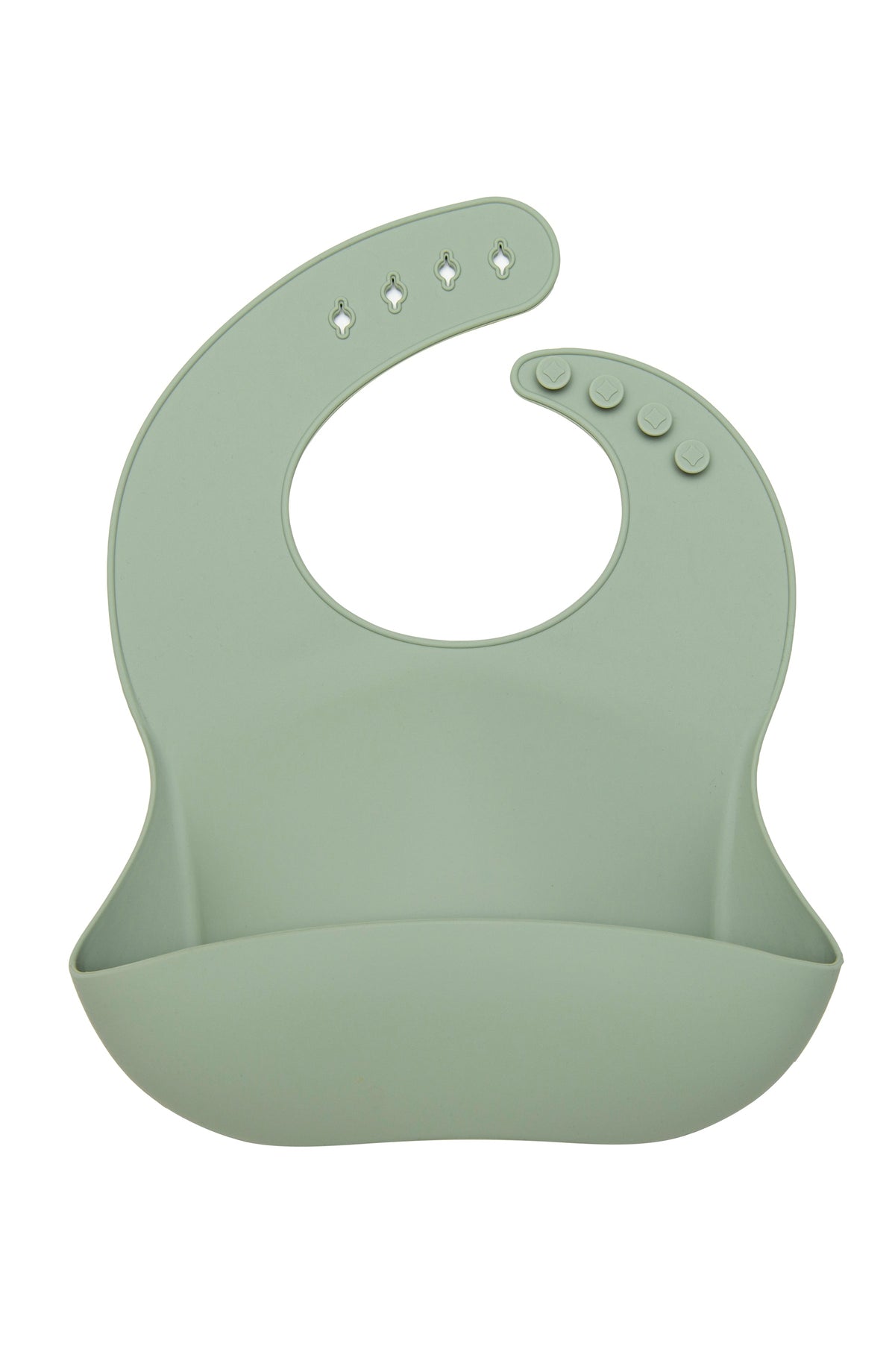
Loulou Lollipop, founded in Canada and certified B Corp, built its tableware range around food-grade silicone from the outset for precisely these reasons. The brand’s silicone tableware collection — which includes suction bowls, divided plates, spoons, and straw cups — is made to LFGB and FDA food contact standards and designed specifically for the six-month-to-toddler feeding window. The products are also designed with the ergonomics of self-feeding development in mind, not just material safety.
What to Look for on Labels in 2026
Regulatory language on baby products has improved, but it still requires some translation. Here’s what actually matters:
“100% food-grade silicone” means the product is silicone through and through, not silicone-coated plastic or silicone with filler. Cross-reference with a certification mark.
LFGB certification is the German standard for food contact safety, widely considered the most stringent in the world for silicone products. An LFGB mark means the product has been independently tested for migration at multiple temperatures.
FDA food contact compliance is the US equivalent and also rigorous. Look for explicit mention of FDA 21 CFR compliance rather than just “FDA approved” (the FDA doesn’t “approve” materials; it sets compliance standards).
“BPA-free” on a plastic product tells you very little without information about what the BPA was replaced with. Ask whether the product has been tested for BPS and BPF, or look for PP (polypropylene) without additional softeners.
“Free from PVC, phthalates, and heavy metals” is a meaningful claim on plastic tableware, especially for products manufactured outside North America.
And one more thing worth knowing: Health Canada’s website maintains a consumer product safety database where recalled children’s products — including tableware — are listed. It’s worth a bookmark. Parents who bought products at liquidation sales, received hand-me-downs, or purchased from international marketplaces without Canadian distribution should check the recall list before introducing older products into regular use.
The Environmental Side
Silicone wins the longevity argument clearly — a silicone bowl used from six months through to age three or four hasn’t been replaced four times the way a cracked polypropylene set might be. That matters for household cost, and it matters for landfill volume.
Silicone is not, however, infinitely recyclable. It requires specialist processing and is not accepted in most municipal blue-bin programs in Canada. Plastic recycling, in theory, solves this — but the practical recycling rates for polypropylene in Canada remain below 30% according to Environment and Climate Change Canada’s 2024 materials tracking data. Neither material is a perfect environmental solution.
Loulou Lollipop’s B Corp certification reflects a broader supply chain and materials commitment, including how products are designed for longevity and durability. Their baby feeding range is built to last through the full early childhood feeding window rather than requiring frequent replacement.
The Short Answer
If you’re equipping a feeding setup for an infant from six months onwards in 2026, food-grade silicone tableware — certified to LFGB or FDA food contact standards — is the more conservative, more durable, and better-supported choice. Polypropylene plastic from a reputable brand, when new and unscratched, is not inherently dangerous, but it degrades in ways that silicone doesn’t, and the substitute bisphenol research has made “BPA-free” a less reassuring claim than it once was.
The age question is less about when a material becomes safe and more about matching product form to developmental stage: flexible silicone spoons at six months, suction bases for early self-feeding, grip-friendly handles through the twelve-to-eighteen-month window, and open or straw cup transitions as spout cups phase out. Getting the product form right matters as much as getting the material right — and for most parents, they’re easier to find together than separately.